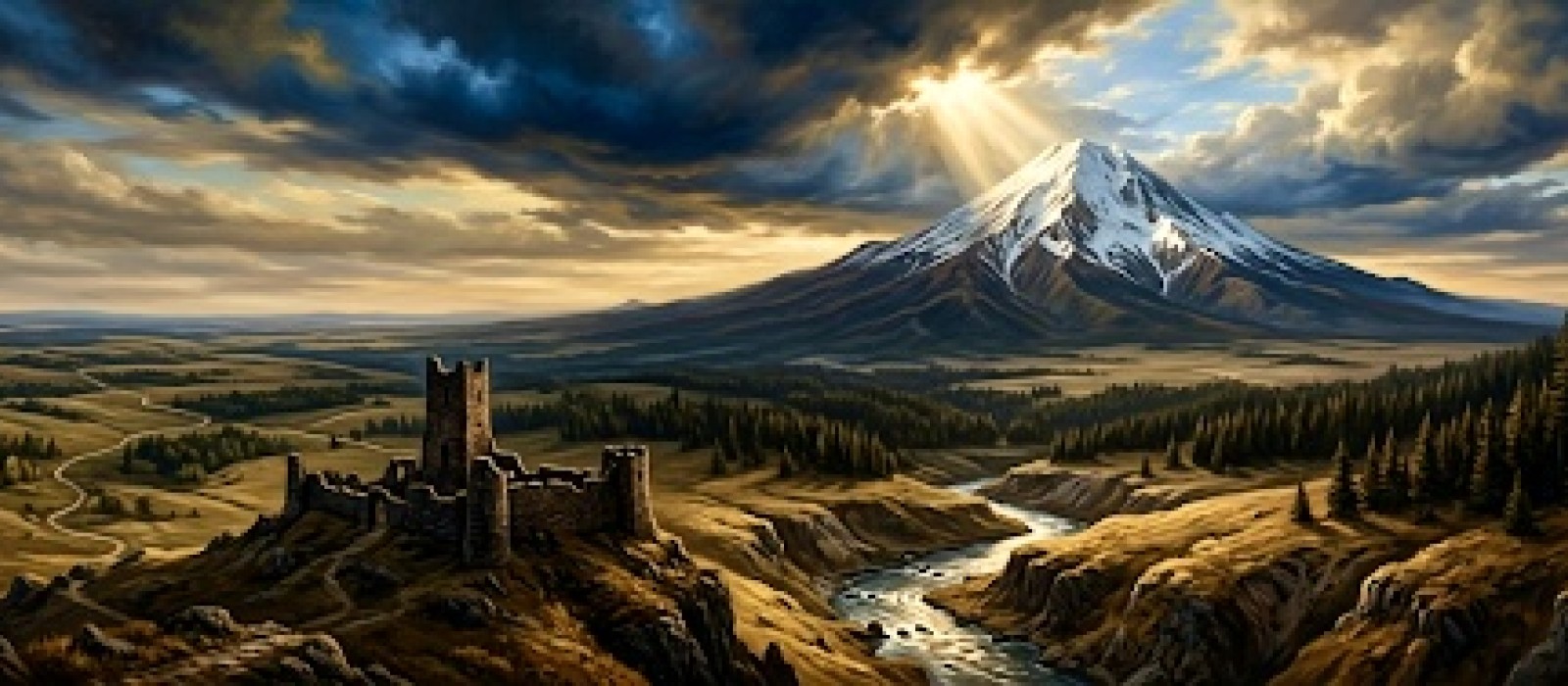
Thorin II Oakenshield was the King of Durin's Folk, leader of the Company of Dwarves, and rightful heir to the Lonely Mountain. Son of Thráin II and grandson of Thrór, he was born in TA 2746 in Erebor, driven into exile by Smaug at the age of 24, and spent nearly two centuries in the wilderness before leading the quest that reclaimed his kingdom. He died in TA 2941, mortally wounded in the Battle of Five Armies — having lived long enough to become King under the Mountain, and to make his peace with Bilbo Baggins. He was portrayed by Richard Armitage in Peter Jackson's film trilogy.
There is a moment near the end of The Hobbit that Tolkien handles very quietly. Thorin Oakenshield, King under the Mountain for the briefest of reigns, lies dying on the field of battle. He asks to see Bilbo. He says goodbye. He says: "If more of us valued food and cheer and song above hoarded gold, it would be a merrier world."
It is a remarkable thing for a Dwarf to say — a race for whom the love of gold runs in the blood, deeper than almost anything else. But Thorin had just spent weeks consumed by a madness that nearly destroyed everything the quest had won. The deathbed clarity cost him everything to reach, and it is what makes him one of the most complex, most human characters in Tolkien's entire legendarium.
This is his complete story.
Who Was Thorin Oakenshield? Origins and the House of Durin
Thorin II was of the House of Durin — the eldest and most noble of the seven Dwarf-houses, descended in direct line from Durin the Deathless, the first of the Dwarves. His grandfather was Thrór, King under the Mountain, under whose reign the Dwarves of Erebor had reached their greatest prosperity. His father was Thráin II, crown prince and heir. Thorin was born in TA 2746, inside the great halls of Erebor itself — in the kingdom that would be taken from him when he was barely 24 years old.
The name Thorin comes from the Old Norse Þorinn, meaning "darer" or "bold one" — ultimately derived from the name of the Norse god Thor. The epithet Oakenshield he earned later, in battle. Tolkien took both names directly from the Dvergatal — the ancient list of Dwarves — in the Old Norse poem Völuspá, part of the Poetic Edda. Even the names of Thorin's companions — Fíli, Kíli, Balin, Dwalin, Dori, Nori, Ori, Óin, Glóin, Bifur, Bofur, Bombur — all come from the same list. Tolkien was not improvising. He was drawing on the deep root of Germanic legend, giving his Dwarves the names their ancestors would have carried.
Thorin grew up in Erebor in a time of extraordinary Dwarven prosperity. The mountain was rich beyond imagining — gold, gems, mithril, the Arkenstone at the centre of it all. Trade with the Men of Dale filled both cities with wealth. It was, for the Dwarves of Durin's Folk, a golden age. Then, in TA 2770, it ended.
The Sacking of Erebor — A Boy of 24 in the Smoke and Fire
Smaug came from the north without warning, "like a hurricane" — Tolkien's words. He descended on the Lonely Mountain in flames. The Dwarves who ran from the Front Gate were killed. The Men of Dale were burned. King Thrór and his son Thráin escaped through the secret Back Door — a narrow passage cut into the mountain's side, known only to the royal family. With them fled a young Thorin, barely an adult by Dwarven reckoning, watching his home burn behind him.
He took almost nothing. Thrór had Thrór's Map and the key to the secret door. That was all. The entire accumulated wealth of generations — the gold, the gems, the mithril coats, the Arkenstone — stayed behind, buried under a dragon who would sleep on it for 171 years.
The exiled Dwarves of Durin's Folk wandered. They lived for a time in Dunland, then settled in the Blue Mountains — a far humbler home than Erebor, but their own. They forged iron goods and traded with Men to survive. All the while, as Tolkien notes, they talked of the Lonely Mountain. They never stopped talking about the Lonely Mountain. For Thorin, who had been born in it, who had breathed its air and walked its halls before the dragon came, the exile was a wound that never closed.
The Battle of Azanulbizar — How Thorin Earned His Name
In TA 2799, when Thorin was 53 years old, the long War of the Dwarves and Orcs reached its climax at the Battle of Azanulbizar — fought in the valley beneath the East-gate of Moria. The Orcs of Moria had killed Thrór, Thorin's grandfather, in a particularly brutal fashion, and Thráin had assembled the seven houses of the Dwarves to take revenge. The battle was enormous and savage.
In the thick of the fighting, Thorin's shield was broken. He picked up an oak branch from the ground and used it — both as a weapon and as a makeshift shield — to fight on. He survived the battle. In memory of what he had done, Thorin swore to bear a plain shield of oak, with no heraldic device upon it, until he was hailed king. The epithet Oakenshield followed him from that day and never left him.
The Battle of Azanulbizar was won, but at terrible cost. Dáin Ironfoot slew Azog, the Orc who had murdered Thrór. But the Dwarves were too few and too wounded to reclaim Moria — and Erebor remained Smaug's. Thorin's father Thráin, eventually consumed by the influence of the last of the Seven Dwarf-rings in his possession, wandered off alone and was captured by Sauron in Dol Guldur. He died there, never having seen Erebor again. When Thráin died, Thorin became King of Durin's Folk — a king in exile, with no kingdom to rule.
Thrór's Map and the Key to Erebor — The Quest Begins
The map came to Thorin through Gandalf, who had found Thráin in the dungeons of Dol Guldur shortly before he died and received from him, in his last lucid moments, a map and a key. The map showed the Lonely Mountain — the Front Gate, the Running River, the town of Dale — and, crucially, the location of the secret door on the mountain's western face. The key was the key to that door. With these two objects, a quest became possible.
Gandalf had his own reasons for wanting Smaug dead — a dragon of that power, used by Sauron, would be catastrophic for the free peoples of the North. He sought out Thorin and, at a chance meeting in Bree in TA 2941, presented his plan. Thorin would gather a company of Dwarves. He would travel to Erebor. He would use Bilbo Baggins — a Hobbit, a creature whose scent Smaug would never have encountered — as a burglar, to enter the mountain unseen. And Gandalf would go with them.
Thorin was not entirely convinced by the Hobbit part of the plan. But the map and the key were real, and the alternative was another century of exile in the Blue Mountains. Thirteen Dwarves gathered at Bag End for the Unexpected Party, and the quest began.
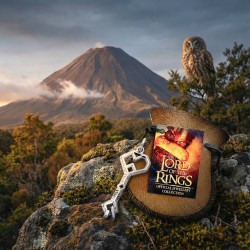
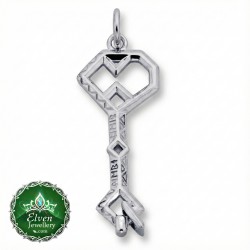
The Key to Erebor Pendant — 50mm in solid 925 sterling silver, carrying Dwarvish runes that translate as "Durin Heir." The key Thráin passed to Gandalf in the dungeons of Dol Guldur, which Gandalf gave to Thorin, which opened the secret door in the Lonely Mountain. The most important key in the history of the Third Age, worn on a 45cm Belcher chain. Handcrafted in New Zealand by the official New Line Productions licence holders. Supplied with a pouch and Licence of Authenticity. 5-year guarantee.
View the Key to Erebor →The Quest of Erebor — Trolls, Mirkwood, and the Halls of Thranduil
The journey from the Shire to Erebor was long and dangerous. The Company was captured by trolls — Thorin was the only Dwarf not taken off guard — and escaped only because Gandalf delayed the trolls until dawn turned them to stone. In the trolls' cave, Thorin found Orcrist: a great Elvish blade made in the ancient city of Gondolin in the First Age, one of the most storied swords in the history of Middle-earth. Elrond, reading its inscription at Rivendell, told them its name meant Goblin-cleaver. The Orcs of the Misty Mountains knew it as "Biter" and feared it.
Captured by the Great Goblin beneath the Misty Mountains, the Company fought their way free — it was here that Bilbo, separated from the others, found the One Ring in the dark. They escaped into Mirkwood with Warg-wolves behind them and eagles above, and pressed on toward Erebor.
In Mirkwood, the Company blundered into the halls of Thranduil the Elvenking — the same Elvenking who had refused to help the Dwarves when Smaug had first attacked Erebor, a refusal Thorin had never forgiven and would not now forget. He refused to tell Thranduil the purpose of their quest. All thirteen Dwarves were imprisoned. It was Bilbo, alone and invisible with the Ring, who engineered their escape — packing the Dwarves into barrels and floating them down the river to Lake-town.
Thorin stepped from his barrel at Lake-town and announced himself as King under the Mountain. The people of Esgaroth welcomed him. They had heard the old songs about the return of the King, and the prosperity it would bring. They gave the Company supplies and boats and sent them north toward the Lonely Mountain — which they could see from their windows, distant and cold, with Smaug inside it.
Erebor Reclaimed — and the Dragon-Sickness
The Company found the secret door on the mountain's western face as the last light of Durin's Day struck the keyhole. They entered. Bilbo went down into the dark to face Smaug. The dragon, provoked and furious, flew to Lake-town and began to burn it — and was killed by Bard the Bowman's black arrow, the bare patch on his left breast exposed at last. Smaug was dead. Erebor was empty. The treasure was unguarded.
And that was when everything went wrong.
Thorin entered the Mountain and found the gold. He found the halls of his ancestors, the treasuries of generations, the accumulated wealth of a kingdom. And something happened to him. Tolkien calls it the dragon-sickness — the curse that Smaug had breathed into the gold over 171 years of guarding it. It is described in the text as a madness: an obsessive possessiveness that warped Thrór before him, that had killed the Master of Lake-town in the book, that now began to consume Thorin.
He became someone else. Suspicious, paranoid, furious. He refused to share any of the treasure with the Men of Lake-town whose homes Smaug had burned, or with the Elves of Mirkwood who had come to negotiate. He barricaded himself in the Mountain, sent ravens to summon Dáin's army from the Iron Hills, and declared that he would kill anyone who approached. He searched obsessively for the Arkenstone — the Heart of the Mountain, the symbol of the King under the Mountain's right to rule — not knowing that Bilbo had already found it and hidden it away.
When he discovered that Bilbo had given the Arkenstone to Bard as a bargaining tool, Thorin's rage was terrible. He banished Bilbo from the Mountain. He prepared for war.
The Battle of Five Armies — Death and Redemption
The Battle of Five Armies broke the standoff. Men of Lake-town, Elves of Mirkwood, Dwarves of the Iron Hills, and the remnants of Thorin's Company all faced each other on the slopes of the Lonely Mountain — and then a vast army of Orcs and Wargs came from the north, and all the other quarrels dissolved in an instant.
Thorin led the charge out of the Mountain himself. Whatever the dragon-sickness had made him, the warrior-king was still there underneath it. He fought through the battle with everything he had. His nephews Fíli and Kíli died defending him. He fought on. He reached the Orc commander Azog — in the films, his greatest enemy — and in the final confrontation, both were mortally wounded.
Bilbo found him dying on the field. And Thorin, the madness burned away by the cost of everything it had taken from him, was himself again. He asked Bilbo's forgiveness. He spoke his famous words about food and cheer and song. He was buried in the heart of Erebor, with Orcrist laid upon his tomb — and the Arkenstone placed on his chest, where it had always truly belonged.
Dáin Ironfoot became the new King under the Mountain. He ruled wisely, rebuilt Erebor and Dale, and led his people into the War of the Ring thirty years later, dying in battle at the age of 252. But it was Thorin who had made it all possible — Thorin who had gathered the Company, Thorin who had carried the map and the key for decades, Thorin who had walked back into the mountain a dragon had held for 171 years. The kingdom his grandfather built, his father lost, and he reclaimed at the cost of his life.
Orcrist — The Goblin-Cleaver of Gondolin
Of all Thorin's possessions, Orcrist is the most storied. It was forged in the First Age city of Gondolin — the hidden Elven city whose fall marked the end of one era and the beginning of another. It was a blade made in the same workshops that produced Glamdring (carried by Gandalf) and the knife that became Bilbo's Sting. All three were found together in a troll-hoard, passed down through centuries of unknown hands, before Tolkien's Company stumbled on them in the hills of Eriador.
Orcrist means "Goblin-cleaver" in the Sindarin Elvish language. The Orcs of the Misty Mountains called it "Biter" and had a particular hatred of it — it glowed blue in the presence of Orcs, as Glamdring and Sting also did, warning its bearer of danger. Thorin carried it through the quest and was buried with it. The ancient raven Roäc reported, after the Battle of Five Armies, that Orcrist had been placed on Thorin's tomb — where it continued its work, glowing in warning whenever Orcs approached, protecting the King under the Mountain even in death.
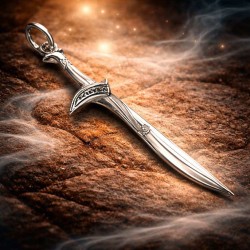
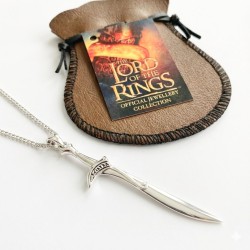
The Orcrist Pendant — 60mm in solid 925 sterling silver. The Goblin-cleaver of Gondolin, forged in the First Age and buried with Thorin Oakenshield after the Battle of Five Armies. The most ancient weapon in the official Hobbit jewellery range — three thousand years of history in a single piece. Handcrafted in New Zealand, supplied with a leather Hobbit pouch and Licence of Authenticity. 5-year guarantee.
View the Orcrist Pendant →The Four Official Thorin Oakenshield Pieces in Sterling Silver
There are four official sterling silver pieces in the Thorin Oakenshield collection at lotrjewelry.com — the only licensed fine jewellery in the world connected to the King under the Mountain. All handcrafted in New Zealand by the New Line Productions licence holders. All backed by a 5-year written guarantee.
Key to Erebor Pendant
50mm, solid 925 sterling silver. The key Thráin gave to Gandalf and Gandalf gave to Thorin — inscribed with Dwarvish runes translating as "Durin Heir." The object the entire Quest of Erebor turned upon. Supplied with a 45cm Belcher chain, pouch, and Licence of Authenticity.
Shop Key to Erebor →Thorin Ring Pendant
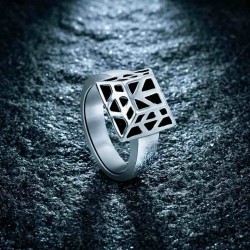
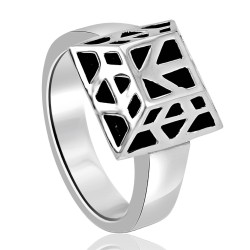
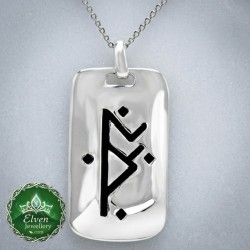
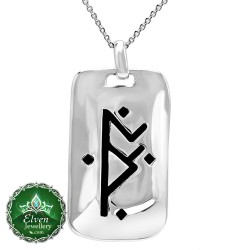
30mm × 18mm, solid 925 sterling silver with oxidised royal seal. Thorin's royal emblem — the mark of the King under the Mountain — worn as a pendant on a 45cm chain. Supplied with a presentation gift box and Licence of Authenticity.
Shop Thorin Ring Pendant →Thorin Signet Ring
Custom-made to your exact size in solid 925 sterling silver. Thorin's royal signet — the seal of Durin's Folk, worn on the finger. Made to order in approximately 5–7 days. UK/NZ/AU and US sizing available. Supplied with a pouch and a licence card.
Shop Thorin Signet Ring →Orcrist Pendant
60mm, solid 925 sterling silver. The Goblin-cleaver of Gondolin — found by Thorin in a troll-hoard, carried through the Quest of Erebor, and buried with him after the Battle of Five Armies. The most ancient weapon in the official range. Supplied with a leather Hobbit pouch and Licence of Authenticity.
Shop Orcrist →Frequently Asked Questions About Thorin Oakenshield
Who is Thorin Oakenshield?
Thorin II Oakenshield was the King of Durin's Folk and leader of the Company of Dwarves in J.R.R. Tolkien's The Hobbit. Son of Thráin II and grandson of Thrór, he was the rightful heir to the Lonely Mountain, driven from it by Smaug at age 24. He spent nearly two centuries in exile before leading the quest that reclaimed Erebor. He died in TA 2941 following the Battle of Five Armies, and was buried with Orcrist in the heart of the Mountain. He was portrayed by Richard Armitage in Peter Jackson's Hobbit film trilogy.
Why is Thorin called Oakenshield?
Thorin earned the epithet Oakenshield at the Battle of Azanulbizar in TA 2799, during the War of the Dwarves and Orcs. In the thick of the fighting, his shield was broken. He picked up an oak branch from the ground and used it as both weapon and shield to continue fighting. In memory of this, he swore to bear a plain shield of oak with no heraldic device until he was hailed king. The name Oakenshield — Eikinskjaldi in Old Norse — followed him from that day forward and is derived from Tolkien's source, the Dvergatal in the Poetic Edda.
How did Thorin Oakenshield die?
Thorin was mortally wounded during the Battle of Five Armies, fought on the slopes of the Lonely Mountain in TA 2941. He led the charge out of Erebor himself and fought through the battle, but was fatally injured in his final confrontation with the Orc commander. He died shortly after the battle, having said his farewell to Bilbo Baggins. His last recorded words are among the most celebrated in all of Tolkien: "If more of us valued food and cheer and song above hoarded gold, it would be a merrier world." He was buried in the heart of Erebor with the Arkenstone on his chest and Orcrist on his tomb.
What is the dragon-sickness in The Hobbit?
The dragon-sickness is a curse that Smaug breathed into the gold of Erebor over 171 years of guarding it — a consuming obsession with wealth and possession that overwhelmed any Dwarf who came into close contact with the hoard. Tolkien traces it to the Old English poem Beowulf: the gold of men of long ago "enmeshed in enchantment." It destroyed Thorin's grandfather Thrór, consumed the Master of Lake-town, and — after Erebor was reclaimed — began to warp Thorin himself, making him paranoid, obsessive, and unwilling to share any of the treasure with Men or Elves. Galadriel's blessing on Gimli, generations later, was specifically designed to protect him from the same curse.
What does the Key to Erebor say?
The runes inscribed on the Key to Erebor read "Durin Heir" in Dwarvish — marking its bearer as the rightful heir of Durin's Folk and the true claimant to the Kingdom under the Mountain. It was this key, combined with Thrór's Map showing the secret door's location, that made the Quest of Erebor possible. Thráin passed the key and map to Gandalf in the dungeons of Dol Guldur. Gandalf gave them to Thorin. Thorin carried them for years before the quest began.
What sword did Thorin carry?
Thorin carried Orcrist — the Goblin-cleaver, an Elvish blade forged in the First Age city of Gondolin. He found it in a troll-hoard during the early stages of the Quest of Erebor, and Elrond identified it at Rivendell. The Orcs of the Misty Mountains called it "Biter" and feared it. Like Glamdring and Sting, it glowed blue in the presence of Orcs. Thorin carried it through the quest, and it was buried with him after his death at the Battle of Five Armies — placed on his tomb, where it continued to glow in warning whenever Orcs approached the Mountain.
Who became King under the Mountain after Thorin?
Dáin II Ironfoot — Lord of the Iron Hills, Thorin's cousin — became King under the Mountain after Thorin's death. Thorin's nephews Fíli and Kíli had also died in the Battle of Five Armies, leaving no direct heirs. Dáin had brought an army of 500 Dwarves to Thorin's aid and fought in the battle himself. He ruled Erebor wisely for decades, oversaw the rebuilding of Dale, and died at the age of 252 during the War of the Ring — fighting at the Battle of Dale against the forces of Sauron, standing over the body of King Brand of Dale, refusing to retreat.
Who played Thorin Oakenshield in the films?
Thorin Oakenshield was portrayed by English actor Richard Armitage in all three of Peter Jackson's Hobbit films: An Unexpected Journey (2012), The Desolation of Smaug (2013), and The Battle of the Five Armies (2014). Armitage is approximately 6 feet 2 inches tall — considerably taller than Tolkien's Thorin — and the production used forced perspective, scale doubles, and camera work to present him as a Dwarf alongside the full-height cast members.
Sources & Further Reading
- The Hobbit, or There and Back Again — J.R.R. Tolkien (1937) — Primary source for the Quest of Erebor, Thorin's character arc, and his death at the Battle of Five Armies
- The Lord of the Rings — Appendix A — 'Durin's Folk' — Thorin's lineage, the history of Erebor, and the line of Durin
- Tolkien Gateway — tolkiengateway.net
Related Products