Peter Jackson has confirmed that he and Warner Bros. are in active negotiations with the Tolkien Estate to license the rights to The Silmarillion and Unfinished Tales of Númenor and Middle-earth for film adaptation. Speaking to Deadline at the Cannes Film Festival on May 13, 2026, the day after receiving an Honorary Palme d'Or, Jackson said the younger generation of the Tolkien family now running the estate are "much more open to talking." The talks are in early stages. No rights deal has been confirmed. But for the first time in the history of Tolkien adaptations, the words "Silmarillion" and "film" are being spoken in the same sentence by the person most likely to make it happen, with apparent permission to say them publicly.
This is the most significant piece of Tolkien news since the original Lord of the Rings trilogy was announced. Not because a deal exists, but because the conversation is happening at all, in public, confirmed by Jackson himself. The Silmarillion has been the locked room of Tolkien's legendarium for fifty years. Yesterday, for the first time, someone with the relationships and the intention to open it told a room full of journalists that the key is being cut.
What Jackson Actually Said — The Exact Quotes
Jackson's comments were made in a wide-ranging masterclass at Cannes the morning after his Honorary Palme d'Or ceremony. He was not asked directly about The Silmarillion. The subject came up in the context of discussing the future of the franchise, and he went further than anyone had expected.
"Christopher Tolkien sort of edited and finished other Tolkien books, The Silmarillion, Unfinished Tales, there's a lot more Tolkien writing which would actually make great movies, that were subsequently edited and released by Christopher. But he just absolutely not... those rights have never been available."
He then added: "But Christopher passed away recently, well, I suppose two or three years ago now, and the younger Tolkiens, this next generation, are now running the estate. They're much more open to talking. So a combination of Warners and us have been talking to the younger members about the possibility of actually licensing the rights to some of the other books. It would be nice to get away from the appendices and get something a bit more meaty."
Three things in that statement are worth holding separately. First: Warner Bros. is involved, not just Jackson personally. This is not a filmmaker's aspiration. It is an active studio negotiation. Second: Jackson used the word "meaty." The appendices have given us the original trilogy, The Hobbit, The War of the Rohirrim, The Rings of Power, The Hunt for Gollum, and Shadow of the Past. Everything that has been filmed in the Jackson era has come from Tolkien's main texts or his appendices. The Silmarillion is not an appendix. It is the complete mythology of the Elder Days: the creation of the world, the Wars of Beleriand, Beren and Lúthien, the Fall of Gondolin, the story of Eärendil whose star Sam sees from the slopes of Mordor. It is where everything in The Lord of the Rings comes from. Third: "those rights have never been available" means that every previous conversation about a Silmarillion film was theoretical. This one is apparently not.
Why The Silmarillion Has Never Been Filmed — Until Now
When Tolkien sold the film rights to The Lord of the Rings and The Hobbit in the 1960s, he specifically excluded his other works. The Silmarillion, which he was still writing and which he never completed in his lifetime, remained with his estate. When he died in 1973, the estate passed to his son Christopher Tolkien, who spent the next forty-seven years editing and publishing his father's unfinished manuscripts: The Silmarillion (1977), Unfinished Tales (1980), The History of Middle-earth (twelve volumes, 1983-1996), The Children of Húrin (2007), Beren and Lúthien (2017), and The Fall of Gondolin (2018).
Christopher Tolkien was deeply opposed to further film adaptations. He was not simply protective of his father's work in the abstract sense. He actively and publicly criticised the Peter Jackson films, describing them as transforming his father's work into "action films for young people" that had "eviscerated the book by making it an action movie for 15 to 25 year olds." He would not grant further film rights under any circumstances. The Silmarillion was never available, in the same way that a door is never available when someone has decided it will not open.
Christopher Tolkien died on January 16, 2020, aged 95. The estate passed to a new generation of Tolkien family members. Jackson's comment that they are "much more open to talking" is the first public confirmation that the change in stewardship has changed the availability of the rights. Amazon's Rings of Power series demonstrated the commercial scale of Tolkien adaptation in the streaming era. The Hunt for Gollum demonstrated that Jackson and Warner Bros. were actively rebuilding the franchise. Those two facts together created the conditions for a conversation that could not have happened five years ago.
What The Silmarillion Actually Is
For readers who know Tolkien only through The Lord of the Rings or the films, The Silmarillion requires some context, because it is not a novel in the conventional sense. It is a mythology: the creation story, the early history, and the great tales of the First Age of Middle-earth, written in a style that draws on the Old Norse Eddas and the Finnish Kalevala rather than on the narrative tradition of the novel.
Within it are stories of an ambition and emotional scale that The Lord of the Rings can only gesture toward. The tale of Beren and Lúthien, a mortal man and an immortal Elvish princess who together descend into the fortress of the first Dark Lord Morgoth to steal a jewel from his crown, is the love story that Tolkien considered the heart of his entire legendarium. He wrote it first, in the trenches of the First World War. His wife Edith danced for him in a forest clearing and became Lúthien. Their names are on their shared gravestone at Wolvercote Cemetery in Oxford. It is the story behind the story.
The Fall of Gondolin is the founding disaster of the First Age: the destruction of the most beautiful Elvish city ever built, betrayed from within, burned by dragons and Balrogs in a single night, with a small group of survivors escaping through a hidden pass in the mountains. The survivors included Tuor, who would father Eärendil, who would father Elrond and Elros. Everything that follows in The Lord of the Rings flows from that night.
The Children of Húrin is the darkest thing Tolkien ever wrote: a tragedy of Shakespearean proportions, following Túrin Turambar through a life shaped by a curse laid on his family by Morgoth, ending in incest, madness, and a sword that speaks its name before it kills. It has nothing of the consolatory resolution that The Lord of the Rings offers. It ends as Greek tragedy ends: completely, without comfort.
These are not supplementary materials. They are the foundational texts of an entire mythology. They are what The Lord of the Rings is the coda to. The idea of them on screen is staggering.
What Would a Silmarillion Film Actually Look Like?
This is the question that immediately follows any news about The Silmarillion rights, and it is genuinely difficult to answer. The Silmarillion as published is not a single narrative. It is a collection of connected myths, genealogies, and histories spanning thousands of years and dozens of major characters. Adapting it as written would produce something like a Norse mythology compendium: magnificent but unfilmable as a single piece.
The practical approach would be to adapt individual stories from within it as standalone films: Beren and Lúthien as one film, The Fall of Gondolin as another, The Children of Húrin as a third. Each is a complete narrative with a beginning, middle, and end. Each is the scale of a major epic film. Each is set in a world that the production teams who built Middle-earth for six existing Jackson films know intimately, at least in its geography and aesthetic.
Jackson's comment that he wants "something meatier" than the appendices points in this direction. He is not describing a documentary adaptation of the full text. He is describing stories with genuine narrative weight: characters, arcs, stakes, tragedy. Beren and Lúthien has all of these. The Fall of Gondolin has all of these. The Children of Húrin has all of these and then some.
The rights question is also more complicated than a single negotiation. The Silmarillion's rights belong to the Tolkien Estate. The Lord of the Rings film rights belong to Warner Bros. through the original sale. Amazon's Rings of Power has some rights to the Second Age material from the appendices. Multiple parties would need to be aligned for any First Age adaptation to move forward cleanly. Jackson acknowledged this complexity is part of why the talks are at an early stage.
What This Means for the World of Tolkien on Screen
Jackson said one more thing at Cannes that has not been widely reported: he is also writing a new Tintin script with Fran Walsh, and still hopes to make a film about the Dambusters Raid. He is not a man who has nothing to do. His willingness to describe The Silmarillion talks publicly at all suggests he considers them serious enough to be worth naming, which is itself a signal.
For the world of Middle-earth on screen, the implications are enormous if the talks succeed. The existing films are all set in the Third Age, with brief excursions into the Second Age through the Rings of Power series. The First Age has never been touched. It contains the most dramatic events in the entire history of Tolkien's world: the original wars against Morgoth, the destruction of the Two Trees that lit Valinor, the creation of the Silmarils, three wars of escalating catastrophe, the drowning of Beleriand at the end of it all. It is the deep history that every event in The Lord of the Rings refers back to.
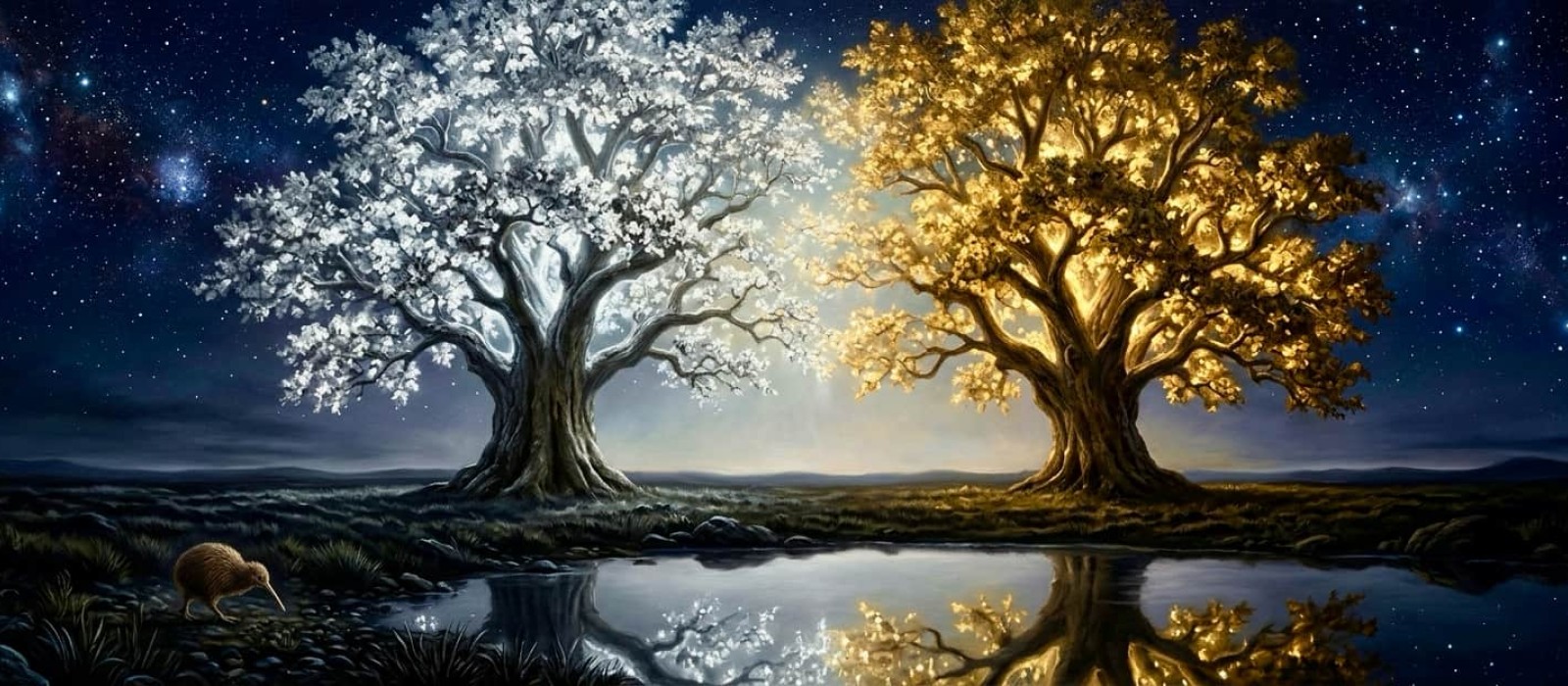
Galadriel watched the Two Trees die. Elrond's father Eärendil sailed across the sea to beg the Valar for help in the final war. The star Sam sees from Mordor is Eärendil wearing a Silmaril. When Aragorn calls himself "Estel," Hope, it is because he carries the bloodline of the survivors of the greatest catastrophes of the First Age. All of it is connected. The Silmarillion is where those connections live.
We do not yet know if the rights deal will be made. We know the conversation is happening. For a body of work that has been locked behind a closed door for fifty years, that is extraordinary news.
The Official Collection — Made in New Zealand
Every piece of officially licensed Lord of the Rings jewellery at lotrjewelry.com comes from the world The Silmarillion underlies: the One Ring Sauron forged using the craft the Elves learned in the First Age, the Evenstar pendant connecting Aragorn to the bloodline of Beren and Lúthien, Nenya the Ring of Water whose connection to the First Age runs through Galadriel herself. Made in New Zealand by the New Line Productions licence holders, in the country where Middle-earth has lived on screen for twenty-five years.
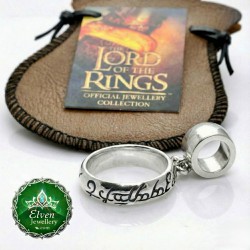
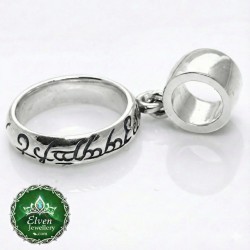
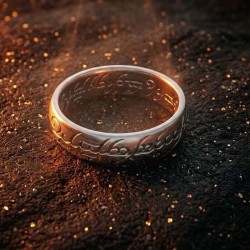
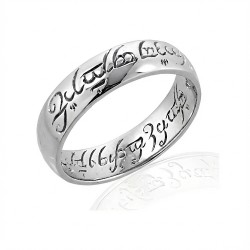
One Ring — Sterling Silver
The ring whose power traces back to techniques Sauron learned from the Valar in the First Age. The ring whose destruction the events of The Silmarillion made inevitable. Solid 925 sterling silver, Comfort Curve, custom-made to size. Made in New Zealand.
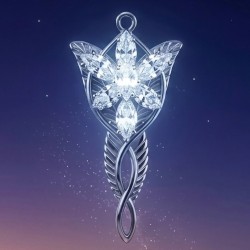
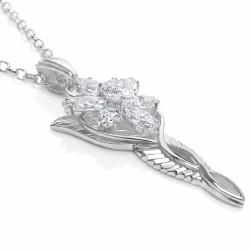
Arwen Evenstar Pendant
The pendant of the woman who carries the bloodline of Beren and Lúthien, the greatest love story in The Silmarillion, through Elwing and Eärendil to Elrond to Arwen. The First Age in silver and starlight. Made in New Zealand.
Nenya — Ring of Water
The ring of Galadriel, who was born in Valinor before the First Age, who saw the Two Trees, who crossed the Grinding Ice and lived through the entire history The Silmarillion records. The oldest consciousness in Lord of the Rings, in solid sterling silver. Made in New Zealand.
Frequently Asked Questions
Is a Silmarillion film officially confirmed?
No. Peter Jackson confirmed at Cannes on May 13, 2026 that he and Warner Bros. are in talks with the Tolkien Estate about licensing the rights to The Silmarillion and Unfinished Tales. He described these as early-stage conversations, not a concluded deal. No rights agreement has been announced. What is confirmed is that active negotiations are happening for the first time in the history of Tolkien adaptations, driven by a change in leadership at the Tolkien Estate following Christopher Tolkien's death in 2020.
Why has The Silmarillion never been filmed before?
When J.R.R. Tolkien sold his film rights in the 1960s, he excluded The Silmarillion and his other works. After his death in 1973, his son Christopher Tolkien managed the estate and was deeply opposed to further film adaptations. He explicitly refused to license The Silmarillion for film under any circumstances, describing the existing Peter Jackson films critically. Christopher died in January 2020 and the estate passed to a younger generation of the Tolkien family, who Jackson describes as "much more open to talking."
What is The Silmarillion about?
The Silmarillion is the complete mythology of Tolkien's world, covering the creation of Arda, the Elder Days before The Hobbit or The Lord of the Rings, and the great stories of the First Age. It contains Beren and Lúthien (the love story Tolkien considered the heart of his entire legendarium), The Fall of Gondolin (the destruction of the greatest Elvish city, including origins of characters who appear in The Lord of the Rings), The Children of Húrin (a tragedy Tolkien described as his most personally significant), and the Akallabêth (the drowning of Númenor). It is published as a single volume but contains multiple distinct narratives spanning thousands of years.
Would Peter Jackson direct a Silmarillion film?
Jackson did not confirm this. His comments established that he and Warner Bros. are pursuing the rights, not that he would direct any resulting adaptation. He is currently a producer on The Hunt for Gollum (directed by Andy Serkis), a producer on Shadow of the Past, and is writing a new Tintin script. He described himself at Cannes as someone who gives directors "as much freedom as I can" rather than needing to direct everything himself. Any Silmarillion production is far enough away that director conversations are premature.
Sources and Further Reading
- Deadline, May 13, 2026: Peter Jackson Cannes masterclass interview, primary source for all direct quotes
- NME, May 13, 2026: "Peter Jackson in talks to adapt J.R.R. Tolkien's The Silmarillion into films"
- Screen Rant, May 13, 2026: "Peter Jackson Is Officially Eyeing New Lord of the Rings Adaptation"
- CBR, May 14, 2026: "Peter Jackson Says New Tolkien Era May Finally Unlock Silmarillion Movies"
- Tolkien, J.R.R.: The Silmarillion, ed. Christopher Tolkien (1977): primary source text
- Tolkien Gateway: tolkiengateway.net
Related Products