Two years ago today, Bernard Hill died at the age of 79. He had played King Théoden of Rohan across two films in Peter Jackson's Lord of the Rings trilogy, and in those two films he delivered one of the most quietly devastating performances in the history of fantasy cinema: a man recovered from the inside out, who found his courage late, who rode to a battle he knew he would not survive, and who died well.
The tributes that came on the day of his passing reflected how deeply the performance had landed. Not just for what he did in the big moments, but for what he did in the small ones. The scene where Gandalf releases him from Wormtongue's influence. The moment on the walls of Helm's Deep when he looks out at an army beyond counting. The quiet conversation with Éowyn the night before the Pelennor Fields. Bernard Hill understood something about Théoden that went beyond the speeches and the armour: he understood that this was a man who had been robbed of himself and was trying to become himself again before it was too late.
Who Bernard Hill Was
Bernard Hill was born on December 17, 1944 in Manchester. He trained at the Manchester Polytechnic School of Theatre and built his career almost entirely through British television and theatre before Lord of the Rings made him internationally known in the early 2000s.
His defining early role was Yosser Hughes in the BBC series Boys from the Blackstuff in 1982: an unemployed man in Thatcher's Liverpool, reduced by circumstance and desperation to the repeated, increasingly desperate cry of "Gissa job." It was one of the most acclaimed performances in British television history and established Hill as an actor capable of portraying suffering with an unflinching honesty that never tipped into sentimentality.
He played Captain Edward Smith in James Cameron's Titanic in 1997, the man in command of the ship as it sank, rendered with a dignity that the role's relatively limited screen time did not deserve but that Hill provided regardless. Cameron later said Hill was one of the finest actors he had ever worked with.
And then came Théoden.
Théoden — The Long Road Back to Himself
Tolkien's King Théoden is one of the most carefully drawn characters in The Lord of the Rings. He is not a villain and not a hero when we first meet him: he is a man who has been slowly poisoned from the inside by Grima Wormtongue's counsel, which served Saruman's interests and slowly drained Théoden of his will, his judgement, and his capacity for decisive action. By the time the Fellowship finds him in Meduseld, he is old before his time, listless and grey, seated on his throne but absent from it in every way that matters.
Gandalf releases him. What follows in Tolkien's text, and in Peter Jackson's film, is one of the most precise depictions of a person recovering their sense of self that fantasy literature contains. Théoden does not immediately become a hero. He becomes a person again. He sits up straighter. He looks at his sword. He looks at his hands. He looks at Wormtongue, who he had trusted and who had ruined him, and he understands what was done to him without yet knowing what to do about it.
Bernard Hill played every stage of that recovery with absolute specificity. The confusion as the fog lifted. The physical effort of standing upright after years of decline. The anger that came slowly, and the grief that came with the anger, when he understood what had been lost during the years of Wormtongue's influence. The scene where he stands on the steps of Meduseld and breathes the air of Rohan for what feels like the first time, looking out over the plains as if seeing them again after a long absence: Hill does nothing in that scene. He simply stands. And it is one of the most affecting moments in the entire trilogy.
Helm's Deep — "So Much Death"
The night before the Battle of Helm's Deep, Théoden stands on the walls and looks at the army Saruman has sent against him. Ten thousand Uruk-hai. More than the Rohirrim have ever faced in a single battle. More, probably, than the fortress can hold.
He turns to Aragorn and says, very quietly: "So much death. What can men do against such reckless hate?"
Aragorn says: "Ride out with me. Ride out and meet them."
What Hill does in that exchange is what separated him from what a lesser actor would have made of the scene. He does not play the speech as heroic fortitude or kingly resolve. He plays it as genuine despair, honestly felt, by a man who has recently recovered his capacity to feel anything at all and is now being asked to lead people to their probable deaths. The heroism comes afterward, when he chooses to ride out anyway. But the despair comes first, and it is real, and Hill does not flinch from it.
The Pelennor Fields — "Arise, Arise, Riders of Théoden"
Tolkien gives Théoden a speech before the charge on the Pelennor Fields that is among the finest passages in the entire book. Jackson gave it to Hill to perform on horseback, in armour, surrounded by thousands of extras and horses, at dawn. It is one of the most practically demanding scenes of the entire production and Hill delivered it in a single usable take.
"Arise, arise, Riders of Théoden! Fell deeds awake: fire and slaughter! Spear shall be shaken, shield shall be splintered, a sword-day, a red day, ere the sun rises! Ride now! Ride now! Ride to ruin and the world's ending! Death! Death! Death! Forth Eorlingas!"
Tolkien's original is slightly different from the film's version, and purists have always preferred the book. But what Hill brought to the filmed version was something the text could suggest but not enact: a voice that had been silent and small for too long, released into its full power at last, in the final moment of a life that had been partly stolen and was now being spent on the most important charge in the history of Rohan.
The extras, reportedly, applauded spontaneously after the take. They had not been asked to. They simply did.
The Death — "I Know Your Face"
Théoden dies on the Pelennor Fields, crushed beneath his horse after the Witch-king destroys it. He is found by his niece Éowyn, who has ridden to battle in disguise and has just helped kill the Witch-king herself. She kneels beside him. He looks up at her and says, with a recognition that is both literal and something more: "I know your face."
He tells her he has not feared death. He says his house has stood. He says he goes to his fathers.
Then: "Éowyn. My body is broken. You have to let me go."
Bernard Hill plays this scene with a completeness that is very rare. Théoden is not afraid. He is not in denial. He is not seeking reassurance. He has done what he came to do. He knows it. The grief is entirely Éowyn's and ours, watching from outside. Théoden himself is, in the old sense of the word, at peace. He goes well.
Tolkien wrote Théoden as a king of the old heroic tradition: a man who understood that a king's final duty was to die honourably in front of his people. Hill understood this too, and played the death scene not as tragedy but as completion. The arc was finished. The man had come back to himself in time to spend himself in a good cause. There was nothing more to do.
What He Gave the Story
There is a kind of performance that serves a story's themes without announcing itself as doing so. Bernard Hill's Théoden is that kind of performance. Everything Tolkien believed about courage, recovery, and the dignity of ordinary people in extraordinary circumstances is in that characterisation: not stated, not signalled, simply lived through two films by a Manchester actor who understood what the material required and gave it without reservation.
He was 59 years old when he filmed the Battle of the Pelennor Fields. He was 59 years old when he delivered that speech on horseback at dawn and the extras applauded. He looked every inch the warrior king Tolkien described, and nothing in his bearing suggested that this was a television actor from Manchester who had learned to ride for the role. He was Théoden. For the time the camera ran, completely and without remainder.
Bernard Hill. December 17, 1944 to May 5, 2024. He gave us one of the finest performances in the history of Lord of the Rings, in a role that could easily have been ceremonial and was instead one of the most human things in the trilogy.
Ride now. Ride to ruin and the world's ending.
The Official Collection — Made in New Zealand
The official Lord of the Rings jewellery at lotrjewelry.com is made in New Zealand by the New Line Productions licence holders, in the country where Bernard Hill filmed the charge of the Rohirrim, the death of Théoden, and everything in between. The One Ring that Théoden's people spent their lives defending against, and the Evenstar that connected Aragorn's world to the world Théoden gave everything to preserve, are both made here.
One Ring — Sterling Silver
The ring Théoden's people spent their lives protecting the free peoples against. Solid 925 sterling silver, precision engraved, Comfort Curve. Custom-made to size. Made in New Zealand by the New Line Productions licence holders.
Shop One Ring →Arwen Evenstar Pendant
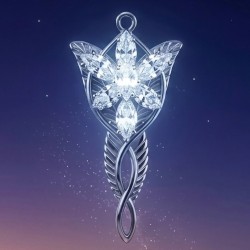
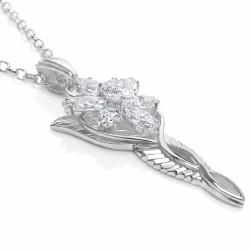
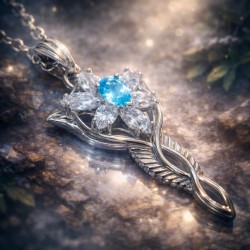
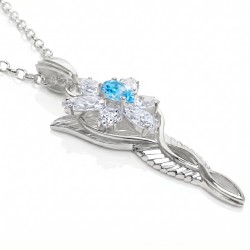
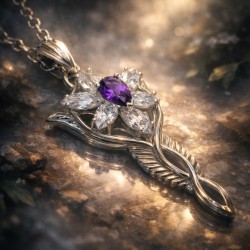
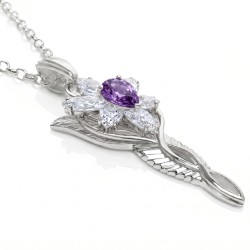
The pendant carried by Aragorn, the king whose return gave Théoden's sacrifice its ultimate meaning. The most gifted piece of Lord of the Rings jewellery in the world. Solid 925 sterling silver. Made in New Zealand.
Shop Evenstar →Nenya — Ring of Water
One of the Three Elven Rings sustained throughout the age that Théoden helped defend. The only officially licensed Elven Ring in the collection. Solid 925 sterling silver with white gold finish. Made in New Zealand.
Shop Nenya →Sources and Further Reading
- The Lord of the Rings, The Two Towers: "The King of the Golden Hall" — Théoden's release from Wormtongue's influence and his recovery
- The Lord of the Rings, The Return of the King: "The Muster of Rohan" and "The Battle of the Pelennor Fields" — the charge and Théoden's death
- The Lord of the Rings, Appendix A: "The House of Eorl" — Théoden's lineage and place in the Kings of the Mark
- Bernard Hill, 1944-2024: obituaries from BBC, Guardian, and The Times, May 5-6, 2024
- Tolkien Gateway: tolkiengateway.net
Related Products