The Tolkien Reading Order: Where to Start with Middle-earth (and What Order to Read the Rest)
If you have ever stood in front of a shelf of Tolkien books and felt genuinely lost, you are in very good company. He wrote a children's adventure, an epic trilogy, a book of mythology, and a whole further shelf of tales his son published after his death. The order you read them in changes how much you enjoy each one. Here is the honest, no-nonsense guide.
The short answer
For a first read, follow publication order: start with The Hobbit, then The Lord of the Rings (Fellowship, Two Towers, Return of the King), then The Silmarillion if you want the deeper history. Save the posthumous works and the twelve-volume History of Middle-earth for later. Chronological in-universe order is best kept for a second reading.
Two orders, one common mistake
Nearly every argument about how to read Tolkien comes down to two competing orders, and choosing the wrong one is the single most common way newcomers burn out before they reach the good stuff.
Publication order is the order Tolkien's books actually appeared in print. It eases you in gently, from a light adventure toward denser and older material. Chronological order follows the internal timeline of Middle-earth, from the creation of the world down to the War of the Ring. It sounds tidy, but it front-loads the hardest, densest book right at the start, which is where a lot of first-time readers give up.
If you take only one thing from this guide: do not start with The Silmarillion. It reads more like scripture or a history text than a novel, and without the world already in your head it can feel impenetrable. Come to it once you already care about Middle-earth, and it becomes one of the most rewarding things Tolkien ever wrote.
"Read publication order first, then re-read The Silmarillion with the full world already in your head. That second reading is where Middle-earth really opens up."
The recommended reading order (for first-time readers)
This is the path that gets the most people all the way through. Each book prepares you for the next, and difficulty rises gradually rather than all at once.
Stage one: the essentials
- The Hobbit (1937) — the lightest way in. A self-contained adventure that introduces Bilbo, the wider world, and one very significant ring.
- The Fellowship of the Ring (1954)
- The Two Towers (1954)
- The Return of the King (1955)
Those four books form a complete, satisfying story. Plenty of readers stop here and never feel they have missed anything essential — and that is a perfectly good place to stop.
Stage two: the deeper history
- The Silmarillion — the creation of the world and the elder days. Read it now that you already love Middle-earth, not before.
- Unfinished Tales — extended stories and background that fill gaps in the main books.
Stage three: the great tales
- The Children of Húrin
- Beren and Lúthien
- The Fall of Gondolin
These three expand the "Great Tales" that The Silmarillion only sketches. They are grander and more emotional in full, and worth the wait.
Stage four: for the devoted
The twelve-volume History of Middle-earth, edited by Christopher Tolkien, collects decades of drafts and manuscripts showing how the world evolved. This is genuinely for dedicated readers and scholars, not for a first or second pass. The same goes for The Nature of Middle-earth, the Letters, and the shorter works like The Adventures of Tom Bombadil. Read them when the world has its hooks in you and you simply want more.
What about chronological order?
Once you have read everything once, a chronological re-read is a genuinely different and rewarding experience. Following Middle-earth from its creation in The Silmarillion, through the Second Age, and down into The Hobbit and The Lord of the Rings lets you watch the whole history unfold in sequence, catching foreshadowing you would have missed the first time. It is a wonderful second journey. It is just a rough first one.
Middle-earth is a real place you can stand in
Here is something the book blogs never mention. When Peter Jackson brought Middle-earth to the screen, he did not build it in a studio backlot. He filmed it here, across the mountains, forests, and high country of New Zealand. The Shire, Rivendell, Edoras, the slopes of Mount Doom — these are real landscapes you can visit, and many fans do, book in hand.
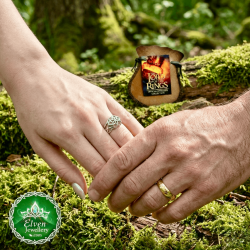
That connection between the page and the land is at the heart of what we do. New Zealand is where the films were made, and it is where our officially licensed jewellery is made too — a piece of Middle-earth, from Middle-earth.
The One Ring
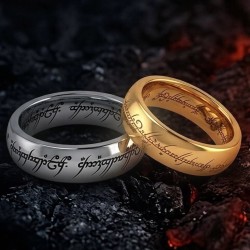
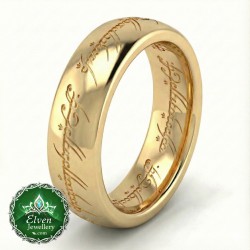
The ring that ties the whole saga together, from Bilbo's discovery in The Hobbit to Frodo's journey to Mount Doom. Made in New Zealand by the New Line Productions licence holders, and supplied with a Licence of Authenticity card.
Nenya, the Ring of Adamant
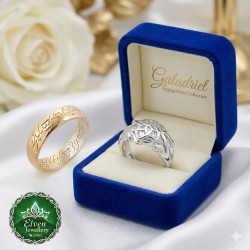
Galadriel's Ring of Power, keeper and preserver of Lothlórien — one of the Elven rings you meet as the history deepens. Made in New Zealand by the New Line Productions licence holders, with a Licence of Authenticity card.
Frequently asked questions
What order should I read the Lord of the Rings books in?
Read them in publication order: The Hobbit first, then The Fellowship of the Ring, The Two Towers, and The Return of the King. That gives you the complete core story in the smoothest way.
Should I read The Silmarillion before or after The Lord of the Rings?
After. The Silmarillion is dense mythology and is much easier to enjoy once you already know and care about Middle-earth. Reading it first is the most common reason newcomers give up.
Do I need to read The Hobbit before The Lord of the Rings?
You don't strictly have to — both stand on their own — but reading The Hobbit first is recommended. It introduces the world gently and sets up the discovery of the Ring that drives the whole trilogy.
Can I just read The Hobbit and The Lord of the Rings and stop there?
Absolutely. Those four books are a complete, self-contained story. Most readers stop there and feel they have read the best of what Tolkien published in his lifetime.
What is the chronological order of Tolkien's Middle-earth books?
In-universe, the timeline runs from The Silmarillion (the creation and elder days), through the Second Age material in Unfinished Tales, then The Hobbit, and finally The Lord of the Rings. It's best saved for a second reading rather than your first.
Where were the Lord of the Rings films made?
In New Zealand. Peter Jackson filmed the trilogy across the country's real mountains, forests, and farmland, and many of those locations — like Hobbiton — can still be visited today.
Sources
- Tolkien Gateway — Reading order
- BooksInOrder — J.R.R. Tolkien Reading Order (2026)
- Goodreads reader Q&A — The Silmarillion and The Lord of the Rings reading-order discussions
Related Products