Beren and Lúthien: The Love Story That Could Be the Next Middle-earth Film
Peter Jackson has confirmed he and Warner Bros. are in talks with the Tolkien Estate about licensing more of Tolkien's writing. One tale keeps coming up in those conversations, and it is the one Tolkien himself cared about most. It is also, quietly, a story about a jewel — and about what people will risk to hold one.
The short answer
Beren and Lúthien is a First Age love story about a mortal man and an immortal Elf-maiden who together steal a Silmaril from Morgoth's iron crown. Peter Jackson has confirmed talks with the Tolkien Estate about licensing further books, and Beren and Lúthien is widely considered the most likely candidate. Nothing is signed, and the cost is the main obstacle.
What Peter Jackson actually said
The situation is simpler than the headlines suggest. Tolkien sold the film rights to The Hobbit and The Lord of the Rings in the late 1960s. Everything else — The Silmarillion, Unfinished Tales, The Children of Húrin, The Fall of Gondolin, and Beren and Lúthien — stayed with the family. For decades that meant no adaptations, because Christopher Tolkien would not sell.
Christopher stepped down from the estate in 2017 and died in 2020. His children and grandchildren now hold those rights, and Jackson has said plainly that this younger generation is more willing to have the conversation. He has described the discussions as involving both himself and Warner Bros., which is what separates this from the usual fan speculation. These are licensing talks, not table talk.
Two cautions are worth keeping in view. Nothing has been agreed, and the price is enormous. Amazon reportedly paid more than USD 250 million in 2017 for the rights to develop The Rings of Power from the appendices alone. Buying The Silmarillion outright is almost certainly beyond reach. Licensing a single self-contained tale is a far more realistic proposition — and Beren and Lúthien is exactly that.
Why this particular story
Jackson and screenwriter Philippa Boyens have spoken warmly about this tale for years. It is not a random pick from the shelf. Of the three "great tales" of the First Age, it is the one with a clean romantic spine, a defined quest, and an ending that does not require six hours of preamble to land emotionally.
It also mattered more to Tolkien than anything else he wrote. He conceived it in 1917, after returning from the Battle of the Somme, and drew Lúthien from his wife Edith. The names Beren and Lúthien are carved on their shared headstone in Oxford. When people call this the heart of the legendarium, they are not being poetic — Tolkien treated it that way himself.
The story, briefly, for anyone who has only seen the films
Beren is a mortal man, the last survivor of his father's outlawed company. Lúthien is the daughter of Thingol, Elven King of Doriath, and Melian the Maia — half-Elf, half-divine, and the most beautiful being ever to walk the world. Beren sees her dancing in the woods of Neldoreth and that, essentially, is that.
Thingol refuses the match and sets an impossible bride-price. He does not ask for gold or service. He asks for a Silmaril — one of the three great jewels of Fëanor, set in the iron crown of Morgoth himself, in the deepest hall of his fortress. It is meant as a death sentence dressed as a condition.
Beren accepts, and this is where the story stops behaving like a fairy tale. Lúthien does not wait at home. She escapes her father's guard, follows him, and it is her power that carries the quest. She sings Morgoth's entire court to sleep. Beren cuts a single Silmaril from the crown with a knife. On the way out the wolf Carcharoth bites off his hand with the jewel still in it, and the Silmaril burns the beast from the inside as it flees howling into the wild.
Thingol asked for a jewel and got one. The jewel then destroyed his kingdom, his family and himself. Tolkien rarely wrote a cleaner warning about wanting a beautiful thing too badly.
A story about a jewel, and what it costs
Here is the part that tends to be skipped in summaries. Thingol gets his Silmaril. And in naming it as the price, he binds himself to the Curse of Mandos and the Oath of Fëanor. Fëanor's sons demand the jewel back. Melian, his own wife, tells him to surrender it and save Doriath. He refuses, because he cannot stop thinking about it.
He then commissions the Dwarves of Nogrod to reset the Silmaril into the Nauglamír, the great dwarf-necklace — combining the finest craftsmanship in the world with the most beautiful object in it. That commission gets him killed and brings down his kingdom. The most famous piece of jewellery in Tolkien's writing is also the most catastrophic.
It is worth holding that against the shape of the rest of the legendarium. The One Ring, the Silmarils, the Nauglamír, the Arkenstone — Tolkien returns again and again to the beautiful made object and the ruin that follows possession. The Three Elven Rings are the counterweight. Nenya, Vilya and Narya were never made for conquest; they were made to preserve, to heal, and to hold something good in place a little longer. Galadriel wears Nenya and refuses the One when it is offered to her freely. She had, one suspects, read the histories.
The Aragorn and Arwen connection
If the story feels familiar, that is deliberate. Aragorn and Arwen are the deliberate echo of Beren and Lúthien, thousands of years later — a mortal man, an immortal Elf, a father who sets a near-impossible condition, and a woman who chooses mortality for love. Aragorn sings the Lay of Lúthien on Weathertop in The Fellowship of the Ring. Arwen is called Undómiel, the Evenstar, and is said to resemble Lúthien returned.
This matters commercially as well as narratively. Anyone who loved the Aragorn and Arwen thread in the films is already emotionally prepared for this story. It is the same shape, told first and told larger. That is a rare thing for a studio: an unadapted property with a built-in audience who do not yet know they are the audience.
Where this sits alongside The Hunt for Gollum
Nothing here displaces what is already confirmed. The Lord of the Rings: The Hunt for Gollum is locked for 17 December 2027, directed by Andy Serkis, filming in New Zealand, with Jackson attached as producer. Beren and Lúthien is a separate and much earlier-stage prospect — no deal, no script, no date.
What the two have in common is that Jackson is clearly not finished with Middle-earth, and that New Zealand keeps being where Middle-earth is filmed. If a First Age story ever does reach the screen, there is no serious argument for shooting the woods of Doriath anywhere else.
Middle-earth was filmed here — and the jewellery is made here
This is the part of the story we get to sit inside. The forests, rivers and mountain passes that became Middle-earth on screen are the landscape this business operates in. When people picture Lúthien dancing in Neldoreth, or Beren coming down out of the highlands, they are picturing somewhere that looks a great deal like New Zealand — because that is where the visual language of Middle-earth was built.
The pieces we sell are made here too, in New Zealand, by the New Line Productions licence holders. Not a licensed-looking reproduction from an overseas workshop, but the officially licensed article, made in the country where the films were shot.
The jewel that ruled them all
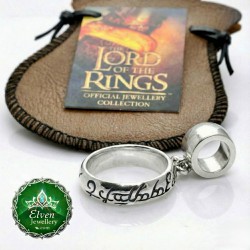
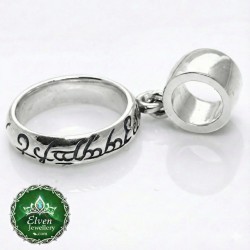
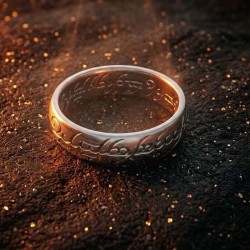
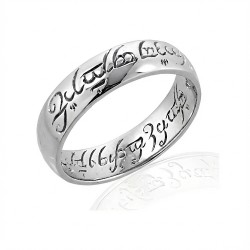
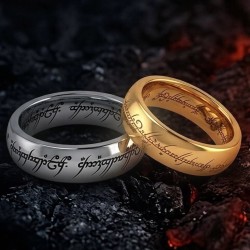
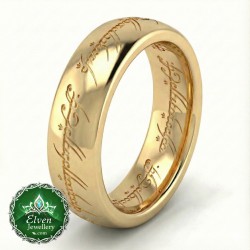
The One Ring
Tolkien's most famous made object, and the one that carries the whole weight of the possession theme running from the Silmarils onward. Available in several finishes and metals.
Made in New Zealand by the New Line Productions licence holders.
The ring that refused
Galadriel's Nenya Ring
The Ring of Adamant, worn by the Lady of Lórien — made to preserve rather than to rule, and worn by the one character who turned the One Ring down when it was offered.
Made in New Zealand by the New Line Productions licence holders.
Common questions
Is Peter Jackson making a Beren and Lúthien film?
Not yet. Jackson has confirmed that he and Warner Bros. are in discussions with the Tolkien Estate about licensing rights to more of Tolkien's books, and Beren and Lúthien is considered the most likely candidate. No deal has been announced and no film has been greenlit.
Why hasn't The Silmarillion ever been made into a film?
Tolkien sold only The Hobbit and The Lord of the Rings film rights in the late 1960s. The Tolkien Estate retained The Silmarillion and related works, and Christopher Tolkien declined to sell them during his lifetime. Rights now sit with the younger generation of the family.
What is the story of Beren and Lúthien about?
A mortal man, Beren, falls in love with Lúthien, an immortal Elf-maiden. Her father demands a Silmaril from Morgoth's crown as the price of marriage. Together they enter Morgoth's fortress, Lúthien sings his court to sleep, and Beren cuts a Silmaril free before the wolf Carcharoth bites off his hand.
Are Beren and Lúthien related to Aragorn and Arwen?
Yes, by descent and by design. Arwen is descended from their line, and their story is the deliberate template for the Aragorn and Arwen romance. Aragorn sings the Lay of Lúthien in The Fellowship of the Ring.
What is the Nauglamír?
A great dwarf-made necklace. King Thingol had the Silmaril won by Beren and Lúthien set into it, combining the finest craftsmanship in Middle-earth with its most beautiful jewel. The commission led directly to his death and the fall of his kingdom.
When is the next Lord of the Rings film coming out?
The Lord of the Rings: The Hunt for Gollum is scheduled for 17 December 2027, directed by Andy Serkis and filming in New Zealand. Any Beren and Lúthien project would come well after that, and only if rights are agreed.
Sources
- Deadline — Peter Jackson interview on Tolkien Estate licensing discussions
- Screen Rant — coverage of Jackson's comments on adapting further Tolkien works
- CBR — analysis of First Age stories available for adaptation
- Tolkien Gateway — Of Beren and Lúthien and the Quest for the Silmaril
- J.R.R. Tolkien, The Silmarillion, ch. 19; Beren and Lúthien (ed. Christopher Tolkien, 2017)
Related Products