The official Lord of the Rings jewellery at elvenjewellery.com is made in New Zealand by the New Line Productions licence holders. I have been selling it for over a decade. I have been to Hobbiton. I have driven past Edoras. I have walked through the Pelorus River gorge, where the barrel escape was filmed. But the location that means the most to me personally is twenty minutes from my holiday home on the southern shores of Lake Taupo: the volcanic landscape of Tongariro National Park, where Peter Jackson brought Mordor to life on screen, and where I have walked the same ground that became the dark land in the films. This is the story of what it means to sell Middle-earth jewellery from the country where Middle-earth was made, told from inside the landscape itself.
People ask me sometimes what makes elvenjewellery.com different from any other Lord of the Rings jewellery retailer. The answer I usually give is about the product: officially licensed, made in New Zealand, by the New Line Productions licence holders, solid silver and gold rather than plated, custom-made to your size. All of that is true, and all of it matters. But there is another answer that is harder to put into words, and it has to do with the view from my holiday home.
On a clear evening, sitting on the deck overlooking Lake Taupo, you can see Mount Ngauruhoe on the southern horizon. The conical peak, the steam that drifts from the summit vents, the way the last light catches the slopes differently depending on the season: this is the view from my garden. Most people in the world know that mountain as Mount Doom. I know it as the thing I look at when I have my morning coffee.
The Walk Through Mordor
I have walked the Tongariro Alpine Crossing, the Great Walk that passes through the heart of what became Mordor on screen. It is a full day: nineteen kilometres of volcanic terrain, past steaming vents and across ancient lava fields, around the base of Ngauruhoe and through the South Crater and the Red Crater, with the Emerald Lakes burning blue-green in the volcanic landscape below the ridge.
What strikes you on that walk is not the dramatic moments. The dramatic moments are there, and they are extraordinary. It is the ordinary quality of the landscape that stays with you. The black rock under your feet. The smell of sulphur on the wind. The way the sound disappears when the wind drops and there is nothing but the creak of your boots on the scree. Tolkien described the approaches to Mordor as a landscape that opposed the people walking through it: not just hostile but actively resistant, the land itself aligned with the shadow. The terrain around Ngauruhoe does not need CGI to produce that feeling. It is already there.
The stark, volcanic landscape of Whakapapa Ski Field on Mount Ruapehu became Mordor in several key scenes, including the epic battle where Isildur defeats Sauron at the end of the Second Age. I have stood on that ground. The jagged lava formations and the black rock slopes are completely unchanged from how they appeared in the film. The CGI added scale and darkness, and the Eye of Sauron. It did not add to the desolation. That was already there, waiting to be used.
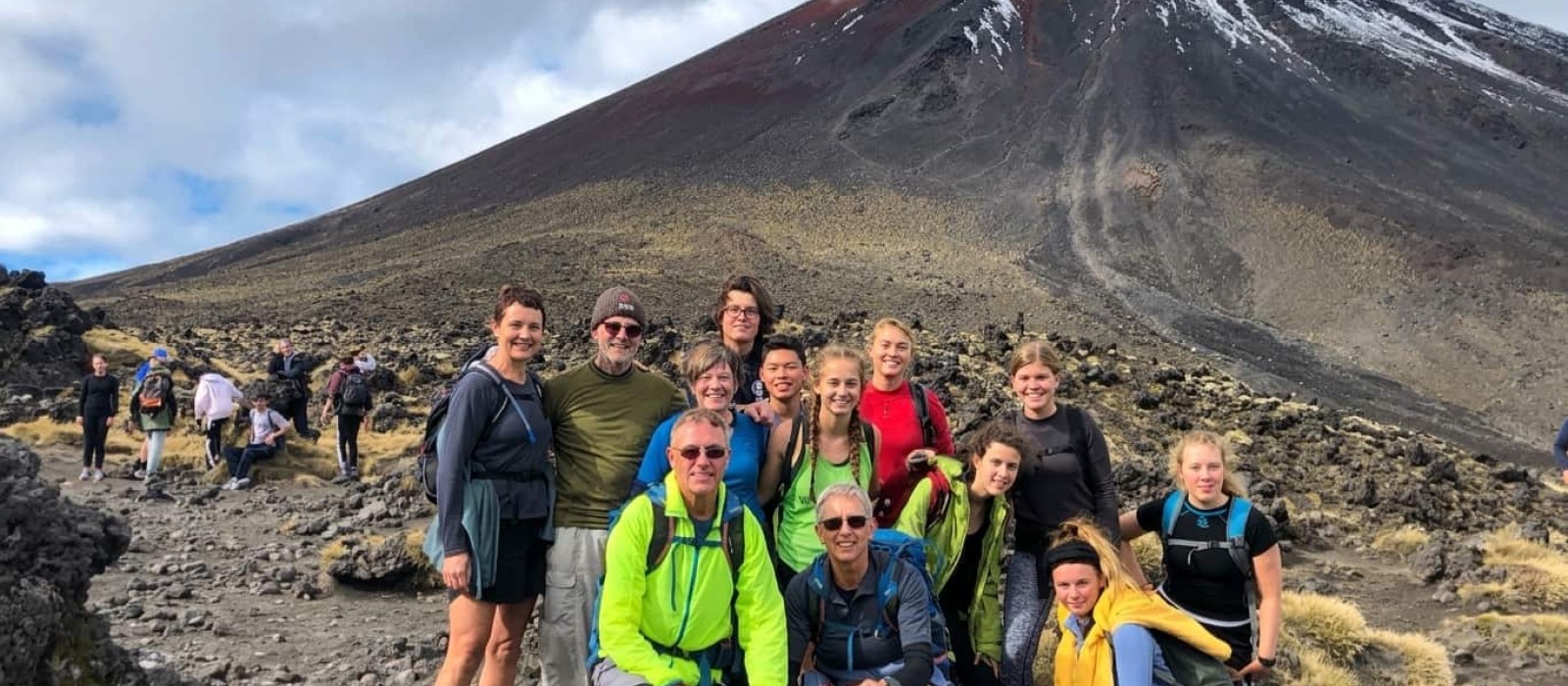
I have also led a group of Rotary exchange students across the Tongariro Alpine Crossing, specifically so they could "see and feel" the landscape of Middle-earth for themselves. Students from different countries, who had grown up with these films, walking the actual ground. The photograph above was taken at the base of Ngauruhoe with the mountain rising directly behind us. It is not a film still. It is not AI-generated. These are images that Warner Brothers can not make claim to. It is a group of people standing in the place where Mordor was filmed, on a clear New Zealand day, with the black lava rock and the snow and the red scoria of the upper slopes exactly as they appear in the films. No CGI required.
Gollum's Pool
One of the specific locations I wanted to find was the Forbidden Pool, the scene in The Two Towers where Gollum is catching fish in a pool at night while Faramir's Rangers watch from above, before Frodo reluctantly agrees to let Faramir's men capture him. It is one of the most quietly devastating scenes in the trilogy: Frodo, who has promised Gollum protection, betrays him because he has no choice, and Gollum's trust turns to suspicion in a single look.
The Forbidden Pool was filmed across two locations in Tongariro National Park: the scenes where you see Gollum in the water were shot at Tawhai Falls, while the waterfall visible in the same scene was shot at Mangawhero Falls. Tawhai Falls, which most people know simply as Gollum's Pool, is a short walk from the main road through the park. The falls drop into a dark, circular pool surrounded by native bush, and the light on the water has exactly the quality of the scene in the film: cold, still, slightly otherworldly. You stand at the edge and look into that pool and you understand why Peter Jackson chose it.
I have been there several times. The pool does not change. The falls drop in the same way in every season. It looks like the place Gollum would fish. It looks like the place a creature who had been living in dark underground water for five centuries would feel, briefly, at home.
The Battle Plains of Mordor
Further into the park, away from the popular Crossing trail, the landscape becomes something else entirely. The Rangipo Desert, with its barren, windswept terrain, became the setting for Mordor's battle plains and Orc army marches. Driving the Desert Road that passes along the eastern edge of the park, you see what this means: a vast flat volcanic plain, almost no vegetation, the colour of ash, with the mountains rising on the western side and nothing between you and the horizon. It is one of the most unusual landscapes in New Zealand, and one of the least visited, because it is not pretty in the conventional sense. It is bleak and huge and very old.
This is where the Orc armies marched in the films. This is where the armies of Mordor assembled before the final battles. The CGI filled it with hundreds of thousands of soldiers. The landscape required no assistance. It already looked like a place where darkness would gather its forces.
I live near all of this. Ten minutes from the southern shore of Lake Taupo, thirty minutes from the entrance to the national park, an hour from Tawhai Falls. When people ask me about New Zealand and Middle-earth, I can say with complete honesty that I know what it looks like from the inside.
Lake Taupo — The Centre of It All
Lake Taupo sits at the geographic centre of the North Island, formed by a supervolcanic eruption roughly 1,800 years ago that was one of the largest eruptions in human history. The lake itself is enormous: 616 square kilometres, the largest lake in New Zealand, fed by rivers that drain the slopes of the Tongariro ranges. At its southern end, where my holiday home sits, the water is cold and clear and the light changes across it hour by hour in a way that is genuinely difficult to describe to someone who has not seen it.
Taupo is the hub from which everything in this part of the North Island radiates. Hobbiton at Matamata is two hours north. The Waikato River that became parts of the Anduin runs from the lake's northern outlet. The Tongariro National Park begins effectively at the lake's southern shore. The Rangipo Desert is twenty minutes by car from the southern end of the lake. The Tawhai Falls and Mangawhero Falls are forty minutes from my front door.
I did not choose the holiday home because of the Lord of the Rings connections. I chose it because the lake, the mountain and the landscape are extraordinary by any measure. The Lord of the Rings connection was already there, woven into the geography, because Peter Jackson had looked at the same landscape and understood what Tolkien was describing.
Why New Zealand Is Middle-earth
There is a question that comes up in interviews with Peter Jackson and his team about why New Zealand worked as Middle-earth when so many other countries were considered. The answer is always variations of the same thing: the landscape had a quality of being somewhere that existed outside of normal time. The forests were old in a different way from European forests. The volcanic terrain was active rather than merely geological. The light was extraordinary. The scale was right: not the overwhelming scale of North American wilderness, which dwarfs human figures to insignificance, but a landscape that felt inhabited and ancient simultaneously, that you could imagine people walking through rather than being lost in.
All of that is true. But walking through it rather than watching it is different again. The Tongariro Alpine Crossing on a clear day, with the mountain above you and the volcanic plateau stretching ahead, does not feel like a film location you are visiting. It feels like a landscape that was always this way and will always be this way, that the films happened to use rather than created. The official jewellery made here by the licence holders carries that quality with it. It was made in the country where the landscape itself is the reason the films were what they were.
When I photograph the Key to Erebor in front of Ngauruhoe from the edge of my holiday home grounds, I am not recreating a film scene. I am standing in my own back yard, in the landscape I know the way you know somewhere you have walked dozens of times, taking a photograph that happens to contain both the mountain and the jewellery made in its shadow. That is the provenance story of elvenjewellery.com, told from the only angle that is entirely mine to tell.
The Official Collection — Made Here
The official Lord of the Rings jewellery at elvenjewellery.com is made in New Zealand by the New Line Productions licence holders. Not inspired by. Not overseas copies. The officially licensed pieces, made in the country where Gollum's Pool is a waterfall forty minutes from my house, where Mount Doom is visible from my deck, where the Battle Plains of Mordor are a forty-minute drive on the Desert Road. Made in Middle-earth. Literally.
One Ring — Sterling Silver
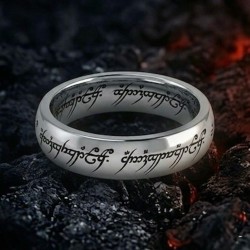
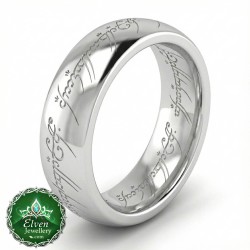
The ring whose inscription Gandalf read by firelight. The ring Frodo carried across the landscape of Mordor that you can walk today in Tongariro National Park. Solid 925 sterling silver, custom-made to size. Made in New Zealand by the New Line Productions licence holders.
Key to Erebor
The key to the secret door in the Lonely Mountain. The pendant I have photographed in front of Mount Ngauruhoe, ten minutes from my holiday home on Lake Taupo. Solid 925 sterling silver. Made in New Zealand by the New Line Productions licence holders.
My Precious Ring
The ring Gollum called his own. The creature whose pool I have visited at Tawhai Falls, forty minutes from my front door. "My Precious" engraved outside. Official Hobbit logo inside. Solid 925 sterling silver. Made in New Zealand.
Visiting the Tongariro Locations — Practical Information
If you are planning a visit to the Tongariro filming locations, Taupo is the natural base. It is an hour from the park entrance and two hours from Hobbiton at Matamata, making it possible to cover both major location clusters in a long weekend.
The Tongariro Alpine Crossing departs from the Mangatepopo car park on the western side of the park and ends at the Ketetahi car park on the north side. It is a one-way walk requiring a shuttle to return to your starting point. Shuttle bookings are essential in summer. Allow a full day: the walk takes six to eight hours at a moderate pace and the weather can change rapidly. The crossing passes within sight of Mount Ngauruhoe throughout and through the volcanic terrain used for multiple Mordor scenes.
Tawhai Falls, Gollum's Pool, is a fifteen-minute walk from the car park on State Highway 48 near Whakapapa Village, entirely flat and suitable for all fitness levels. It is one of the most accessible filming locations in the entire park and entirely free to visit.
The Desert Road, State Highway 1 along the eastern side of the park, passes the Rangipo Desert and offers views of the Mordor battle plain landscape without requiring any walking. It is also one of the most dramatically beautiful drives in the North Island, particularly at dusk when the light on the volcanic plateau turns the landscape extraordinary colours.
Sources and Further Reading
- Brodie, Ian: The Lord of the Rings Location Guidebook Extended Edition, HarperCollins: the definitive guide to New Zealand filming locations
- Tongariro National Park: doc.govt.nz — Department of Conservation visitor information including Tongariro Alpine Crossing details
- Tolkien Gateway: tolkiengateway.net
Related Products