Samwise Gamgee, born TA 2980 in Hobbiton, the Shire, is by any honest accounting the hero of The Lord of the Rings. Not the Ring-bearer: that is Frodo. Not the King returned: that is Aragorn. Not the wizard who held the bridge: that is Gandalf. Sam is the person who carries Frodo when Frodo cannot carry himself, who plants the seed that restores the Shire, who refuses the Ring when it is offered to him in the most practical and complete way possible, who comes home and builds a life so full and good that Tolkien gives him the last word in the entire story. He is a gardener from Hobbiton who walked to the edge of the world and chose, every day, to keep walking.
Tolkien said this about Sam explicitly. In a 1956 letter he wrote: "Sam is the chief hero." Not Frodo. Not Aragorn. Sam. The hobbits call the book The Lord of the Rings, but "if it is to be called by a person's name it must be called Sam's Tale."
Tolkien meant it. Sam is the only member of the Fellowship who completes the quest, returns home, and builds something with what he learned. Gandalf sails West. Frodo sails West. Aragorn becomes a king. Legolas and Gimli eventually depart. Sam comes home, marries Rosie Cotton, has thirteen children, serves as Mayor of the Shire for seven terms, and plants a garden so extraordinary that people come from across the Shire to look at it. He is the story's most complete human being, and the one Tolkien most clearly loved.
Who Sam Was Before the Quest
Samwise Gamgee was born in TA 2980, the son of Hamfast Gamgee, known as the Gaffer, a gardener of some repute in Hobbiton who had tended the gardens at Bag End for years. Sam grew up in Number Three, Bagshot Row, at the foot of the Hill below Bag End, within sight and smell of Bag End's gardens his entire childhood.
His education was broader than most hobbits of his station. Bilbo Baggins, who lived above him and whose gardens his father tended, had a reputation for filling young hobbit heads with Elvish nonsense, and Sam was particularly susceptible. He learned to read, which was unusual for a hobbit gardener. He learned the names of Elvish things. He learned the poems that Bilbo and Frodo recited by the fire on autumn evenings. He grew up with a head full of Elves and dragons and distant mountains, and a practical hobbity conviction that such things, however wonderful, were not really for the likes of Sam Gamgee.
Tolkien drew Sam's character partly from his own experience of the enlisted men under his command at the Battle of the Somme in 1916: the working-class soldiers from the English Midlands whose patience, practicality, courage, and loyalty he found more moving than almost anything else in his life. Sam's speech patterns, his habit of saying "Mr. Frodo," his gentle self-deprecation and his absolute reliability under pressure: these are all drawn from men Tolkien knew in the trenches of the First World War, rendered into Hobbit and placed in the most important support role in the history of Middle-earth.
The Quest — Carrying Frodo When Frodo Could Not Walk
Sam was recruited into the quest almost accidentally. Gandalf, overhearing him eavesdropping on a conversation with Frodo about the Ring, decided that the simplest solution was to bring him along. Sam was not asked if he wanted to go. He was told he was going. He packed his pots and pans and his rope and his cooking herbs and his box of soil from the Shire, and he went.
What he did on the quest defies summary. He carried Frodo across the final approaches to Mount Doom when Frodo had nothing left. He fought Shelob with a sword he barely knew how to use, alone, in the dark, to reach a body he thought was dead. He wore the Ring for a brief period after Frodo was captured and felt its pull and put it down again, with a clarity that reflected exactly what Tolkien had always said about Sam: that he wanted a garden, not power, and the Ring had nothing to offer a person with that kind of desire.
He also cooked. Throughout the journey, in situations where cooking was absurd, Sam cooked. He found herbs. He thought about potatoes. He asked Gollum to catch fish and thought about how to make the best of them. This is not comic relief. This is Tolkien's point about what sustains people on impossible journeys: not heroism in the abstract, but the specific, recurring insistence on small pleasures in the face of enormous darkness. Sam's cooking is his refusal to let the quest consume everything. It is the Shire carried in a set of pots and pans all the way to the foot of Mount Doom.
The Ring — Why Sam Could Refuse It
Sam wore the One Ring for a brief period after Frodo was stung by Shelob and Sam believed him dead. He took it to complete the quest himself. He was the Ring-bearer, briefly, alone in the Pass of Cirith Ungol with no one to tell him what to do.
He felt its power. He had a vision of himself as a great garden-lord: a figure who with the Ring could make the wastelands of Mordor bloom, who could water and plant where nothing had grown, who could tend the whole world rather than a small plot in Hobbiton. It was, Tolkien says, the Ring's attempt to work on Sam through the deepest desire it could find in him.
Sam considered it for a moment. Then he put it down. He said to himself: "I am not going to be great. That is not for Sam Gamgee."
This is the most important moment of Sam's story. It is not a failure of imagination or a failure of ambition. It is a complete and clear-eyed self-knowledge that was not available to any other Ring-bearer: the understanding that he was Sam Gamgee, gardener, and that what he wanted was his garden, his gaffer, Rosie Cotton, and his friend Frodo. Everything the Ring was offering was a distortion of something genuinely good in him, and he recognised the distortion and refused it. The Ring had nothing for a person who wanted only what they already had.
Mount Doom — The Last Carry
The most physically specific act of heroism in The Lord of the Rings is not Aragorn on the Pelennor Fields or Gandalf on the Bridge of Khazad-dûm. It is Sam Gamgee picking up Frodo Baggins on the slopes of Mount Doom and carrying him on his back up the Mountain because Frodo has no more walking left in him.
He says: "I can't carry it for you, but I can carry you."
He cannot destroy the Ring. That is Frodo's burden and the Ring's own treachery in the end. But he can carry the person who must carry the Ring, and he does, for as long as it takes, up the side of a volcano, until the job is finished.
Tolkien never uses the word heroic about this. He does not need to. The scene speaks entirely for itself.
After the War — The Shire Restored
Sam came home to a Shire that Saruman's occupation had damaged: trees felled, gardens destroyed, the mill replaced with a noisier, uglier industrial structure, Bag End being used as Sharkey's headquarters. He was furious. He was also immediately practical about it.
He used the box of Lothlórien soil and the mallorn seed that Galadriel had given him as a parting gift. He planted the seed where the Party Tree had stood. He scattered the soil across the Shire's damaged fields. Tolkien writes that the following year was the best the Shire had known in living memory: the crops were better, the flowers more vivid, the children born that year unusually healthy and strong. Sam did not know quite what the soil would do. He trusted Galadriel's gift and planted it and let it work.
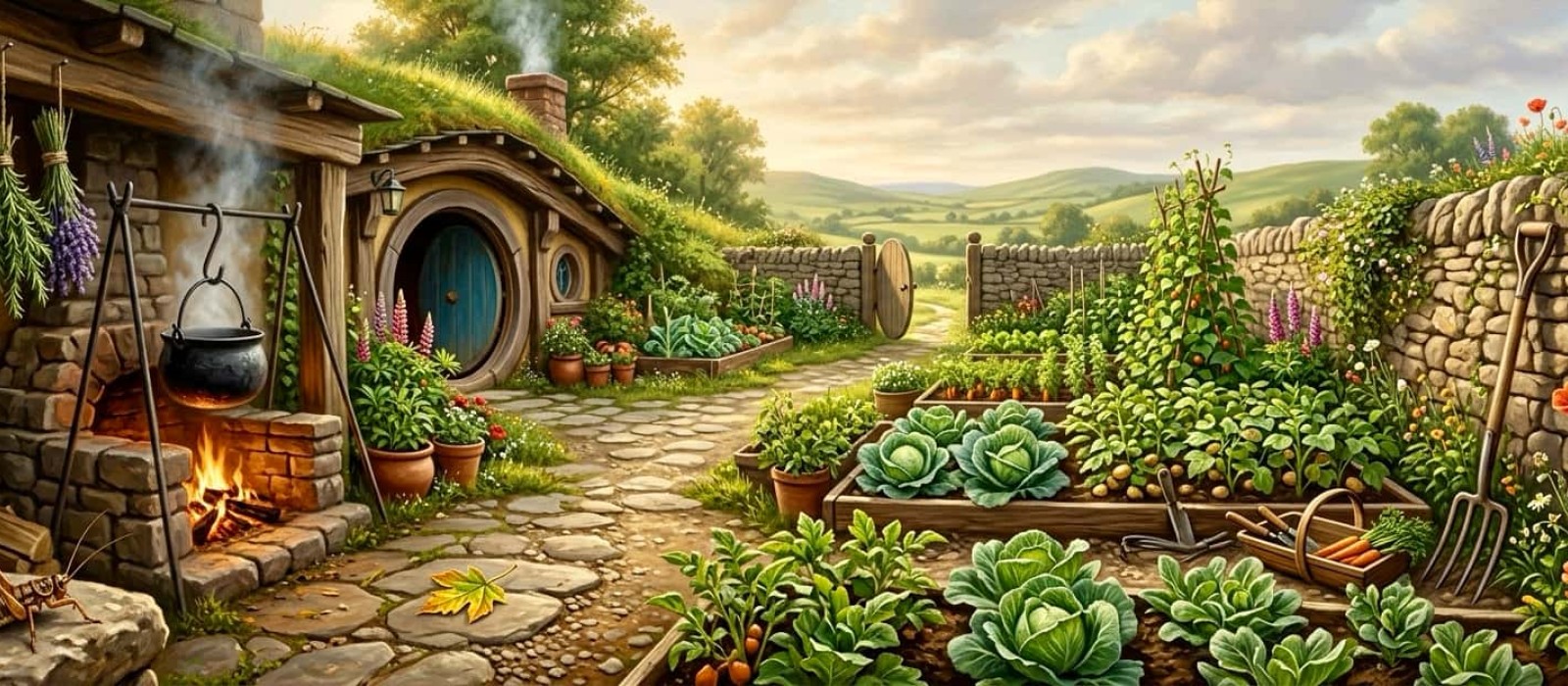
On the Hill, where the Party Tree had been, a young mallorn grew in the spring, its leaves gold in autumn and silver in winter, the only mallorn tree in Middle-earth outside Lothlórien. It became the most famous and beloved tree in the Shire. Sam's garden at Bag End, described by Tolkien as the finest in the region, became a place people visited specifically to see it. He had carried Lothlórien home in his pocket and planted it in Hobbiton, and it grew.
The Life Sam Built
Sam married Rosie Cotton on May 1, TA 3020, the first anniversary of Aragorn's coronation. They moved into Bag End together, with Frodo still living there until his departure to the West in September TA 3021. They had thirteen children. The eldest was Elanor, born in TA 3021, named for the golden flower of Lothlórien. Sam described her as "more beautiful than anything I have seen, except in Elvish visions." She was born with golden hair uncommon among hobbits, which her father always believed was a gift from her birth year and the mallorn's flowering.
Sam served as Mayor of the Shire for seven consecutive terms, from FA 6 to FA 41. He was, by universal agreement, the finest Mayor in living memory: practical, fair, unhurried, and deeply acquainted with what ordinary hobbit life required from those who governed it. He served as Deputy Mayor under the previous holder of the office while learning the role before taking it over himself, with the same quiet thoroughness he applied to everything.
He was also, in the Fourth Age, the holder of the Red Book of Westmarch: the manuscript that Tolkien presents as the source document for both The Hobbit and The Lord of the Rings, containing Bilbo's and Frodo's accounts and Sam's own continuation of them. He wrote in it. He passed it to Elanor when she was old enough. It is, in Tolkien's conceit, the reason the story exists at all.
The Last Page — To the Grey Havens
Tolkien gives Sam the final line in the entire story of The Lord of the Rings. When Frodo, Gandalf, Galadriel, Bilbo, and Elrond sailed West on September 29, TA 3021, Sam watched them go from the Grey Havens, turned his horse for home, and said: "Well, I'm back."
That is the last line of the book. Not a speech. Not a declaration. Three words, spoken to the house and the children and the garden that he had come home to. Tolkien ends the greatest epic in English fantasy with the most domestic statement imaginable, spoken by a gardener who walked to the end of the world and back and wanted, above everything else, to be home.
In Appendix B, Tolkien records that in FA 61, after Rosie died, Sam entrusted the Red Book to Elanor and rode west to the Grey Havens. He was the last of the Ring-bearers. As a former bearer, he too had been granted the right of passage. He sailed West. He was the last.
Sean Astin and Shadow of the Past — Sam Returns
Sean Astin is reportedly set to return as Sam in The Lord of the Rings: Shadow of the Past, the film announced on Tolkien Reading Day 2026 and written by Stephen Colbert, Philippa Boyens, and Peter McGee. The film has a dual timeline structure: older Sam, Merry, and Pippin retracing the first steps of their journey, set fourteen years after Frodo sailed West, while Sam's daughter Elanor uncovers a secret about why the War of the Ring was nearly lost before it began.
The casting has a remarkable real-world resonance. Sean Astin's daughter Alexandra played Elanor Gamgee in The Return of the King as an infant. If Elanor is now a young adult and a central character in Shadow of the Past, the possibility of Astin's real daughter returning as his character's daughter, twenty-plus years later, is an extraordinary piece of casting symmetry that the filmmakers will surely be considering. Nothing has been confirmed. But the logic is entirely there.
Sam returning, older, to walk the road again: Tolkien would have approved. He was always the one who came back.
The Official Collection — Made in New Zealand
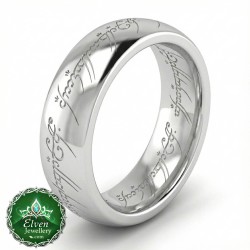
The ring Sam carried briefly on the slopes of Cirith Ungol, held for a time, and put down freely, is the central piece of the official collection at lotrjewelry.com. Made in New Zealand by the New Line Productions licence holders, in the country where every scene of Sam's journey was filmed and where Shadow of the Past will be made.
One Ring — Sterling Silver
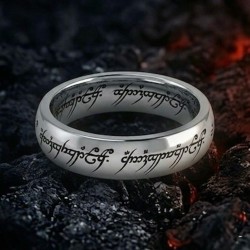
The ring Sam carried briefly and put down because he wanted a garden, not power. The ring Tolkien said Sam was the hero of. Solid 925 sterling silver, Comfort Curve, custom-made to size. Made in New Zealand by the New Line Productions licence holders.
Shop One Ring →My Precious Ring
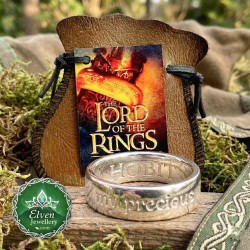
"My Precious" engraved outside. Official Hobbit logo inside. The ring Sam could feel pulling at him in Cirith Ungol and set aside because he was Sam Gamgee and wanted his garden. Solid 925 sterling silver. Made in New Zealand.
Shop My Precious →Sting Pendant
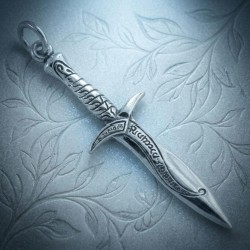
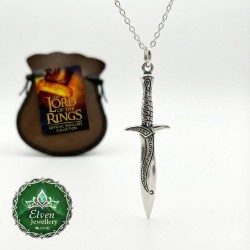
The blade Sam used to fight Shelob alone in the dark, in a tunnel, not knowing if Frodo was alive, to reach his friend. Solid 925 sterling silver, 60mm. The dagger that glowed blue near Orcs. Made in New Zealand by the New Line Productions licence holders.
Shop Sting →Frequently Asked Questions About Samwise Gamgee
Is Sam the true hero of Lord of the Rings?
Tolkien said yes. In a 1956 letter he wrote: "Sam is the chief hero." He clarified that although the story is called The Lord of the Rings, "if it is to be called by a person's name it must be called Sam's Tale." Sam is the only member of the Fellowship who completes the quest and then comes home and builds something with what he learned. He plants the Shire's most beautiful garden, restores the land with Galadriel's gift, raises thirteen children, serves seven terms as Mayor, and ends his days sailing to the West as the last of the Ring-bearers. His arc is the most complete in the entire story.
Why could Sam resist the One Ring?
The Ring worked by amplifying desire. Sam's deepest desire was a garden, his friends, and his home. When he wore the Ring briefly in Cirith Ungol, he had a vision of himself as a great garden-lord who could make the wastelands bloom. He recognised it as a distortion of something genuinely good in him and refused it, saying to himself: "I am not going to be great. That is not for Sam Gamgee." The Ring had nothing to offer a person who already wanted only what he had. His strength against it was not heroic willpower but complete self-knowledge.
What did Sam do after the War of the Ring?
Sam married Rosie Cotton on May 1, TA 3020. They moved into Bag End and had thirteen children, the eldest being Elanor, born in TA 3021. Sam restored the Shire using the box of Lothlórien soil and the mallorn seed Galadriel had given him. He served as Mayor of the Shire for seven consecutive terms. He held and continued writing in the Red Book of Westmarch, the manuscript that contains Bilbo's and Frodo's accounts of their adventures. In FA 61, after Rosie died, he rode to the Grey Havens and sailed West as the last of the Ring-bearers.
Who is Elanor Gamgee?
Elanor Gamgee was Sam's eldest daughter, born in TA 3021 and named for the golden flower of Lothlórien. Tolkien describes her as unusually beautiful, with golden hair uncommon among hobbits. She became Maid of Honour to Queen Arwen and married Fastred of Greenholm. Sam entrusted the Red Book of Westmarch to her in FA 61 before sailing West. In Peter Jackson's The Return of the King, the infant Elanor was played by Alexandra Astin, Sean Astin's own daughter. In The Lord of the Rings: Shadow of the Past, Elanor is expected to be a major character as a young adult, investigating a buried secret about the War of the Ring.
What is the last line of Lord of the Rings?
The last line is Sam's, spoken after watching Frodo sail West from the Grey Havens and turning his horse for home: "Well, I'm back." It is one of the most deliberate endings in English literature: the entire epic concluded in three words, by a gardener returning to his house and his family after everything that had happened. Tolkien chose to end the greatest fantasy novel of the twentieth century not with a declaration of victory or a grand departure but with the most ordinary homecoming imaginable. It belongs entirely to Sam.
Sources and Further Reading
- The Lord of the Rings: all three volumes, J.R.R. Tolkien: primary source for Sam's complete story from Bag End to the Grey Havens
- The Lord of the Rings, Appendix B and C: "The Tale of Years" and "Family Trees" — Sam's dates, marriages, children, and his role as Mayor and Red Book keeper
- The Letters of J.R.R. Tolkien, ed. Humphrey Carpenter: Letter 131 — Tolkien's statement that "Sam is the chief hero" and his account of what he drew on in creating Sam's character
- GeekTyrant, April 2026: Sean Astin reportedly set to return as Sam in Shadow of the Past
- Tolkien Gateway: tolkiengateway.net
Related Products