Of all the casting in The Hunt for Gollum, Kate Winslet's is the most intriguing. The returning cast are all known quantities, playing characters audiences have spent twenty years with. Winslet is new to Middle-earth, playing a character whose name appears nowhere in Tolkien's text and whose identity Warner Bros. has not confirmed beyond a single word: Marigol.
That single word has generated more fan analysis than any other element of the film's announcement. And the analysis points, with surprising consistency, toward the same conclusion.
Who Is Marigol? The Name as Evidence
The name Marigol is new to the Lord of the Rings universe in one sense and deeply embedded in it in another. The embedded part is the suffix. Sméagol. Déagol. Gollum. These are all names from the same community, the same people, formed on the same phonological pattern. The suffix "gol" recurs across all three. Marigol fits that pattern exactly.
It is one letter short of Marigold, which is indeed a hobbit name in Tolkien's writing: Samwise Gamgee has a younger sister named Marigold in the appendices. But the deliberate dropping of the final letter, producing "gol" at the end, is almost certainly intentional on the part of the filmmakers. It places Marigol phonologically and culturally in the same community as Sméagol and Déagol, the Stoor river-hobbits of the Gladden Fields.
The dominant theory among Tolkien scholars and fans is that Marigol is Sméagol's grandmother: the matriarch of the community, referenced twice in Tolkien's published text but never named.
The Grandmother in Tolkien's Text
In "The Shadow of the Past," the second chapter of The Fellowship of the Ring, Gandalf tells Frodo the story of Gollum's past as he has pieced it together from research and from Gollum's own account. He describes what Gollum told him about how the Ring came to him.
Gollum claimed it was his birthday present, Gandalf reports, and said it came from his grandmother, "who had lots of beautiful things of that kind." Gandalf's comment on this is precise: "I have no doubt that Sméagol's grandmother was a matriarch, a great person in her way, but to talk of her possessing many Elven-rings was absurd, and as for giving them away, it was a lie."
The grandmother is described as a matriarch, a great person, someone of standing in the community. She is referenced again in the "Riddles in the Dark" chapter of The Hobbit, where Gollum recalls living with her "ages and ages before." She is clearly a figure of importance in Sméagol's memory: the person he was closest to in the life he had before the Ring consumed him, the last human connection he retained in the fragments of his history.
She is never named. Marigol is a name that fits every constraint: phonologically appropriate for a Stoor hobbit, positioned as a matriarchal figure, connected to the Gladden Fields community where Sméagol was born. If the filmmakers have given her this name, it represents exactly the kind of careful expansion of Tolkien's lore that the best additions to the franchise have always achieved: filling a gap that exists in the text, using material Tolkien provided, in a way that deepens rather than contradicts the source.
Why the Grandmother Matters to the Story
Including Sméagol's grandmother in the film is not merely a way to add a prominent cast member to a story that otherwise focuses on Gollum's pursuit of the Ring. It changes the emotional architecture of the film in a fundamental way.
The Hunt for Gollum is described by Philippa Boyens as "quite an intense story" with "a strong psychological, interior story" at its heart. Understanding Gollum means understanding Sméagol, and understanding Sméagol means understanding what he was before the Ring found him. His grandmother is the last figure from that life who appears in his memory. She is the person he was when he was still a person.
If Marigol appears in flashback sequences showing Sméagol's life before the Ring, she provides the film with exactly what Gollum's story has always lacked on screen: the person he was before corruption, seen through the eyes of someone who loved him. That is an extraordinarily powerful dramatic position, and it would explain both why the role required an actor of Winslet's calibre and why it took Serkis and Jackson considerable persuasion to secure her. A few scenes of a supporting character would not have needed that level of effort. A role that is the emotional centre of the film's flashback structure would.
Kate Winslet and Peter Jackson — A Previous Collaboration
Winslet's casting is not her first connection to Peter Jackson. In 1994, she played Juliet Hulme in Jackson's Heavenly Creatures, the film based on the 1954 Parker-Hulme murder case in Christchurch, New Zealand. The film was Jackson's international breakthrough and Winslet's feature film debut, the role that launched her career before Titanic made her a global star three years later.
Their reunion on Middle-earth, thirty-three years later, carries the particular weight of two people who have both reached the heights of their respective crafts since they last worked together. Jackson has directed six films that have collectively grossed billions at the global box office and won seventeen Academy Awards. Winslet has won one Academy Award herself, been nominated for eight, and built a body of work across drama, comedy, and blockbuster cinema that represents one of the most varied careers of her generation.
Reports indicate the creative team spent most of 2025 persuading Winslet to take the role. The persuasion requiring that much effort suggests the role was genuinely demanding in terms of what it required of her, rather than simply a cameo or an easy commercial opportunity. She accepted. She relocated to New Zealand for filming. Whatever Marigol is, Winslet clearly believed she was worth the commitment.
Kate Winslet's Career
Kate Elizabeth Winslet was born October 5, 1975 in Reading, Berkshire, England. Her father is a working-class actor and her mother worked in a tea shop while also acting on the side. She trained at the Redroofs Theatre School and began working as a child actor in television before Heavenly Creatures in 1994 launched her film career at 19.
Her subsequent career is among the most varied of any actor of her generation. Sense and Sensibility (1995) brought her first Academy Award nomination. Titanic (1997) made her one of the most recognisable actors in the world. Eternal Sunshine of the Spotless Mind (2004) demonstrated range that pure stardom could not have predicted. Little Children (2006) and The Reader (2008, which won her the Oscar for Best Actress) cemented her reputation for serious dramatic work. Mare of Easttown (2021, Emmy Award) showed that television could be as compelling a medium for her as film. Avatar: Fire and Ash (2025) demonstrated comfort with large-scale franchise productions.
She is, in short, exactly the kind of actor the role of Sméagol's grandmother requires: someone with the technical depth to play emotional complexity in a character who may appear in only a handful of scenes, and the presence to make those scenes carry the weight the film needs them to carry.
What Marigol's Inclusion Means for the Stoors
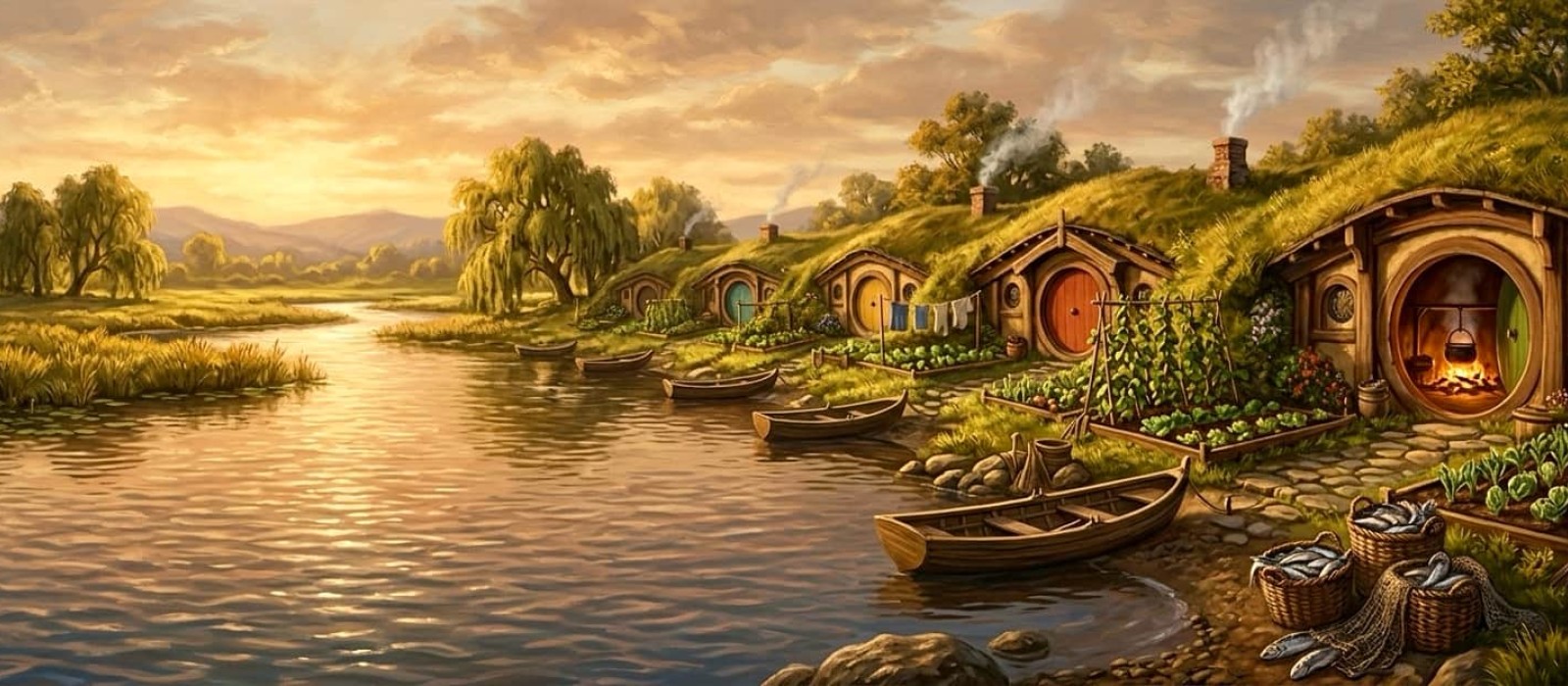
If Marigol is Sméagol's grandmother and the film shows the Gladden Fields community in any detail, it will be the first time the Stoor hobbits have been depicted on screen in the Peter Jackson film universe. The Stoors were one of the three original breeds of hobbit, living along the river-lands east of the Misty Mountains, skilled in fishing and boating, and constituting the people from whom Sméagol and Déagol both came.
This is a significant expansion of the world. Amazon's The Rings of Power introduced its own version of the proto-hobbit peoples in its second season, set thousands of years earlier. The Hunt for Gollum would be showing the Stoors in the Third Age, in the specific community where the Ring drama began, giving the tragedy of Gollum's fall a social and cultural context that even Tolkien's text only gestures at.
Marigol as matriarch of that community would be its centre of gravity: the person whose authority and warmth defined what the Gladden Fields hobbits were before Sméagol murdered Déagol and the Ring's corruption began spreading through everything it touched. That is not a supporting role. That is the moral foundation of the entire backstory.
The Official Collection — Made in New Zealand
The ring that Sméagol killed to possess, that he called his precious for five centuries, that his grandmother may have held on the day it entered the story, is the central piece of the official collection at lotrjewelry.com. Made in New Zealand, where Kate Winslet is filming in 2026, by the New Line Productions licence holders.
My Precious Ring
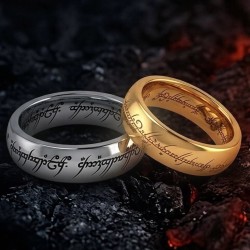
"My Precious" is engraved outside. Official Hobbit logo inside. The ring Sméagol killed Déagol for, kept for five centuries, was lost to Bilbo in the dark. The ring his grandmother may have held before it found him. Solid 925 sterling silver. Made in New Zealand.
Shop My Precious →One Ring — Sterling Silver
The One Ring, beginning the journey that would take it from the Gladden Fields to the Crack of Doom across nearly six centuries. Solid 925 sterling silver, Comfort Curve, custom-made to size. Made in New Zealand by the New Line Productions licence holders.
Shop One Ring →One Ring — Gold
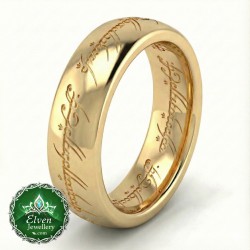
Solid 9ct or 18ct gold, as Tolkien described it: a ring of fine gold. The ring as it was at the Gladden Fields, newly lost, waiting to be found. Custom-made in New Zealand by the New Line Productions licence holders.
Shop One Ring Gold →Frequently Asked Questions About Kate Winslet and Marigol
Who is Marigol in The Hunt for Gollum?
Marigol is a new character created for the film, played by Kate Winslet. Warner Bros. has not confirmed her role beyond her name. The dominant fan theory, supported by the name's phonological similarity to Sméagol, Déagol and Gollum, is that she is Sméagol's grandmother, who is referenced twice in Tolkien's text as a matriarch of the Stoor hobbit community but never named. Gandalf describes her in The Fellowship of the Ring as "a great person in her way." If this theory is correct, Winslet is playing the last person Sméagol loved before the Ring destroyed him.
Has Kate Winslet worked with Peter Jackson before?
Yes. Winslet's feature film debut was in Jackson's Heavenly Creatures (1994), based on the Parker-Hulme murder case in Christchurch, New Zealand. The film was Jackson's breakthrough to international attention and launched Winslet's career at 19. Their collaboration on The Hunt for Gollum is a reunion thirty-three years later, with both having reached the very top of their respective crafts in the intervening decades.
Is Marigol in Tolkien's books?
Not by that name. The character of Sméagol's grandmother is referenced in Tolkien's text but never named. Gandalf mentions her in "The Shadow of the Past" when describing how Gollum claimed the Ring came from his grandmother as a birthday present, and Gollum recalls her in "Riddles in the Dark." The name Marigol was created for the film, but the character it names has a basis in Tolkien's own writing. The same approach was used for Tauriel in The Hobbit trilogy and Lurtz in The Fellowship of the Ring.
What does the name Marigol mean?
The name Marigol does not appear in Tolkien's published linguistic works. It is one letter different from Marigold, a common hobbit name in the Shire (Samwise Gamgee has a sister named Marigold in the appendices). The significant element is the suffix "gol," which matches the suffix shared by Sméagol, Déagol and Gollum: names from the same Stoor hobbit community in the Gladden Fields. The implication is that Marigol belongs to that same community and naming tradition, pointing toward her being one of Sméagol's people rather than a Shire hobbit or a character from another race.
Sources and Further Reading
- The Lord of the Rings, The Fellowship of the Ring: "The Shadow of the Past" — Gandalf's reference to Sméagol's grandmother as "a matriarch, a great person in her way"
- The Hobbit: "Riddles in the Dark" — Gollum's memory of living with his grandmother "ages and ages ago"
- Warner Bros. CinemaCon announcement, April 14, 2026: Kate Winslet confirmed as Marigol
- Deadline, March 2026: Winslet confirmed as female lead, details of the persuasion process
- SYFY Wire, April 2026: comprehensive analysis of the Marigol theories and name linguistics
- Tolkien Gateway: tolkiengateway.net
Related Products