Tom Bombadil — called Iarwain Ben-adar by the Elves, Forn by the Dwarves, and Orald by Men, all meaning the same thing: Eldest, Oldest and Fatherless — is the most mysterious figure in all of Tolkien's Middle-earth. He predates the Elves, predates the trees, predates the shadow and the darkness. He is immune to the One Ring. He is not a Maia, not a Vala, not any category of being that Tolkien elsewhere defined. He simply is — and Tolkien intended him to remain unexplained. After twenty-five years of absence from any film adaptation, he is about to appear on screen for the first time in a feature film. This is everything you need to know about him before that happens.
There is a moment in The Fellowship of the Ring when Frodo, unable to sleep in Tom Bombadil's house, watches the fire die down and asks Goldberry — Tom's wife, the River-woman's daughter — who Tom Bombadil is. She thinks about it for a moment and then says, "He is."
That is the most honest answer available. It is also, characteristically, the most Tolkienian. In a mythology built on precise genealogies and ancient histories and the careful attribution of every name and power and origin, Tom Bombadil exists outside all categories, answerable to no system, defined by no lineage. He is the one thing in Middle-earth that cannot be accounted for — and Tolkien put him there on purpose.
Who Is Tom Bombadil? — What We Actually Know
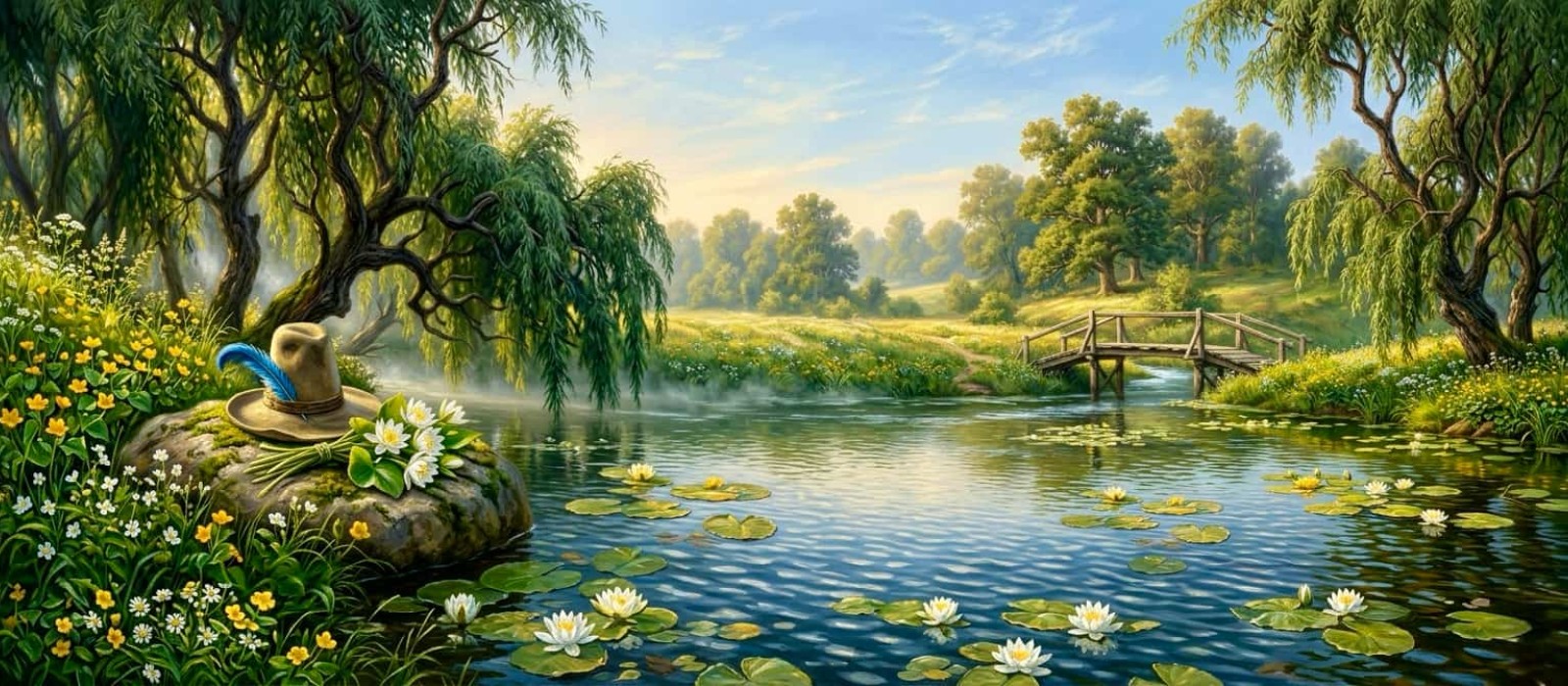
Tom Bombadil is described in The Fellowship of the Ring as a short, stout man — though he is not a man — with a long brown beard, bright blue eyes, a tall hat with a blue feather, a blue coat, and yellow boots. He walks with a bouncing gait and speaks in a characteristic cadence — half verse, half song, always rhythmic, often nonsensical on the surface — that reflects his deep and easy relationship with the world around him. He collects water-lilies. He loves his wife. He is, in almost every external respect, the most cheerful person in the entire story.
His name is as ancient as he is. The Elves called him Iarwain Ben-adar — Oldest and Fatherless — because even Elvish memory, which stretched back to the earliest ages of the world, could not find a beginning for him. The Dwarves called him Forn. The Men of the North called him Orald. Each name means roughly the same thing: the first one, the one before counting began. Tom himself says, "Eldest, that's what I am. Tom remembers the first raindrop and the first acorn. He knew the dark under the stars when it was fearless — before the Dark Lord came from Outside."
That last phrase is significant. "Before the Dark Lord came from Outside." Tolkien's cosmology places Morgoth — the first Dark Lord — as a being who existed before the world and entered it. Tom was here before even that. He predates the corruption of Arda. He knew the world before evil had a foothold in it.
He also knows Goldberry — the River-woman's daughter, who lives with him in his house by the Withywindle. She is associated with water, with the river, with the seasonal cycle of nature. She sets the table, she keeps the house, she seems to understand Tom in ways that suggest a relationship far older and deeper than anything the story has time to explore. She is as mysterious as he is, and almost as old.
What Tom Does — The Rescue from Old Man Willow
Tom first appears in the story when Frodo's cry for help — a desperate repetition of Tom's name, learned from Gildor's Elves — reaches him across the water. Merry and Pippin have been swallowed by Old Man Willow, the ancient, malevolent tree that rules the Withywindle. Frodo is screaming. Sam is useless with panic. The tree is impassive, the bark closing like water.
Tom arrives singing. He gives the tree a sharp command — "Hey derry dol! You let them out again, Old Man Willow!" — and the tree opens. Tolkien's description of this is entirely matter-of-fact. Tom does not fight Old Man Willow. He does not use visible magic. He simply tells it what to do and it does it, the way a person of certain authority tells a difficult animal to stop, and the animal stops. The power is real, but it operates through something that looks like nothing more than personality.
He takes the hobbits to his house, feeds them an extraordinary meal, gives them the most restful sleep they have had since leaving the Shire, and tells them old things — very old things, about the world before the Elves arrived, about the trees before they grew dark, about the wide land when it was young. He answers questions in a way that makes you feel you have received information, while making it almost impossible to remember afterwards exactly what the information was.
The One Ring — Why It Has No Power Over Tom
This is the question everyone asks. This is the question that has been asked since the book was published in 1954. Gandalf refused to touch the Ring. Galadriel refused it. Aragorn declined to handle it. The Ringwraiths were drawn to it across hundreds of miles. And Tom Bombadil put it on his finger, held it up to the light, looked through it, and handed it back.
When he put it on, nothing happened. No invisibility. No connection to the Ring's will. He simply wore a gold ring and looked through it like a child looking through a hoop, and gave it back to Frodo. Then — as if to complete the demonstration — when Frodo put the Ring on in Tom's house, Frodo did not disappear. Tom could still see him perfectly, smiling at him across the room.
The Ring could not touch Tom because Tom had nothing for the Ring to work with. The Ring's power operated through desire — it found what a person most deeply wanted and amplified it beyond reason, turning a genuine and reasonable longing into an obsession, then an enslavement. Gandalf wanted order. Galadriel wanted preservation. Boromir wanted to save his homeland. Sam wanted his garden and his friends to be safe. Every desire was real and the Ring could reach it.
Tom wanted nothing the Ring could offer. He had no desire for power, no ambition to expand his domain, no hunger for more than he already had. He was entirely sufficient to himself. The Ring offered domination — the ability to impose your will on others — and Tom had no interest in imposing his will on anyone. He lived in a small area by the Withywindle. He knew everything in it and loved it. He did not want Mordor. He did not want the Shire. He did not want anything beyond what he already possessed.
The Ring is a mirror of desire. Tom showed it nothing.
Why Couldn't Tom Destroy the Ring?
This comes up at the Council of Elrond. Gandalf raises the possibility: could the Ring be sent to Tom? Would it be safe there? Would Tom destroy it?
The Council's answer is careful and multi-part. First: the Ring would be safe with Tom, but only in the sense that he would not use it and might not be much affected by it. But safety is not the same as security. Sauron would still be searching, and Tom's nature did not make him impervious to being found. He simply would not hide the Ring or guard it with any particular care — he would put it down somewhere and forget about it. It would slip away eventually, as it always did with bearers who did not hold it through will.
Second: Tom could not destroy the Ring because the Ring could only be destroyed in the Cracks of Doom, and Tom would not go to Mordor. This is important. Tom's power was absolute within his domain — the land he had claimed by living in it, by knowing it, by being older than anything in it. Outside that domain, he was not especially powerful. Gandalf says that if Sauron regained the Ring and broke the world, Tom's power would fade, his land would be swallowed, and he would eventually be consumed like everything else. The immunity was local. The sovereignty was bounded.
And third — the subtlest point — even if Tom held the Ring and Sauron was defeated, the Ring's existence would still be a threat. The victory would not be permanent. The Ring would find its way to someone who could use it, sooner or later. The only permanent solution was destruction. Tom could not provide that.
The Rescue from the Barrow-wights
Tom appears twice in the six chapters of The Fellowship of the Ring that Peter Jackson omitted. The first rescue, from Old Man Willow, is almost comic in its ease. The second, from the Barrow-wights in the burial mounds, is something different.
The Barrow-wights were ancient spirits of shadow, sent into the burial mounds of the old North Kingdom by the Witch-king to haunt and corrupt them. They were genuinely dangerous — not merely frightening, but productive of a supernatural cold and dread that froze the mind and the body simultaneously. When Frodo woke inside the barrow, paralysed, the cold pressing down on him, a pale hand moving toward him in the dark, he was in serious danger.
He remembered Tom's walking song — deliberately provided for exactly this purpose — and called out. Tom came. His song drove the Barrow-wight out of the mound with a directness and authority that was qualitatively different from anything else in the chapter. The Wight fled. Tom opened the barrow with a kind of brisk tenderness and laid the ancient bones back to their rest — not with fear or disgust but with the ceremony of someone who understood what they were, who had known these dead when they were living, who could give them peace because he was older than their grief.
He gave the hobbits swords from the barrow-hoard: short blades from the ancient kingdom of Westernesse, forged centuries ago with spells against the servants of the Witch-king. These weapons mattered more than anyone present could know. One of them, in Merry's hand on the Pelennor Fields, would be the blade that broke the Witch-king's power and made Éowyn's killing blow possible. Tom handed it to a hobbit on a hillside as if it were a walking stick and sent them on their way.
What Is Tom Bombadil? — The Theories
Tolkien never answered this question directly. He said, in multiple letters, that Tom was an intentional enigma — that some things in any mythology must remain unexplained, and that Tom was one of them deliberately. He wrote: "Even in a mythical Age there must be some enigmas, as there always are. Tom Bombadil is one (intentionally)."
He also said, in a 1937 letter written before The Lord of the Rings was conceived, that Tom was "the spirit of the (vanishing) Oxford and Berkshire countryside." That description predates the mythology and refers to a different context, but it captures something essential: Tom is the spirit of the landscape itself, the personification of an English countryside that was being lost to industrialisation, the embodiment of a relationship with the natural world that Tolkien felt was disappearing.
The most widely discussed theories among Tolkien scholars and readers are these:
A Maia who has "gone native": The most structurally tidy explanation, supported by Robert Foster's Complete Guide to Middle-earth. Tom would be a divine spirit of the same fundamental order as Gandalf and Sauron, who arrived in Middle-earth in the very earliest ages and became so thoroughly embedded in the physical world — in trees, water, stone, the land itself — that he ceased to operate on the level of divine politics and power. His immunity to the Ring would come from having no divine ambition left to corrupt.
The embodiment of Arda itself: The Earth, or the sum of the natural world, given a personality and a voice. This explains both his immunity and his neutrality: Nature does not take sides in the contest between good and evil. It simply is. The Ring has nothing to offer something that already contains everything.
An Ainur outside the hierarchy: A being produced as a side-effect of the Music of the Ainur — the creative act through which the world was made — rather than as one of the intentional participants in it. He would therefore have no "father" in the divine sense (hence Eldest Fatherless), no allegiance in the cosmic struggle, and no position in Sauron's scheme of domination because he predated the scheme entirely.
None of these fully satisfies every detail Tolkien provided. That is the point. Tolkien was a professional linguist and mythologist who understood very precisely when a story needed an unanswered question. Tom is the unanswered question. He represents the mystery at the edge of the known world — the thing that does not fit any category, that was here before categories were invented, that will probably be here after the last category has been dissolved.
Tom Bombadil on Screen — From Rings of Power to Shadow of the Past
Peter Jackson cut Tom from his 2001 adaptation of The Fellowship of the Ring for reasons he has always acknowledged straightforwardly: the character was extremely difficult to integrate into a three-hour film without either giving him so little time that he seemed arbitrary or giving him enough time to interrupt the pace of the story's first act significantly. Both problems were real. Jackson chose to compress the journey from the Shire to Bree entirely, sacrificing the six chapters that contained Tom.
Tom's first screen appearance was in the second season of Amazon Prime Video's The Lord of the Rings: The Rings of Power in 2024, played by Rory Kinnear. The series set Tom in the Second Age — before the events of The Lord of the Rings — and gave him a role in the Stranger's journey east toward Rhûn. Kinnear's costume was designed by Luca Mosca to closely follow Tolkien's description: tall hat with a feather, the characteristic blue coat and yellow boots. His portrayal was received warmly, with particular praise for his musical rendering of "Old Tom Bombadil," the poem Tolkien originally published in The Oxford Magazine in 1934.
The feature film debut — the one that will matter most to people who encountered Tom through the books and the Jackson trilogy — will come in The Lord of the Rings: Shadow of the Past, the film announced on Tolkien Reading Day 2026 by Stephen Colbert and Peter Jackson. The film adapts the six chapters that Jackson omitted, including both "In the House of Tom Bombadil" and "Fog on the Barrow-downs." Tom Bombadil's appearance in a Peter Jackson-universe feature film is, effectively, confirmed — these chapters cannot be adapted without him.
Whether Rory Kinnear will be cast remains unconfirmed. The Rings of Power and the Jackson film universe have different rights structures, and casting the same actor would raise questions of canonical connection between the two that the productions may or may not want to address. As of the date of this article, no casting for Shadow of the Past beyond the original Hobbit cast has been confirmed.
The Official Collection — The One Ring That Could Not Touch Tom
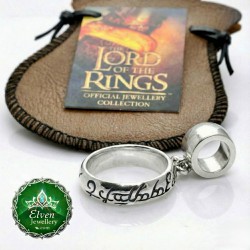
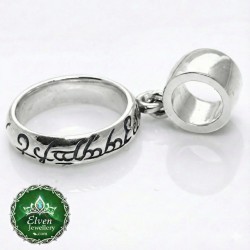
The One Ring that Tom Bombadil held up, looked through, and handed back without a second thought — the ring that enslaved nine kings of Men, corrupted Gollum for five centuries, and could not find purchase on the only being in Middle-earth who desired nothing it could offer — is the central object of the official collection at lotrjewelry.com. Made in New Zealand by the New Line Productions licence holders, in solid 925 sterling silver or solid gold, custom-made to your exact size.
One Ring — Sterling Silver
The precision-engraved One Ring in solid 925 sterling silver. The ring Tom Bombadil held and handed back. Comfort Curve, custom-made to your exact size. Made in New Zealand by the New Line Productions licence holders. The most famous ring in literature.
Shop One Ring Silver →One Ring — UV Fire Script
The inscription glows red under UV light — as if written in fire. The Ring as Gandalf saw it in Frodo's hearth. The same ring that showed Tom nothing because Tom wanted nothing. Custom-made to size. Made in New Zealand.
Shop UV Fire Script →One Ring — Gold
Solid 9ct or 18ct gold — the ring of fine gold that Sauron forged, Isildur took, Gollum kept, Tom Bombadil held without effect, and Frodo carried to Mount Doom. The definitive version. Made in New Zealand by the New Line Productions licence holders.
Shop One Ring Gold →Frequently Asked Questions About Tom Bombadil
Who is Tom Bombadil?
Tom Bombadil is a mysterious figure in J.R.R. Tolkien's The Fellowship of the Ring who rescues the hobbits from Old Man Willow and the Barrow-wights during their journey from the Shire to Bree. He is the oldest being in Middle-earth — the Elves called him Iarwain Ben-adar, "Oldest and Fatherless," because even they could not find a beginning for him. He is completely unaffected by the One Ring. His exact nature was deliberately left unexplained by Tolkien, who considered him an intentional enigma representing the mystery at the edge of any mythology.
Why is Tom Bombadil immune to the One Ring?
The Ring's power worked by finding and amplifying desire — taking what a person most deeply wanted and inflating it into obsession and enslavement. Tom Bombadil had no desire the Ring could work with. He wanted nothing it could offer — no power, no domination, no expanded domain. He was entirely sufficient to himself, content within his small territory by the Withywindle, interested in the world around him without wanting to possess or control it. The Ring is a mirror of desire. Tom showed it nothing, so it had no hold on him.
Why didn't they just give the Ring to Tom Bombadil?
The Council of Elrond considered this. The conclusion was: the Ring would be safe with Tom in the short term, but Tom would not guard it carefully or hide it — he would put it down and forget about it, and it would eventually slip away as it always did with unguarded bearers. More importantly, Tom could not destroy the Ring, which was the only permanent solution. He would not go to Mordor, and his immunity was local — if Sauron regained the Ring and broke the world, Tom's domain would eventually be consumed like everything else. Safety with Tom was temporary; destruction was the only answer.
What is Tom Bombadil's real name?
Tom Bombadil is the name used in the Shire and the surrounding lands. His Sindarin Elvish name is Iarwain Ben-adar — Oldest and Fatherless. The Dwarves called him Forn — Eldest. The Men of the North called him Orald — Eldest. All of these names mean essentially the same thing: the one who was here first, whose beginning cannot be found in any record because he predates all records. "Tom Bombadil" itself is likely a name he gave himself or was given by hobbits — its exact etymology in Tolkien's languages is not established.
Why did Peter Jackson cut Tom Bombadil from the films?
Jackson has always been direct about this: Tom Bombadil was extremely difficult to integrate into the pace of a three-hour film. Including him properly — giving him enough screen time to establish who he is and why he matters — would have significantly interrupted the momentum of the first act at exactly the moment when the story needed to be building toward Rivendell and the Fellowship. Cutting him allowed the journey from the Shire to Bree to be compressed into a tense, urgent sequence. Book readers have debated the decision for twenty-five years. Shadow of the Past will finally address it.
Is Tom Bombadil a Maia or a Vala?
Tolkien never confirmed this. The most widely accepted theory among Tolkien scholars is that he is a Maia — a divine spirit of the same fundamental order as Gandalf and Sauron — who arrived in Middle-earth in the earliest ages and became so thoroughly embedded in the natural world that he ceased to operate in the realm of cosmic politics or divine hierarchy. Robert Foster's Complete Guide to Middle-earth describes him as "a Maia 'gone native.'" Other theories suggest he is the embodiment of Arda itself, or a being produced as a side-effect of the Music of the Ainur who predates even the formal hierarchy of the Valar and Maiar. Tolkien explicitly said he is "one (intentionally)" — a deliberate unanswered question, not an oversight.
Who plays Tom Bombadil in the films?
Tom Bombadil has not yet appeared in any Peter Jackson Lord of the Rings feature film. He made his first screen appearance in the second season of Amazon Prime Video's The Lord of the Rings: The Rings of Power (2024), played by Rory Kinnear, in a Second Age storyline involving the Stranger and his Harfoot companions. His feature film debut is expected in The Lord of the Rings: Shadow of the Past — the film announced on Tolkien Reading Day 2026, written by Stephen Colbert, Philippa Boyens, and Peter McGee, adapting the six chapters of The Fellowship of the Ring that Jackson originally omitted. Whether Kinnear will reprise the role has not been confirmed.
What did Tolkien say about Tom Bombadil?
Tolkien made several significant statements about Tom in his letters. He said Tom was "not an important person to the narrative" but represented "something I feel important, though I would not be prepared to analyse the feeling precisely." He called him in a 1937 letter "the spirit of the (vanishing) Oxford and Berkshire countryside" — though this predates The Lord of the Rings and refers to an earlier, standalone context. He said "even in a mythical Age there must be some enigmas, as there always are. Tom Bombadil is one (intentionally)." And when a reader suggested Tom might be a stand-in for God, he replied: "I really do think you are being too serious, besides missing the point."
Sources & Further Reading
- The Lord of the Rings — The Fellowship of the Ring: Chapters VI–VIII — 'The Old Forest', 'In the House of Tom Bombadil', 'Fog on the Barrow-downs' — the primary source for everything Tom Bombadil does in the story
- The Letters of J.R.R. Tolkien, ed. Humphrey Carpenter: Letters 144, 153, and others — Tolkien's direct statements about Tom's intentional mystery and his own uncertainty about Tom's precise nature
- The Adventures of Tom Bombadil — J.R.R. Tolkien (1962): a collection of poems featuring Tom, including the original 1934 Oxford Magazine poem that predates his appearance in The Lord of the Rings
- The Fellowship of the Ring: 'The Council of Elrond' — Gandalf's explanation of why the Ring cannot simply be given to Tom and why Tom could not destroy it
- The Lord of the Rings: The Rings of Power, Season 2 (2024) — Tom Bombadil's first screen appearance, played by Rory Kinnear
- Tolkien Gateway — tolkiengateway.net/wiki/Tom_Bombadil
Related Products