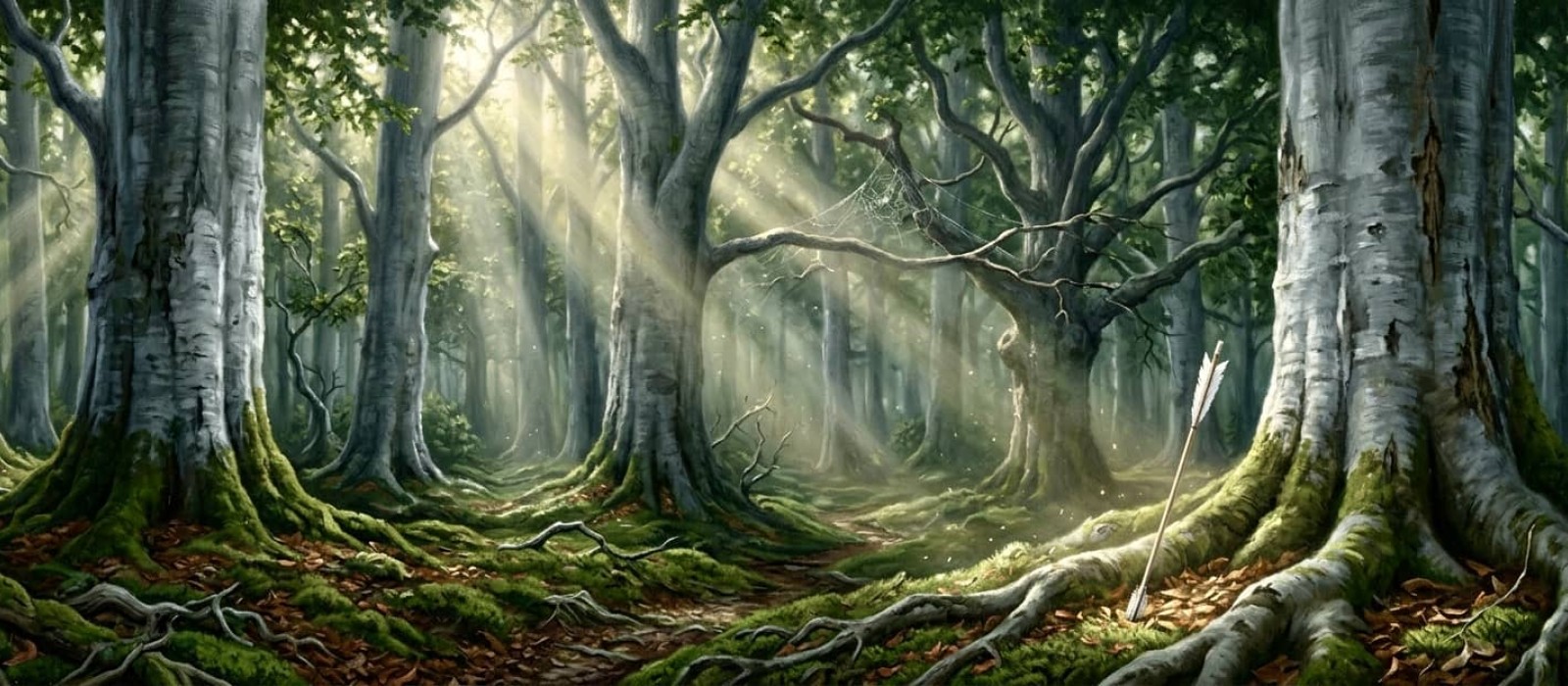
Legolas Greenleaf — son of Thranduil, Prince of the Woodland Realm of Mirkwood — was a Sindar Elf who volunteered to represent his people in the Fellowship of the Ring at the Council of Elrond in TA 3018. He was a master archer, a scout of extraordinary range and perception, and the first Elf in the history of Middle-earth to forge a genuine and lasting friendship with a Dwarf. He sailed to the Undying Lands at the end of the Fourth Age — the last of the Nine Walkers to leave Middle-earth, taking with him Gimli son of Glóin, the only Dwarf ever granted passage to Valinor.
Most people first encounter Legolas as a visual spectacle — the arrow fired so fast it blurs, the impossibly light footfall on snow, the impossible calm in the middle of a battle. Peter Jackson's films made him one of the most recognisable characters in modern cinema, and Orlando Bloom's performance gave him a particular stillness and otherworldly precision that has defined how a generation pictures an Elf.
But behind the extraordinary archery and the ageless face is a character with a specific history, a defined lineage, and a role in Tolkien's story that is more carefully constructed than it first appears. He is the Elf who learned to love a Dwarf. He is the Prince who walked away from his father's isolationism and never looked back. He is the being who heard the cry of the sea-birds at Pelargir and was never quite the same again.
This is his complete story.
Who Was Legolas? — The Prince of Mirkwood
Legolas was the son of Thranduil — the Elvenking of the Woodland Realm of Northern Mirkwood — and the prince of that realm. His grandfather was Oropher, a Sindarin Elf of Doriath who had migrated east after the devastation of Beleriand at the end of the First Age, settled among the Silvan Wood-elves of Mirkwood, and founded the Woodland Realm. Oropher was killed fighting Sauron in the Last Alliance at the end of the Second Age. His son Thranduil took over the kingdom and ruled it for the entirety of the Third Age.
This lineage matters. Legolas was Sindar by blood — of the Grey Elves, the same broad kindred as the Elves of Doriath and Rivendell — but he had grown up entirely among the Silvan Wood-elves of Mirkwood, adopting their customs, their simpler culture, and their deep connection to forest and tree. He was, in Tolkien's precise formulation, a Sindarin Elf who had effectively "gone native" among the Silvan folk — nobler by lineage than most of those he lived among, but more rooted and earthly in character than the High Elves of Rivendell or Lothlórien. He wore green and brown. He lived in a forest carved into the living rock. He was the Wood-elf at the Council of Elrond — the one who brought the least ancient lore and the most practical, outdoors-facing skill.
His exact age is unknown. Tolkien never stated it. Estimates range from several hundred to several thousand years, and the truth is probably somewhere in the middle — old enough to have watched Mirkwood slowly darken as Sauron's influence grew from Dol Guldur, young enough by Elvish reckoning to have something fresh and wondering in how he encountered the world.
Mirkwood — The Forest That Made Him
The Woodland Realm of Northern Mirkwood was not the gracious, golden forest of Lothlórien or the ancient, intellectual sanctuary of Rivendell. It was a working kingdom in a darkening forest, perpetually under pressure from the shadow that had taken root in Dol Guldur to the south. The great spiders — spawn of Shelob, descendants of Ungoliant — had spread through the forest. Orcs tested the borders. The trees themselves had grown surly and watchful under the shadow's influence.
Legolas had grown up fighting this. He was not a courtly Elf of the high houses — he was a warrior of the forest, a hunter of spiders and Orcs in the tangled dark of a threatened woodland. When he came to the Council of Elrond as a messenger from his father, bringing news of Gollum's escape, he arrived as a practical creature of the wild rather than a philosophical being of ancient learning. His skills — the bow, the light foot, the extraordinary sight and hearing — were the skills of someone who had spent centuries keeping a forest alive against everything that wanted to consume it.
His father Thranduil was an isolationist. His response to the growing shadow was to pull inward — to defend the Woodland Realm's borders, maintain its independence, and refuse engagement with the wider struggles of Middle-earth. Legolas did not share this philosophy. Something in him reached toward the wider world. When the opportunity came at the Council to step forward and join the Fellowship, he took it without hesitation.
The Council of Elrond — "You Have My Bow"
Legolas arrived at Rivendell in late TA 3018 as his father's messenger — sent to tell the Council that Gollum had escaped from Mirkwood's custody during an Orc raid and that his whereabouts were now unknown. It was not good news. Gollum's escape was, as the Council understood, partly Sauron's doing — the Orc raid had been deliberately designed as a distraction.
When Elrond asked who would carry the Ring to Mordor, and Frodo stepped forward, Elrond acknowledged that the Ringbearer would need companions — a Fellowship of nine to match the nine Nazgûl. Legolas volunteered immediately to represent the Elves. He had come as a messenger and stayed as a member of the most important company assembled in the Third Age.
In Peter Jackson's films, his line at that moment is "You have my bow" — one of the most economical expressions of commitment in the entire trilogy. In the books, his volunteering is equally straightforward. There is no hesitation, no deliberation, no negotiation. A mission requiring someone who could shoot, move lightly, see far, and endure the wild — this was him. He stepped forward.
The Fellowship — Abilities and Contribution
Legolas contributed to the Fellowship in ways that were consistently practical and often decisive. His eyesight was the group's early warning system — he could see clearly at distances that would be impenetrable fog to any mortal. On the slopes of Caradhras, when the avalanche trapped them and the Fellowship were debating whether to turn back, Legolas walked on the surface of the snow that was chest-deep on the hobbits — his weight so light that he left barely a print — and scouted the path ahead.
In Moria, he first heard the far-off drums before anyone else. At the Bridge of Khazad-dûm, while Gandalf faced the Balrog and the rest of the Fellowship were frozen in horror or running for their lives, Legolas looked at the Balrog and understood what it was with the deep species memory of an Elf who knew the lore of the First Age. He cried out and stood transfixed — not from cowardice but from recognition, the way a person might be momentarily stilled by encountering something they had only read about in history coming suddenly and terribly alive.
After the loss of Gandalf in Moria, and the Fellowship's subsequent shattering at Amon Hen, Legolas joined Aragorn and Gimli as the Three Hunters — chasing the Uruk-hai across the plains of Rohan to rescue Merry and Pippin. They ran for three days with minimal rest. Tolkien describes Legolas moving faster than the others, barely seeming to touch the ground, his feet barely bending the grass. The loping, tireless pursuit across the plains of Rohan is one of the most vivid passages in the Two Towers — three unlikely hunters covering a hundred miles of open country on foot.
Helm's Deep and Pelargir — The Arrow and the Sea
At Helm's Deep, Legolas stood on the walls through the night battle against ten thousand Uruk-hai. His running arrow count — traded with Gimli in the famous contest — is one of the most celebrated running jokes in the entire story, the friendship between Elf and Dwarf expressed through competitive violence. Gimli: "Two. What's yours?" Legolas: "Nineteen." The contest is silly and joyful and entirely characteristic of how Tolkien understood that genuine affection between two proud beings would express itself.
At Pelargir — the Corsair port on the southern reaches of the Anduin, where Aragorn used the Army of the Dead to drive out the enemy ships — something happened to Legolas that Tolkien describes with great care. The gulls. He heard the cry of sea-birds for the first time in his life, and something was awakened in him that could not be put back to sleep. Galadriel had warned him: "In joy thou hast lived. Beware of the Sea! If thou hearest the cry of the gull on the shore, thy heart shall then rest in the forest no more."
He told Gimli afterwards: "I have heard them now. They are calling me. I cannot return." From that moment, the desire for the Sea — the ancient Elvish longing for the West, the call to sail to Valinor — was in him, permanently. He finished the war. He fought on the Pelennor Fields and at the Black Gate. But he was already, in some sense, departing. The forest of Mirkwood could no longer hold him. The world of Men could no longer fully contain him. He was listening to something else now.
Legolas and Gimli — The Most Important Friendship in Middle-earth
The friendship between Legolas and Gimli is, as Tolkien scholar Christina Scull observed, the greatest reconciliation theme in The Lord of the Rings — and given that the book contains the reunion of Men and Elves, the return of the King, and the healing of the land, that is saying something.
It began badly. There was initially friction between Legolas and Gimli because of the ancient quarrel between Elves and Dwarves, rekindled by Thranduil's treatment of Gimli's father Glóin when Thorin's company had passed through Mirkwood decades earlier. They became friends when Gimli greeted Galadriel with respectful words in Lothlórien — Legolas had expected Gimli to behave like a Dwarf, suspicious and grudging, and instead watched him respond to Galadriel's grace with genuine reverence. Something shifted.
By the time they reached the Glittering Caves of Aglarond after Helm's Deep, Legolas had made a bargain with Gimli: Gimli would visit Fangorn Forest with him, and Legolas would visit the Caves. Gimli had described the Caves with such eloquence and passion that Legolas was moved despite himself — and Tolkien records that Legolas finally accepted that Gimli had bested him in speech with his praise for the Glittering Caves of Aglarond. An Elf conceding to a Dwarf in a matter of description and feeling. It was unprecedented.
After the war, they kept their bargain. They explored both places together. Legolas eventually brought a company of Elves from Mirkwood to settle in Ithilien — the garden of Gondor — making it bloom again. Gimli became Lord of the Glittering Caves. They spent the early Fourth Age in the same region, the oldest of friends, the most improbable of companions. And at the end, when Legolas finally built a ship and sailed West, he took Gimli with him — the only Dwarf in the history of Arda to be granted passage to Valinor, by the grace of Galadriel and the love of an Elf who could not imagine leaving without him.
The Official Legolas Collection — Made in New Zealand
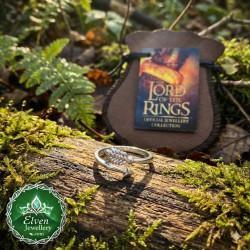
The official Legolas jewellery collection draws from the imagery of the arrow — the defining symbol of the Elven archer of Mirkwood, the weapon of precision and silence that characterised everything about how Legolas moved through the world. All pieces are officially licensed, made in New Zealand by the New Line Productions licence holders, in solid 925 sterling silver.
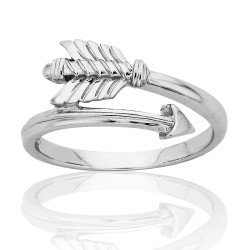
Legolas Arrow Ring
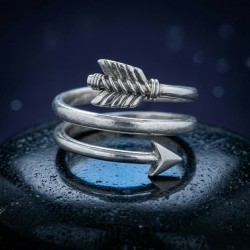
The official Legolas Arrow Ring — a sterling silver ring in the form of an arrow wrapping the finger, with the arrowhead and fletching meeting where they join. Solid 925 sterling silver, custom-made to your exact size. The ring of the archer of Mirkwood. Made in New Zealand.
Shop Arrow Ring →Legolas Wrap Ring
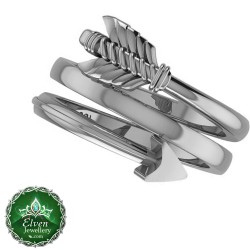
The Legolas Wrap Ring — a broader sterling silver band with the arrow motif wrapping around the full circumference of the ring. A bolder expression of the same design language. Solid 925 sterling silver, custom-made to size. Made in New Zealand by the New Line Productions licence holders.
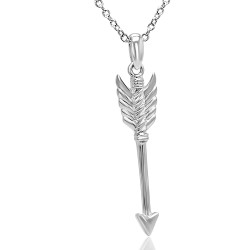
Shop Wrap Ring →Legolas Arrow Pendant
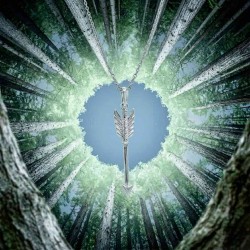
The official Legolas Arrow Pendant — a sterling silver arrow on a 45cm Belcher chain. Clean, precise, and unmistakably Elven. The jewellery equivalent of a single arrow loosed in perfect silence. Made in New Zealand. Supplied with chain and official Licence of Authenticity.
Shop Arrow Pendant →Legolas Arrow Earrings
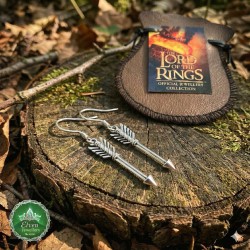
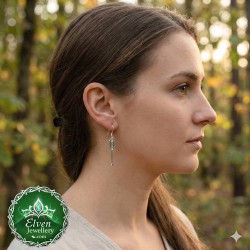
The official Legolas Arrow Earrings — a pair of sterling silver arrow drop earrings, elegant and precise. Wear them with the Arrow Pendant for the complete Legolas set. Solid 925 sterling silver, nickel-free. Made in New Zealand by the New Line Productions licence holders.
Shop Arrow Earrings →Frequently Asked Questions About Legolas
Who is Legolas in Lord of the Rings?
Legolas Greenleaf is the son of Thranduil, King of the Woodland Realm of Mirkwood, and the Prince of that realm. A Sindar Elf raised among the Silvan Wood-elves, he came to the Council of Elrond as a messenger from his father and volunteered to join the Fellowship of the Ring as the representative of the Elves. A master archer, scout, and warrior, he was one of the Nine Walkers who accompanied Frodo on the quest to destroy the One Ring. He is portrayed by Orlando Bloom in Peter Jackson's films — including both the Lord of the Rings trilogy and The Hobbit trilogy, where he appears as a younger Elf in Mirkwood.
How old is Legolas?
Tolkien never specified Legolas's age. His birth date is unknown. Estimates among scholars and fans range from around 500 years old at the time of the War of the Ring to several thousand — the wide range reflecting the fact that Tolkien provides almost no information about his early life. He is described as one of the younger Elves in the Fellowship relative to figures like Galadriel, Elrond, and Gandalf, but "younger" in Elvish terms still encompasses centuries. His exact age is one of the deliberate gaps in Tolkien's text.
Why is Legolas in The Hobbit films if he's not in the book?
Legolas does not appear in Tolkien's novel The Hobbit, but Peter Jackson included him in the film trilogy on the reasonable basis that as the Prince of Mirkwood he would plausibly have been present when Thorin's company was captured and imprisoned in his father's halls. Tolkien's book simply doesn't mention him — but his absence from the text doesn't mean he wasn't there. Jackson used the films to explore Legolas's earlier years in Mirkwood, his relationship with his father Thranduil, and his first contact with Gimli's father Glóin — all of which feeds naturally into the dynamic between Legolas and Gimli in The Lord of the Rings.
What is the significance of Legolas and Gimli's friendship?
It is the most symbolically important friendship in the entire story. Elves and Dwarves had been enemies, or at best deeply suspicious of each other, since the First Age — a relationship poisoned by the sack of Doriath, Thranduil's imprisonment of Thorin's company, and centuries of mutual distrust. Legolas and Gimli's friendship was the first genuine Elf-Dwarf bond in living memory. It was so significant that when Legolas finally sailed to Valinor at the end of the Fourth Age, he took Gimli with him — the only Dwarf ever given passage to the Undying Lands. Their friendship reconciled, at a personal level, an enmity that had lasted thousands of years.
What happened to Legolas after the War of the Ring?
After the war, Legolas brought a company of Elves from Mirkwood to Ithilien — the beautiful garden region of Gondor east of the Anduin — and helped restore it to its former beauty under King Elessar's reign. He lived there through the early Fourth Age, maintaining his friendship with Gimli, who ruled the Glittering Caves of Aglarond nearby. After the deaths of Aragorn and eventually of the other members of the Fellowship, Legolas built a grey ship at the mouth of the Anduin and sailed West to Valinor — taking Gimli with him, the only Dwarf ever to make that journey.
What did Galadriel's warning to Legolas mean?
Before the Fellowship left Lothlórien, Galadriel gave each member a message. To Legolas she said: "In joy thou hast lived. Beware of the Sea! If thou hearest the cry of the gull on the shore, thy heart shall then rest in the forest no more." She was warning him about the Sea-longing — the deep desire for the Undying Lands that afflicts Elves who hear the sea-birds calling. At Pelargir during the War of the Ring, Legolas heard gulls for the first time. From that moment, the longing for the West was in him permanently. He stayed in Middle-earth for the rest of Aragorn's reign out of loyalty and love, but the forest of Mirkwood no longer had any claim on him.
Is Legolas related to Thranduil?
Yes — Legolas is Thranduil's son and the Prince of the Woodland Realm. Thranduil is the Elvenking of Mirkwood, son of Oropher, who founded the Woodland Realm after the War of Wrath at the end of the First Age. Oropher was killed in the Last Alliance. Thranduil succeeded him and ruled Mirkwood throughout the Third Age. Their relationship in Peter Jackson's Hobbit films — complicated, emotionally reserved, defined by things left unsaid — is largely an invention of the filmmakers expanding on Tolkien's very sparse lore about Thranduil's personality and family life.
Sources & Further Reading
- The Lord of the Rings — The Fellowship of the Ring: 'The Council of Elrond'; The Two Towers: 'The Riders of Rohan'; The Return of the King: 'The Last Debate' and Appendix A
- Unfinished Tales, ed. Christopher Tolkien — Appendix B: 'The Sindarin Princes of the Silvan Elves' — Legolas's lineage through Thranduil and Oropher
- Tolkien Gateway — tolkiengateway.net
Related Products