Peter Jackson and Stephen Colbert announced today that the next Lord of the Rings film after The Hunt for Gollum will be titled The Lord of the Rings: Shadow of the Past — and it will finally adapt the six chapters of The Fellowship of the Ring that Peter Jackson cut from his 2001 film. The chapters are: Three is Company, A Short Cut to Mushrooms, A Conspiracy Unmasked, The Old Forest, In the House of Tom Bombadil, and Fog on the Barrow-downs. Tom Bombadil is finally coming to the screen.
For twenty-five years, book readers have had exactly one complaint about Peter Jackson's The Fellowship of the Ring. It is not about the casting, the production design, or the score. It is about six chapters that sit between Bilbo's birthday party and the Prancing Pony in Bree — six chapters that Jackson compressed into a single long montage of walking, and which contain some of the most beloved and most mysterious material Tolkien ever wrote.
Those chapters are finally getting their film.
On Tolkien Reading Day — March 25, the anniversary of the destruction of the One Ring — Peter Jackson revealed his "very special partner" for the next Lord of the Rings movie. That partner was Stephen Colbert: lifelong Tolkien devotee, Late Show host, and the man who has been trying to convince Peter Jackson to make this film for the past two years. Colbert will write the screenplay with Philippa Boyens and his son Peter McGee. Jackson, Walsh, and Boyens will produce.
The film's working title is The Lord of the Rings: Shadow of the Past. It will come after The Hunt for Gollum — directed by Andy Serkis, set for December 17, 2027. The framing story is set fourteen years after Frodo's passing, with Sam, Merry, and Pippin retracing the first steps of their adventure, while Sam's daughter Elanor uncovers a long-buried secret about why the War of the Ring nearly failed before it began.
But the heart of the film is those six chapters. And here, for anyone who has never read them, and for anyone who wants to rediscover what Jackson left behind — is everything they contain.
Why Peter Jackson Cut These Chapters in 2001
Jackson's The Fellowship of the Ring begins with Bilbo's birthday party and cuts almost immediately to Gandalf's return seventeen years later, the fire test, and Frodo's departure from Bag End. In between those two events, six chapters of Tolkien's book describe a journey of roughly three weeks — the hobbits' walk from Hobbiton to Buckland, their passage through the Old Forest, and their encounter with something ancient and terrible in the burial mounds of the Barrow-downs.
Jackson has always been open about why these chapters were cut. The film was already long. The journey from Bag End to Bree was a character-building prologue to the main story, and compressing it allowed the film to get to Aragorn, Rivendell, and the Fellowship more quickly. From a pure pacing perspective, it was a defensible choice. The chapters include almost no action in the conventional sense. They are atmospheric, mysterious, deeply strange in their tone, and introduce two characters — Old Man Willow and Tom Bombadil — who appear nowhere else in the main narrative and are notoriously difficult to adapt.
But the decision came at a cost. Readers who knew the book felt, and still feel, that something essential was removed from Frodo's story — that the journey through the Old Forest and the Barrow-downs was not a prologue to the adventure but the first test of it, and that what the hobbits found in those burial mounds would later change the history of the War of the Ring in ways that the films never acknowledged.
Colbert told Jackson he had read those six chapters over and over for decades, convinced they contained a complete story. He was right.
Chapter III: Three is Company — The Night the Shire Ended
The hobbit party of four — Frodo, Sam, and Pippin — leaves Bag End at dusk. (Merry joins them later at Crickhollow.) It is an ordinary evening in the Shire, green and pleasant, and they walk along the lane toward Woodhall singing. Then a Black Rider comes.
This is the first Nazgûl encounter in the entire book, and it is extraordinary in its restraint. The Black Rider does not attack. It does not speak. It simply stops its horse in the lane ahead of them, and sniffs — and the hobbits dive off the path into the roots of a tree and lie absolutely still in the dark while the Rider passes so close they can hear its breathing. Frodo feels an almost irresistible compulsion to put on the Ring. He does not know why. He has never felt this before. He controls it — barely.
The hobbits reach Woodhall and are taken in by a party of High Elves — Gildor Inglorion and his folk, travelling toward the Grey Havens. Gildor tells Frodo enough to confirm that the Shire is not safe and he must leave it quickly, but will not tell him everything. He says, in a phrase Tolkien considered one of his best: "Courage is found in unlikely places." The hobbits sleep under the stars with the Elves and continue their journey in the morning.
What this chapter establishes — which the film bypassed — is the texture of the Shire's ending for Frodo. The film jumps from feast to departure. The book gives him one last ordinary evening, one first brush with the shadow, and one moment of Elven grace — a farewell to the world he is leaving, felt through a single night.
Chapter IV: A Short Cut to Mushrooms — Farmer Maggot and the First Real Fear
Frodo's relationship with Farmer Maggot is a small comic gem in Tolkien's storytelling. As a young hobbit, Frodo had repeatedly stolen mushrooms from Maggot's fields and been caught and threatened with terrible consequences. He has been afraid of Maggot ever since. Walking toward Buckland in the fog, the route takes them past Maggot's farm — and Frodo's dread of a grumpy farmer feels almost comic beside the dread of the Black Riders.
But the chapter pivots. Farmer Maggot, it turns out, had a Black Rider come to his farm that very day — asking for news of a "Baggins." Maggot is shaken. He is a solid, sensible hobbit of the old school, not easily frightened. The Rider frightened him. He drives the hobbits toward Buckland in his cart, through the thickening fog, and at the boundary of his land he stops — because something is coming through the fog toward them on the road.
It is Merry, coming to meet them. The relief is enormous and slightly absurd — and Tolkien uses it deliberately, the comedy of the near-miss sitting right beside the genuine menace of what is out there in the dark. Maggot gifts them a basket of mushrooms and leaves. The hobbits cross the Brandywine into Buckland, and the Shire is behind them.
Chapter V: A Conspiracy Unmasked — The Most Overlooked Act of Love in the Entire Book
This is the chapter that Tolkien readers most often cite when asked what the films missed most deeply — and it is not about monsters or magic. It is about friendship.
At Crickhollow, the house Frodo pretended to be moving to as a cover story for leaving the Shire, he discovers that Sam, Merry, and Pippin have known his plan for months. They have been preparing for it. Sam overheard Gandalf talking to Frodo and immediately told Merry, and the three of them spent the months since quietly gathering supplies, planning the route, and making arrangements — without telling Frodo, because they knew he would try to go alone if he knew they knew. Merry lays it out: "You can trust us to stick to you through thick and thin to the bitter end. And you can trust us to keep any secret of yours — closer than you keep it yourself. But you cannot trust us to let you face trouble alone, and go off without a word. We are your friends, Frodo."
In Peter Jackson's film, the equivalent moment happens at the Ford of Bruinen, much later — Sam refusing to let Frodo leave without him, throwing himself into the river. It is a beautiful scene. But in the book, it happens here, before anything terrible has occurred, before any of them fully understand what they are walking into. They choose to go with him not in a moment of crisis but in a moment of ordinary domestic revelation, sitting in a comfortable house in Buckland, and the weight of their loyalty — chosen freely, before the darkness — is entirely different.
Tolkien considered this chapter essential to everything that followed. Frodo does not go to Mordor alone because Sam and the others refuse to let him disappear. The Fellowship begins here, in this small house, around a fireplace, with a basket of mushrooms on the table.
Chapter VI: The Old Forest — Something Ancient That Has No Love for Hobbits
The Old Forest lies on the eastern boundary of Buckland, behind the High Hay hedge that the Bucklanders built and maintain to keep it out. It is ancient, resentful, and alive in a way that ordinary forests are not. The trees remember things. They have grudges. They are not evil in the Sauron sense — they have no interest in Rings or dark lords — but they are old and slow and deeply hostile to anything that walks on two legs and cuts wood.
The hobbits enter the Old Forest at dawn and find that the paths move. The forest herds them toward the Withywindle, the valley at its heart — the place where the influence of the oldest and most powerful tree is strongest. Tolkien describes the weight of the forest's consciousness pressing down on them, a sleepiness that is not natural, a malice that is vegetable rather than animal but no less real for that.
At the Withywindle they find Old Man Willow — an enormous, ancient willow tree on the bank, its roots in the water, its canopy throwing shade for a hundred yards. Something about it compels the hobbits to rest. Merry and Pippin lean against the trunk and are asleep within minutes — and then the tree moves, cracks open, and swallows them. Merry to the waist. Pippin entirely. The bark closes over them like water.
Frodo and Sam scream. Sam tries to hack at the tree with a knife. The tree is indifferent to both. And then, from somewhere across the water, they hear singing.
Chapter VII: In the House of Tom Bombadil — The Character Everyone Wants to Know
"Hey derry dol! merry dol! ring a dong dillo! Ring a dong! hop along! fal lal the willow! Tom Bom, jolly Tom, Tom Bombadillo!"
Tom Bombadil is the most-discussed character in all of Tolkien — the one who was never put on film, the one who generates more debate per page than any other figure in the legendarium, the one who fans have been asking Peter Jackson about for twenty-five years.
He arrives at the Withywindle singing nonsense verse, carrying water-lilies, wearing a tall battered hat with a blue feather. He speaks to Old Man Willow in a commanding voice and the tree releases Merry and Pippin immediately. He takes all four hobbits back to his house, where his wife Goldberry — the River-woman's daughter, the embodiment of running water — has a table set for them. They stay two nights, eating, drinking, and sleeping without nightmares for the first time since leaving the Shire.
Who is Tom Bombadil? Tolkien deliberately never answered this fully. He predates the Shire, predates the Elves, predates the trees themselves. He calls himself "Eldest." Gandalf later says that Tom "has withdrawn into a little land, within bounds he has set, though none can see them, waiting perhaps for a change of days." He is the embodiment of pure being — of joy and presence without any desire for power. This is why the Ring does not affect him: it has nothing to offer him. He has no will to dominate, no ambition to amplify. He simply is.
When Frodo puts on the Ring in Tom's house, he does not become invisible. Tom can still see him perfectly. When Tom himself puts the Ring on — he can — it has no effect on him at all. He holds it up to the light, looks through it, and hands it back. The Ring cannot see him. He is outside its domain entirely.
Tolkien admitted in his letters that Tom was one of the things he was least sure he had successfully integrated into the narrative. He is not plot-functional in the way that most of Tolkien's major figures are — he saves the hobbits, he tells them old things, he gives them a walking song, and then they leave and he is never mentioned again except by Gandalf and briefly in the appendices. But he represents something Tolkien believed deeply: that there are things in the world that exist outside the struggle between good and evil entirely, that predate it and will outlast it, and that cannot be touched by power because they have never desired it.
Chapter VIII: Fog on the Barrow-downs — The Scene That Changes Everything
This is the chapter that Colbert named specifically when the announcement was made — and it is the one with the most direct consequence for the entire War of the Ring.
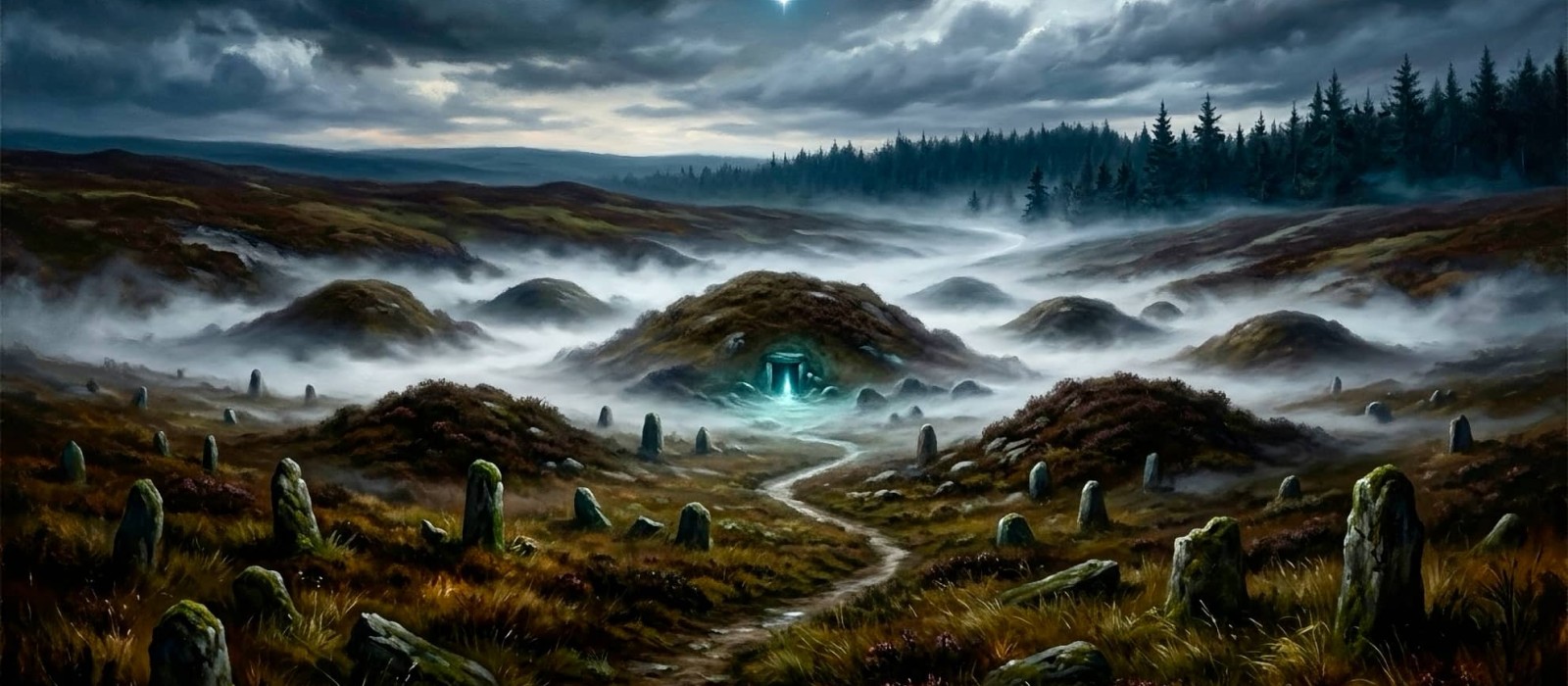
Leaving Tom Bombadil's house, the hobbits walk across the Barrow-downs — the great burial mounds of the ancient kings of Cardolan, one of the successor kingdoms of Arnor. These mounds are not merely old graves. They are haunted. The Witch-king, as part of his long campaign against the North Kingdom, sent spirits of shadow into the mounds to animate them — Barrow-wights, cold and malevolent, who preserve the dead in a kind of terrible stasis and lure the living down into the dark with them.
A cold fog comes down. The hobbits are separated. Frodo finds himself alone on a hilltop as evening falls, and then a cold hand grabs him. He wakes inside a barrow — lying on a stone slab in the dark, the bones of some ancient king beside him, a golden circlet on his head, and a sword lying on his chest. He cannot feel his friends. He can hear something moving in the dark. He can feel the cold deepening around him.
He fights the compulsion to put on the Ring and escape alone. He remembers Tom Bombadil's walking song — "In the house of the Lord of Rings..." — no, wrong story. He remembers Tom's rhyme: "Ho! Tom Bombadil, Tom Bombadillo! By water, wood and hill, by the reed and willow, By fire, sun and moon, harken now and hear us! Come, Tom Bombadil, for our need is near us!" And he sings it, in the dark, into the cold, his voice shaking.
Tom comes. He drives the Barrow-wight out with a song. He opens the barrow. He lays the ancient dead back to their rest with a kind of brisk, tender ceremony. And then he gives the hobbits weapons from the barrow-hoard — short swords of ancient make, from the kingdom of Westernesse, forged centuries ago with spells against the servants of the Witch-king.
Those swords matter. They matter enormously. Merry's sword — the one he draws on the Pelennor Fields to help Éowyn face the Lord of the Nazgûl — is one of those Barrow-downs blades. The Witch-king cannot be killed by the sword of a Man. But Merry's blade carries a Westernesse spell specifically against Ringwraiths — forged in the wars against the Witch-king himself. When Éowyn strikes the killing blow, it is Merry's Barrow-downs blade that breaks the Witch-king's power and makes it possible. Without Tom Bombadil opening that barrow. Without those six cut chapters. The Witch-king does not fall on the Pelennor Fields.
This is what Tolkien embedded in those six chapters that Jackson's film never had room to explain. The mushrooms, the conspiracy, the Old Forest, the house by the river, the fog on the hill, the cold hand in the dark — they were not a prologue. They were load-bearing.
What We Know About Shadow of the Past
The announcement was made today so details are limited, but the confirmed facts are these:
The writers: Stephen Colbert, Philippa Boyens, and Peter McGee (Colbert's son). Boyens is one of the three people who wrote all six Peter Jackson Middle-earth films. Colbert has a deep and documented knowledge of Tolkien's work — he has been publicly obsessed with it for decades, he took a cameo as a Lake-town spy in The Desolation of Smaug, and he once stumped Peter Jackson, Ian McKellen, Viggo Mortensen, and Elijah Wood simultaneously in a LOTR trivia contest.
The producers: Peter Jackson, Fran Walsh, and Philippa Boyens, the same trio behind all six original films.
The framing story: Set fourteen years after Frodo's passing. Sam, Merry, and Pippin retrace their original journey. Sam's daughter Elanor has discovered a long-buried secret about why the War of the Ring nearly failed before it began. This framing device allows the film to use the original cast — Sean Astin, Dominic Monaghan, Billy Boyd — while incorporating the Barrow-downs chapters as flashback or embedded narrative.
Tom Bombadil: Confirmed to appear. He is in the source chapters. He cannot be avoided. After twenty-five years of fan campaigning, the most enigmatic character in Tolkien's entire work is finally coming to the screen.
The timeline: The Hunt for Gollum releases December 17, 2027. Shadow of the Past will follow after that — no release date yet confirmed.
Filming location: New Zealand. Where else.
The Evenstar — Worn Through Those Six Chapters
It is worth remembering that through all six of these chapters — through the Shire, the Old Forest, Tom Bombadil's house, and the Barrow-downs — Frodo is wearing the One Ring on a chain around his neck. That chain, that ring, and the objects that surrounded those hobbits through the first steps of the greatest journey ever taken — these are the things the official jewellery collection at lotrjewelry.com exists to honour.
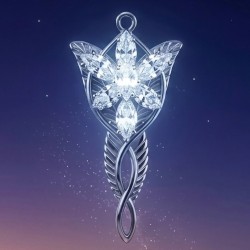
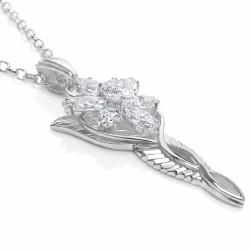
The Arwen Evenstar pendant — the piece Arwen gave to Aragorn, made in New Zealand by the New Line Productions licence holders, is the most beloved piece of official LOTR jewellery in the world. The One Ring, in sterling silver or solid gold, is the central object of those chapters and the entire story. Both are available now, custom-made to size, shipped worldwide from the country where Middle-earth lives.
Arwen Evenstar Pendant
The official licensed Evenstar in solid 925 sterling silver. The most gifted piece of LOTR jewellery in the world. Available in CZ, genuine amethyst, and genuine blue topaz. Made in New Zealand by the New Line Productions licence holders.
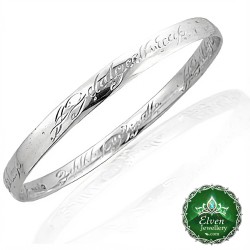
The One Ring — Sterling Silver
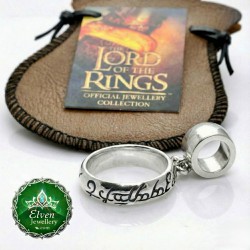
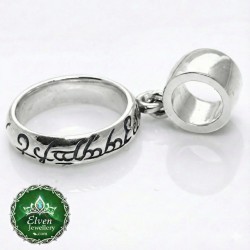
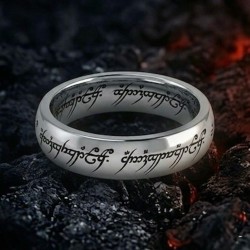
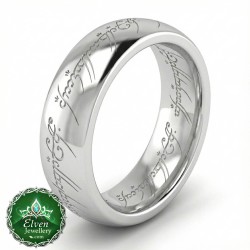
The precision engraved One Ring in solid 925 sterling silver. Comfort Curve profile, custom-made to your exact size. The ring Frodo carried through the Old Forest, over the Barrow-downs, and all the way to Mount Doom. Made in New Zealand.
The One Ring — UV Fire Script
Sterling silver with red UV-reactive resin — the inscription glows as if written in fire under UV light. The Ring as Gandalf saw it in the flames of Frodo's hearth. Custom-made to size. Made in New Zealand.
Frequently Asked Questions
What is The Lord of the Rings: Shadow of the Past?
It is the second new Lord of the Rings film announced by Warner Bros. and New Line, announced on Tolkien Reading Day, March 25, 2026. It will adapt the six chapters of The Fellowship of the Ring that Peter Jackson omitted from his 2001 film: Three is Company, A Short Cut to Mushrooms, A Conspiracy Unmasked, The Old Forest, In the House of Tom Bombadil, and Fog on the Barrow-downs. It is written by Stephen Colbert, Philippa Boyens, and Peter McGee, with Peter Jackson and Fran Walsh producing. It will follow The Hunt for Gollum (December 2027) in the new slate of Middle-earth films.
Who is Tom Bombadil, and why is he so significant?
Tom Bombadil is a mysterious figure in The Fellowship of the Ring who rescues the hobbits from Old Man Willow and the Barrow-wights, and in whose house they stay for two nights. He is completely unaffected by the One Ring — wearing it does not affect him, and when Frodo puts it on in his presence, Frodo does not become invisible to Tom. He predates the Elves and calls himself "Eldest." Tolkien never fully explained him, but described him as representing pure being, without desire for power, which is why the Ring cannot touch him. He is one of the most discussed and debated characters in all of Tolkien, and the most beloved figure never yet put on film.
Why do the Barrow-downs chapters matter to the rest of the story?
Because of the swords. When Tom Bombadil rescues the hobbits from the Barrow-wight, he gives them ancient blades from the barrow-hoard — weapons from the kingdom of Westernesse, forged with spells specifically against the servants of the Witch-king. Merry carries one of these blades through the entire story. At the Battle of the Pelennor Fields, it is Merry's Barrow-downs sword that strikes the Witch-king's leg and breaks his power at the crucial moment — making it possible for Éowyn to deliver the killing blow. Without those six chapters, that weapon has no origin, and the defeat of the Witch-king has no explanation.
Why did Peter Jackson cut these chapters from the 2001 film?
Primarily for pacing and length. The film was already three hours long, and the journey from Bag End to Bree was a prologue to the Fellowship's formation rather than part of the main action. Tom Bombadil was also considered particularly difficult to adapt — his character is atmospheric and philosophical rather than narrative, and introducing him without the context of the book risked him feeling arbitrary or confusing. Jackson has never expressed regret about cutting him, but has always acknowledged that it was the most contentious decision he made in adapting the book.
What chapters did Peter Jackson cut from The Fellowship of the Ring?
The six chapters between the Shire and Bree that Jackson omitted or compressed are: Chapter III Three is Company (the first Black Rider encounter and the meeting with Gildor's Elves); Chapter IV A Short Cut to Mushrooms (Farmer Maggot and the fog); Chapter V A Conspiracy Unmasked (the revelation that Sam, Merry and Pippin have known all along); Chapter VI The Old Forest (Old Man Willow); Chapter VII In the House of Tom Bombadil; and Chapter VIII Fog on the Barrow-downs (the Barrow-wights and the Westernesse blades).
Will the original cast return for Shadow of the Past?
The film's framing story — Sam, Merry, and Pippin retracing their steps fourteen years after Frodo's passing — is specifically structured to allow Sean Astin, Dominic Monaghan, and Billy Boyd to return. No casting has been confirmed beyond the writers and producers as of today's announcement. Elijah Wood has confirmed his interest in returning as Frodo if the story allows for it.
Sources & Further Reading
- The Lord of the Rings — The Fellowship of the Ring — Chapters III–VIII: 'Three is Company', 'A Short Cut to Mushrooms', 'A Conspiracy Unmasked', 'The Old Forest', 'In the House of Tom Bombadil', 'Fog on the Barrow-downs' — the six source chapters
- The Lord of the Rings: Shadow of the Past (announced 25 March 2026) — Writers: Stephen Colbert, Philippa Boyens, Peter McGee; Producers: Peter Jackson, Fran Walsh, Philippa Boyens
- Tolkien Gateway — tolkiengateway.net
Related Products