Gimli son of Glóin was the sole Dwarven member of the Fellowship of the Ring, representative of the race of Durin's Folk in the greatest quest of the Third Age. Born in TA 2879 during the Dwarven exile from Erebor, he fought through Moria, Helm's Deep, the Pelennor Fields, and the Black Gate — and became, at the end of his long life, the only Dwarf in the history of Middle-earth ever to sail to the Undying Lands.
There is a line near the very end of J.R.R. Tolkien's appendices — almost a footnote, easy to overlook — that quietly overturns five thousand years of Dwarven history. In the year Fourth Age 120, an old Dwarf of 262 years built a grey ship with his closest friend and sailed West. No Dwarf had ever done this. No Dwarf was supposed to. The Undying Lands were not made for them.
That Dwarf was Gimli son of Glóin. And his story — from an exile's birth in the Blue Mountains to an impossible departure over the Sea — is one of the most quietly extraordinary in all of Tolkien's legendarium.
Who Was Gimli? Origins and the House of Durin
Gimli was a Dwarf of the House of Durin — the eldest and most noble of the seven Dwarf houses, traced in unbroken line from Durin the Deathless himself, the first of the Dwarves. His father was Glóin, son of Gróin, son of Farin, a direct descendant of King Náin II. The bloodline was ancient and distinguished.
He was born in TA 2879 in the Blue Mountains — not in Erebor, the kingdom his people called home, but in exile. Smaug the Golden had descended on the Lonely Mountain in TA 2770, driving the Dwarves of Durin's Folk from their ancestral halls a century before Gimli drew his first breath. He grew up among a people defined by loss: magnificent craftsmen living in borrowed stone, always talking of the Mountain they intended to reclaim.
His father Glóin was one of the thirteen Dwarves who actually did reclaim it. When Thorin Oakenshield assembled his company in TA 2941, Glóin was among them — the fifth Dwarf to arrive at Bilbo Baggins' door for the Unexpected Party. He wore a white hood, carried two axes, and brought the full force of Dwarven stubbornness to the quest that would kill Smaug and restore Erebor. Gimli was 62 at the time. His father considered him too young to go.
That decision — that near-miss — is where Gimli's story almost ended before it began.
The Quest He Almost Joined — Glóin and Thorin's Company
Sixty-two years old is not young by human standards. But for a Dwarf, whose lifespan can stretch past 250 years, it was still early. Tolkien records in Unfinished Tales that Gimli was desperate to join Thorin's company and was bitterly disappointed to be left behind. He considered himself ripe for adventure. The Company thought otherwise.
While his father marched toward Erebor — through Mirkwood, into the halls of Thranduil the Elvenking, across the Long Lake — Gimli waited. He was there when the survivors returned. He was part of the Dwarven community that resettled Erebor under King Dáin II Ironfoot after Smaug's death at Lake-town. He grew up in the Mountain his father helped reclaim, surrounded by the treasure they had won back.
This matters for understanding Gimli. He carried the inheritance of Thorin's quest — the loss, the exile, the restoration, the grief — without having lived it himself. His father was one of only a handful of the thirteen original Dwarves who survived the Battle of Five Armies. Glóin had stories. Gimli had the weight of them.
The connection between father and son runs through both trilogies in a way unique in Tolkien's work. Glóin appears in The Hobbit as a member of Thorin's company. He appears again in The Fellowship of the Ring at the Council of Elrond, escorted by his son. Their axes — according to Peter Jackson's films — were nearly identical. The weapon was inherited. So was the will to use it.
The Council of Elrond — How Gimli Joined the Fellowship
In TA 3017, a messenger arrived at Erebor — almost certainly a Nazgûl travelling in secret. The messenger spoke on behalf of the Dark Lord Sauron, offering friendship and gifts, and asking for news of a hobbit named Baggins and a ring of power. King Dáin II Ironfoot did not trust the offer. He sent Glóin and Gimli to Rivendell to seek the counsel of Elrond, and to warn Bilbo — now residing peacefully with the Elves — that Sauron's attention had turned toward him.
They arrived at Rivendell in October of TA 3018. The Council of Elrond was assembled. Representatives of Elves, Men, Dwarves, and Hobbits gathered to determine what must be done with the One Ring that Frodo Baggins now carried.
It was at this council that Gimli attempted to destroy the Ring himself. He struck it with his axe. The axe shattered. The Ring was unblemished. Elrond explained: only in the fire of Mount Doom, where it was forged, could it be unmade. Frodo volunteered to carry it there. And Gimli — fierce, loyal, sceptical of the task ahead — declared that he would go too.
The Fellowship of the Ring was nine: Frodo, Samwise, Merry, Pippin, Gandalf, Aragorn, Boromir, Legolas, and Gimli. One each of Hobbit, Wizard, Man of the West, Elf, and Dwarf. A company of unlikely allies, assembled to walk into Mordor.
Through Moria — The Axe Found in Balin's Tomb
Gimli had one personal reason, beyond loyalty to the Fellowship, to want to pass through the Mines of Moria. His cousin Balin had led a party of Dwarves into Moria years earlier, intent on reclaiming the ancient halls of Khazad-dûm. There had been no word since.
When the Fellowship entered Moria, Gimli was at first full of pride — naming the peaks of the Misty Mountains by their ancient Khuzdul names, speaking of the great halls his ancestors had built. Then they found Balin's tomb. The Chamber of Mazarbul told the whole grim story: Balin had been killed. His company had fought for years and been overwhelmed. The last entries in the Book of Mazarbul were written as the Orcs broke down the door.
Gimli wept. Then the Orcs came again, and he fought.
It was in Moria — in the battle at the Chamber of Mazarbul, fighting through the Orc-horde to the Bridge of Khazad-dûm — that the great double-bladed axe associated with Gimli throughout the rest of the story was first put to work. The weapon became as much a part of his identity as his red beard. In battle after battle, from Moria to the Black Gate, it was the axe that recorded his deeds.
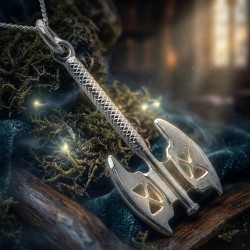
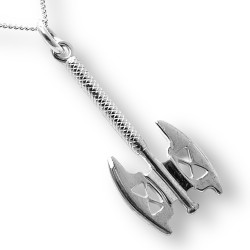
The Official Gimli's Axe Pendant — a 48mm sterling silver replica of the double-bladed battle-axe Gimli carried from Balin's tomb through the War of the Ring — is handcrafted in New Zealand by the official New Line Productions licence holders. Worn daily by Gimli across three films, from the depths of Moria to the fires of the Pelennor Fields.
View Gimli's Axe Pendant →Lothlórien — The Transformation No One Expected
After Gandalf fell on the Bridge of Khazad-dûm, the broken Fellowship staggered out of Moria and made for Lothlórien — the forest realm of Galadriel and Celeborn, deep in ancient Elven magic. The Galadhrim who guarded its borders had little love for Dwarves. Gimli entered blindfolded, as the price of admission.
What happened next is one of the most quietly important moments in Tolkien's entire work.
When Galadriel gave gifts to the Company, she addressed each member by name and in their own tongue — including Gimli, whom she addressed in Khuzdul, the secret language the Dwarves keep even from their closest allies. She spoke of the sorrows of his people. She understood. Gimli, who had entered Lothlórien suspicious and half-insulted, was undone by kindness.
When asked what gift he desired, he said that simply being permitted to look upon her and hear her voice was gift enough. But when pressed, he admitted what he truly wished: a single strand of her golden hair, to be kept as an heirloom of his house for as long as it lasted.
The significance of this was immense — and Galadriel knew it. Fëanor himself, the greatest craftsman in the history of the Elves, had asked the same gift three times during the First Age. She had refused him every time. Galadriel gave Gimli three strands, with a blessing: that his hands would overflow with gold, but that gold would have no dominion over him. He was made immune, by her gift, to the dragon-sickness that had consumed Thorin Oakenshield and corrupted so many of Durin's Folk before him.
From that day, Galadriel called him Lockbearer. And from that day, Gimli called himself a friend of Elves.
Helm's Deep — The Battle That Made Him Lord
The Fellowship had broken at Amon Hen. Frodo and Sam were heading to Mordor alone. Boromir was dead. Merry and Pippin had been taken by Uruk-hai. Gimli, Legolas, and Aragorn ran forty-five leagues across the plains of Rohan in less than four days, with only a few hours of sleep, tracking the Orcs who held the Hobbits.
They eventually came to Helm's Deep — the great fortress of Rohan that Helm Hammerhand had held against overwhelming odds centuries before, and which now faced a force of ten thousand Uruk-hai sent by Saruman. The Rohirrim were outnumbered and the walls were crumbling. Gimli fought in the Hornburg alongside Éomer and the defenders of Rohan.
It was here that the great orc-counting competition between Gimli and Legolas was born — a running tally of kills across the battle, kept with cheerful competitiveness in the middle of carnage. By the end of Helm's Deep, Gimli stood at 42 confirmed kills. Legolas counted 41. Gimli won.
Behind the walls of Helm's Deep lie the Glittering Caves of Aglarond — a vast cavern system of extraordinary natural beauty, lit by underground streams and studded with crystals. Gimli discovered them during the battle. He was utterly captivated. After the War of the Ring, he would return to make them his home and the seat of his new lordship.
The Paths of the Dead and the Pelennor Fields
When Aragorn chose to ride the Paths of the Dead — a cursed passage through the mountain, haunted by the spirits of Men who had broken their oath to Isildur and been condemned to walk in shadow until it was fulfilled — Gimli went with him. It took all his courage. Dwarves do not fear underground places, but the Dead are another matter. He recorded it afterwards as the most frightening experience of his long life.
They emerged at the other end with an army of the Dead behind them — the Oathbreakers, finally able to fulfil their pledge. Aragorn led them down the coast of Gondor, seizing the Black Ships of the Corsairs of Umbar. Gimli was there when those ships arrived at the Battle of the Pelennor Fields, turning the tide of the greatest battle of the age.
He was there at the Black Gate — the Battle of the Morannon — when Aragorn led the last army of the West to distract Sauron's eye while Frodo completed the quest inside Mordor. He was there when the Ring was destroyed and the tower of Barad-dûr fell. He saved Pippin's life on that battlefield, recognising the Hobbit's feet under the bulk of a dead troll and pulling him free.
After the War — Lord of the Glittering Caves
After the fall of Sauron, Gimli kept his promise to himself. He led a company of Durin's Folk south from Erebor to the Glittering Caves of Aglarond — the caverns he had glimpsed during the Battle of Helm's Deep — and established a new Dwarven settlement there. He became the first Lord of the Glittering Caves, founding a new chapter for his people outside the traditional mountain strongholds of the north.
The Dwarves of the Glittering Caves did not sit idle. They repaired the physical damage of the War of the Ring across Rohan and Gondor. Their greatest achievement: the new gate of Minas Tirith, destroyed when Sauron's forces broke it during the siege. Gimli's craftsmen replaced it with a gate of mithril and steel that surpassed anything that had stood there before.
He and Legolas remained close. They travelled together to Fangorn Forest and to the Caves of Aglarond, each giving the other the gift of seeing something beautiful that their own people rarely sought out. The friendship between the Dwarf and the Elf — the most unlikely bond in the Fellowship — outlasted the Third Age entirely.
Did Gimli Sail to the Undying Lands?
Yes. This is the last recorded fact about Gimli in all of Tolkien's appendices — and it is genuinely extraordinary.
In Fourth Age 120, the year King Aragorn Elessar died, Legolas built a grey ship in Ithilien and sailed down the Anduin to the Sea. Gimli went with him. He was 262 years old. Tolkien records the moment precisely in the Tale of the Years: "And when that ship passed an end was come in Middle-earth of the Fellowship of the Ring."
The Hobbits of the Shire, who preserved the account in the Red Book of Westmarch, wrote of it in wonder: "We have heard tell that Legolas took Gimli Glóin's son with him because of their great friendship, greater than any that has been between Elf and Dwarf. If this is true, then it is strange indeed: that a Dwarf should be willing to leave Middle-earth for any love, or that the Eldar should receive him, or that the Lords of the West should permit it."
No Dwarf had ever gone West before. The Undying Lands were not created for them — Tolkien was deliberately ambiguous about the nature of the Dwarves' souls and their ultimate fate. For Gimli to be granted passage was a singular exception, made possible, most scholars believe, by Galadriel's blessing and the extraordinary nature of his friendship with Legolas.
He is the only Dwarf in the history of Arda — across all the Ages — to have sailed to Valinor.
The Axes of Gimli and Glóin — Two Generations in Sterling Silver
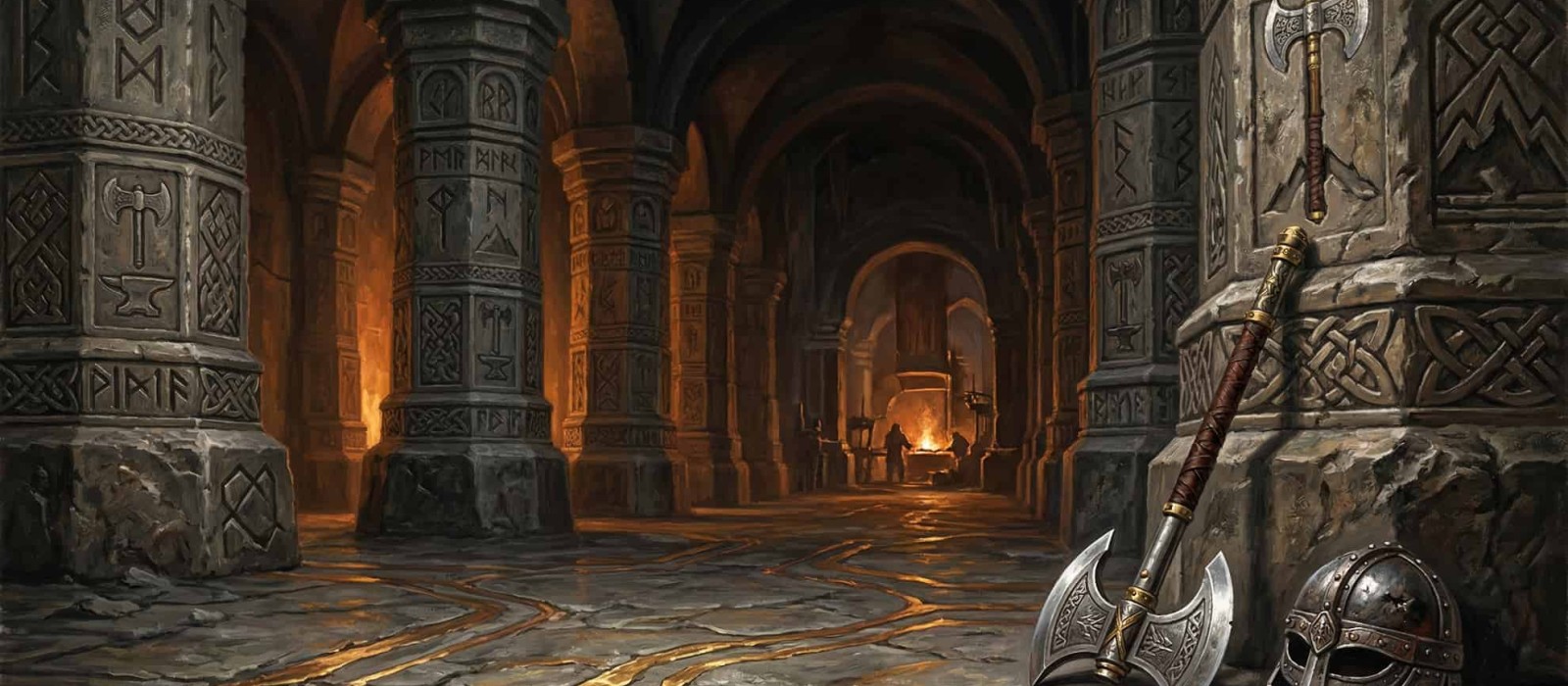
The axe is inseparable from Gimli's identity — and through him, from his father Glóin's. In Peter Jackson's films, the axes carried by father and son are nearly identical: double-bladed, heavy, built for war. The weapon is a visual shorthand for the entire House of Durin — practical, powerful, built to last.
There are two official sterling silver axe pendants in the collection, each representing a different generation of the same Dwarven bloodline.
Gimli's Axe Pendant
48mm in solid 925 sterling silver. The double-bladed battle-axe Gimli carried from the Chamber of Mazarbul in Moria through the Battle of the Morannon at the Black Gate. Every battle in the War of the Ring — Moria, Helm's Deep, Pelennor Fields, the Black Gate — was fought with this weapon. Worn as a 45cm pendant chain. Nickel-free. Backed by a 5-year written guarantee. Handcrafted in New Zealand by the official New Line Productions licence holders.
Shop Gimli's Axe →Glóin's Axe Pendant
60mm in solid 925 sterling silver. The axe of Glóin — one of Thorin Oakenshield's thirteen original Dwarves, and Gimli's father. The only official jewellery in the range that spans both trilogies: Glóin wields his axe in The Hobbit, and the same lineage of weapon is carried by his son Gimli through The Lord of the Rings. A father-to-son inheritance in silver, worn as a 45cm pendant chain. Nickel-free. 5-year guarantee. Made in New Zealand.
Shop Glóin's Axe →Frequently Asked Questions About Gimli
Who is Gimli in Lord of the Rings?
Gimli son of Glóin is the sole Dwarven member of the Fellowship of the Ring. Born in TA 2879, he represents the race of Dwarves — specifically the House of Durin — in the quest to destroy the One Ring. He fought through Moria, Helm's Deep, the Pelennor Fields and the Black Gate, and became the first Lord of the Glittering Caves after the war. He was played by John Rhys-Davies in Peter Jackson's film trilogy.
Did Gimli sail to the Undying Lands?
Yes. In Fourth Age 120 (when Gimli was 262 years old), he sailed West with his close friend Legolas from Ithilien. This made him the only Dwarf in the history of Middle-earth ever to journey to Valinor — the Undying Lands. Tolkien records this as the final note in the Tale of the Years, and notes that the ship's passing marked the end of the Fellowship of the Ring in Middle-earth.
What is Gimli's axe called?
Tolkien does not give Gimli's axe a specific name in the text — unlike Sting or Orcrist, it is not a named blade. It is a double-bladed battle-axe, and in the films it is visually near-identical to the axes carried by his father Glóin in The Hobbit. Gimli carried it from the Chamber of Mazarbul in Moria through every major battle of the War of the Ring.
Why did Galadriel give Gimli three strands of her hair?
When Galadriel gave gifts to the Fellowship at Lothlórien, Gimli asked only for a single strand of her golden hair — to be kept as an heirloom of his house. Galadriel was moved by the request: Fëanor, the greatest craftsman of the Elves, had asked the same gift three times in the First Age and been refused every time. She gave Gimli three strands, with a blessing that gold would never have dominion over him — granting him immunity to the dragon-sickness that had consumed Thorin Oakenshield. She called him Lockbearer from that day forward.
Is Gimli related to Thorin Oakenshield?
Not by direct descent, but by clan and heritage. Both are of the House of Durin — the eldest and most noble of the seven Dwarf houses. Gimli's father Glóin was one of Thorin's thirteen companions in The Hobbit, and one of only a handful who survived the Battle of Five Armies. Gimli grew up in Erebor after its restoration, shaped by the legacy of Thorin's quest — though he never met Thorin himself.
What happened to Gimli after the War of the Ring?
After the fall of Sauron, Gimli led a company of Durin's Folk to the Glittering Caves of Aglarond — the extraordinary cavern system he had discovered during the Battle of Helm's Deep — and founded a new Dwarven settlement there, becoming the first Lord of the Glittering Caves. He and the Dwarves of Aglarond helped rebuild much of the War's damage across Rohan and Gondor, including replacing the gate of Minas Tirith with a new one of mithril and steel. He eventually sailed West with Legolas in Fourth Age 120.
Why was Gimli left out of Thorin's quest in The Hobbit?
Gimli was only 62 years old at the time of Thorin's quest in TA 2941 — and while that is not young by human reckoning, for a Dwarf with a lifespan of over 250 years it was still considered too young for such a dangerous undertaking. Tolkien records in Unfinished Tales that Gimli was bitterly disappointed to be left behind, considering himself ready for adventure. His father Glóin went instead, and was among the survivors who reclaimed Erebor.
Sources & Further Reading
- The Lord of the Rings — The Fellowship of the Ring: 'The Council of Elrond'; The Two Towers: 'Helm's Deep'; The Return of the King: Appendix A: 'Durin's Folk'
- The Hobbit, or There and Back Again — J.R.R. Tolkien (1937) — Source for Glóin and the Quest of Erebor, establishing Gimli's family history
- Tolkien Gateway — tolkiengateway.net
Related Products