Middle-earth is not a backdrop. It is a character — ancient, layered, and as carefully constructed as any person in the story. J.R.R. Tolkien spent decades building its geography, history, and languages before he wrote a single chapter of The Lord of the Rings. Every location the Fellowship passes through carries the weight of thousands of years of history, and every landscape Tolkien describes serves a deliberate narrative purpose. The Shire is not merely where hobbits live. Moria is not merely a cave. Mordor is not merely a destination. They are the story's emotional architecture — and understanding them changes everything about how the narrative works.
There is a passage in The Fellowship of the Ring where Tolkien describes Frodo's last look back at the Shire as he leaves Bag End for the final time. He is fifty years old. He has lived his whole life in that valley. The Green Dragon is still lit. The mill is still turning. And he knows — though he cannot say exactly how — that he will not see it again the same way, if he sees it at all.
It is one of the most quietly devastating moments in the entire book. And it works entirely because of where it happens — because Tolkien had spent the previous chapters making you feel the weight and texture of the Shire so completely that leaving it costs something real. That is what the locations of Middle-earth do throughout the story. They are not settings. They are stakes.
The Shire — What Everything Is Being Fought For
Tolkien based the Shire on the English countryside he loved — the Midlands of the late Victorian era, a world of post roads and market towns, kitchen gardens and pipe-weed, where nothing very dramatic was supposed to happen and the biggest scandal in living memory was Bilbo Baggins disappearing at his own birthday party. He described it as the kind of place that existed, or once existed, in England before the Industrial Revolution began eating the hedgerows.
The Shire's smallness is the point. Tolkien understood that epic stories need a domestic scale to give them emotional weight — that you cannot care about saving the world unless you understand what the world being saved actually looks like from a comfortable armchair with a pipe. The Shire is the armchair. Every step Frodo takes away from it is a step away from that comfort, and the Ring's weight increases accordingly.
Sam Gamgee carries the Shire with him the entire journey. When he is in the tower of Cirith Ungol and everything has gone wrong and Frodo has been taken and he cannot see any way forward, he looks up and sees a star through a gap in the clouds. Tolkien writes: "The beauty of it smote his heart, as he looked up out of the forsaken land, and hope returned to him. For like a shaft, clear and cold, the thought pierced him that in the end the Shadow was only a small and passing thing: there was light and high beauty for ever beyond its reach." That is the Shire, carried inside him. Not a place but a principle — the idea that somewhere, ordinary life continues, and is worth returning to.
In New Zealand, the Shire comes to life at Hobbiton in Matamata — the most visited Lord of the Rings filming location in the country. Forty-four hobbit holes built into a working farm, the Party Tree, the Green Dragon. The set that felt more like a real village than any film set had a right to.
Rivendell — The House That Holds Everything Together
Rivendell — Imladris in Elvish, the Last Homely House East of the Sea — is the hinge on which the story turns. Both The Hobbit and The Lord of the Rings pass through it. The Council of Elrond happens here, and the Fellowship is formed here, and the strategy of the entire War of the Ring is decided here. Without Rivendell, there is no quest.
But Tolkien's Rivendell is not merely a plot convenience. It is a sanctuary outside of time — a place where the healing properties of Vilya, Elrond's Elven Ring, slow the normal decay of the world and fill the valley with a particular quality of light and peace. Bilbo arrives there with Thorin's company and cannot keep track of the days. The Fellowship rests there for two months after the escape from the Shire and leaves strengthened in ways they cannot quite account for. Rivendell restores things. It is where broken swords are reforged and where the weight of the road can, briefly, be put down.
Tolkien modelled Rivendell partly on the valley of Lauterbrunnen in Switzerland, which he had visited as a young man and which struck him as exactly the kind of place an Elf-lord would build his house. Peter Jackson filmed its equivalent in the Kaitoke Regional Park north of Wellington — a valley of ancient rimu and kahikatea forest, green and enclosed, with the Hutt River running through it. The natural light there has exactly the quality Tolkien described.
Lothlórien — The Wood That Time Forgot
Tolkien described Lothlórien as the most beautiful place remaining in Middle-earth during the Third Age — a forest of golden Mallorn trees where the Elvish world was most fully preserved against the shadow spreading from Mordor. Nenya, Galadriel's Ring of Water, maintained it: slowing time within its borders, keeping the beauty of the Elder Days alive in a world that was systematically losing them.
The Fellowship enters it in grief — they have just lost Gandalf in Moria — and finds themselves in a place that is not quite part of the normal world. Tolkien is careful about how he renders this. Frodo and Sam feel watched. The trees seem aware of them. The light is wrong — brighter than it should be for the time of day, coming from the wrong directions. Lothlórien is uncanny in the oldest sense of the word: familiar and strange simultaneously, beautiful in a way that carries a faint edge of unease, because you understand that this kind of beauty is no longer natural to the world and is being preserved by an act of will against its own time.
The Fellowship leaves with gifts that Galadriel has made or kept: the phial of starlight that Frodo carries into the darkness of Shelob's lair, the mallorn seed that Sam plants in the Shire when he comes home, the elven cloaks that make them nearly invisible in the wild. The gifts are practical. They are also symbols — of what Lothlórien was, and of the fact that its time was ending, and that these objects were all that could be carried away from it before it faded.
Peter Jackson filmed Lothlórien in the Kinloch Forest near Glenorchy in the South Island — one of the more remote and difficult locations of the entire production. The forest there has the quality of great age and unusual light that Tolkien described. When the Ring is destroyed and Nenya's power fails, that light goes with it.
Moria — The Kingdom That Greed Destroyed
The Mines of Moria — Khazad-dûm, the great Dwarven realm delved under the Misty Mountains — is the most structurally dramatic location in The Fellowship of the Ring, and the one that does the most narrative work in the shortest time. The Fellowship enters it as a shortcut and leaves it shattered, Gandalf gone, the road changed forever.
But Moria is not just a dungeon. It is a tragedy with a specific moral. Tolkien tells you exactly what happened there: the Dwarves of Durin's Folk delved too deep, found mithril, grew richer and more ambitious, and eventually struck something in the roots of the mountain that destroyed everything they had built. The Balrog — a demon of the First Age that had been sleeping in the dark since Morgoth's defeat — woke up and drove them out. The greatest kingdom in Dwarf history, built over thousands of years, fell in a matter of months because of the hunger for more.
Tolkien used Moria to embody one of his deepest preoccupations: the relationship between craft and corruption. The Dwarves were extraordinary makers — Moria's great halls and carved pillars and the Twenty-first Hall are described with an awe that Tolkien reserves for very few places — but their appetite for the metal they found there consumed everything else. The mithril was real. The beauty was real. The destruction was also real, and the two things were directly connected.
When the Fellowship walks through the darkness of Moria and Gandalf reads Balin's book — "We cannot get out. They are coming." — the horror works because Tolkien has already made you understand what was lost. The archaeology of the place speaks for itself.
Rohan — The Riders and the Open Plains
Rohan is the kingdom of the Rohirrim — the horse-lords of the plains of Calenardhon, descendants of the Éothéod, a people who came south from the far North in the Third Age and were given the land by Gondor in return for their aid against Sauron. They are Tolkien's Old English analogue: their language, their culture, their warrior ethic, their loyalty to their king and their hall all draw directly from the Anglo-Saxon tradition that Tolkien spent his career studying. The Rohirrim speak a language that is, in Tolkien's fictional conceit, what Old English would look like if it were the native tongue of a horse people of the plains.
The landscape of Rohan — the endless golden grass plains, the White Mountains rising in the south, the wind that never stops — is as deliberately crafted as the culture it shapes. A people who live on the plains become defined by openness, by the horizon, by the horse as the measure of freedom and distance. When that openness is threatened — when Isengard begins industrialising the forests, when the Dunlendings press from the west, when the armies of Mordor march — the threat is felt not just politically but physically, as a narrowing of the world.
Peter Jackson filmed Rohan on the Canterbury Plains and in the Mackenzie Basin of the South Island — the vast tussock grasslands of New Zealand's high country, with the Southern Alps rising behind them. The landscape gives exactly the quality Tolkien described: enormous, wind-scoured, beautiful in a way that has nothing to do with shelter or comfort.
Gondor — The Last Kingdom of Men
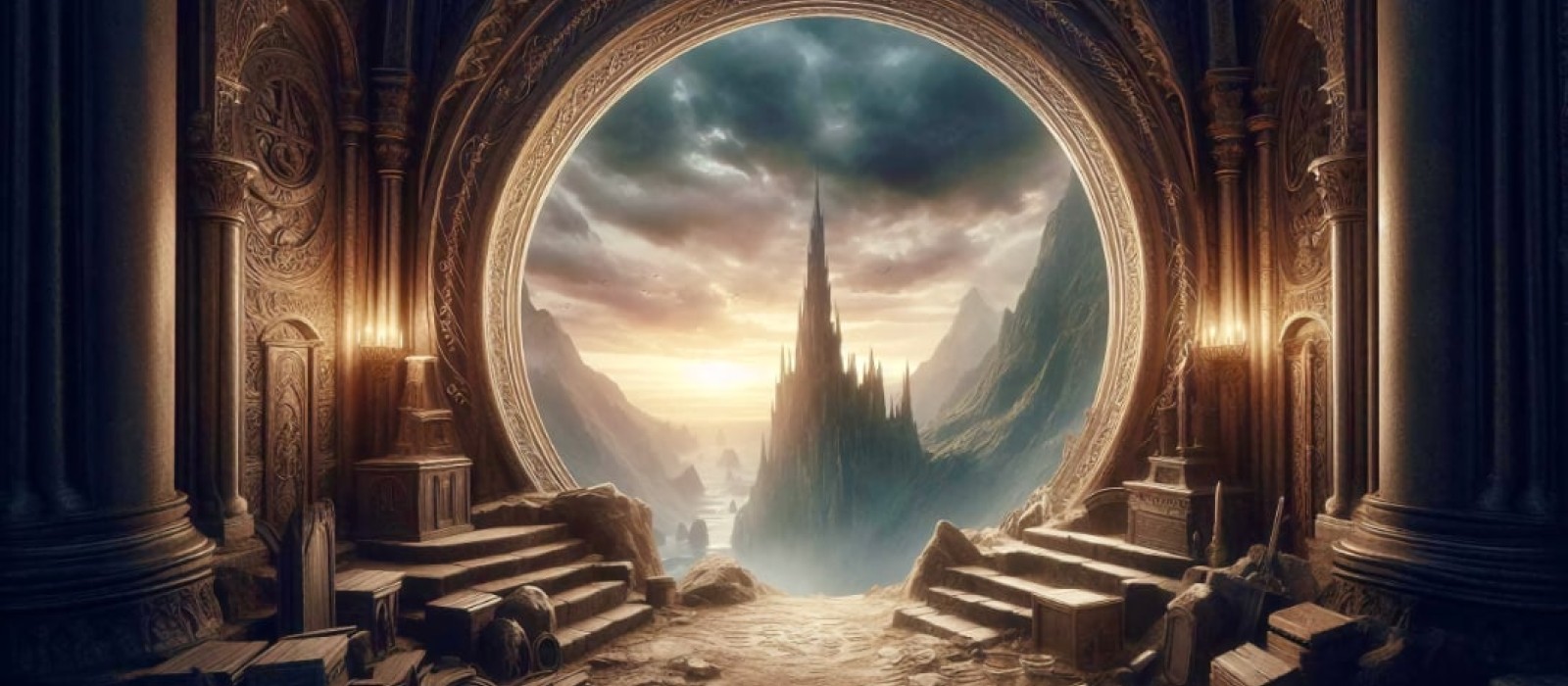
Minas Tirith — the White City of Gondor, built against the shoulder of Mount Mindolluin in seven concentric rings of white stone, its Tower of Ecthelion rising from the topmost level to catch the morning light — is Tolkien's image of what a great city of Men could be at its best. Based partly on medieval European hill cities and partly on his sense of what Númenórean architecture and engineering would have produced, it is a city of immense beauty and profound melancholy: everything about it speaks of something that was once greater and is now reduced, still noble but diminished.
This is the point. Gondor in the Third Age is not at its height — it is in managed decline. The line of Kings ended a thousand years before the story begins. The Stewards have ruled in their absence, competently but without the legitimacy or the power of the true line. The White Tree in the courtyard — a descendant of the original Tree of Númenor, itself a descendant of Telperion, one of the Two Trees of Valinor — is dead and dry. Nothing can be planted in its place until the King returns.
When Aragorn arrives and a sapling of the White Tree is found growing on the mountain above the city — found by Gandalf, planted by Aragorn in the courtyard, blooming in time for the wedding of the King — it is one of the most quietly significant moments in the entire story. The tree's blooming is the sign that the line of Kings has returned, that the age of Stewards is over, that the thing that was diminished is restored. Gondor's landscape, like all of Tolkien's landscapes, is not decorative. It is diagnostic.
Mordor — The Land That Evil Made
Mordor is the only location in Middle-earth that Tolkien describes as entirely the product of a single will. The Plateau of Gorgoroth, the plains of ash, the Dead Marshes at its margins, the Mountain of Doom at its centre — this is not a landscape that happened. It is a landscape that Sauron made, or that the presence of Sauron's power over three ages made, the land itself becoming an expression of the domination that was being exercised from Barad-dûr.
Tolkien had seen the Western Front. He had walked across ground that had been turned into something that no longer resembled landscape — ground that had been shelled and gassed and fought over so many times that it had ceased to be earth and become something else entirely. He never made that connection explicitly in his letters, but it is hard to read the approach to Mordor without thinking of what he had seen in 1916. The Dead Marshes, with their pale lights and the faces of the dead visible beneath the water, are one of the most specifically horrifying things in all of his writing. Sam and Frodo moving across the grey, flat, stinking waste toward the Mountain of Doom — growing thinner, darker, more diminished with every page — is the book's central physical ordeal, and the landscape is the instrument of it.
Peter Jackson filmed the approach to Mordor on the central plateau of the North Island — the volcanic landscape around Tongariro National Park, with Ngauruhoe standing in for Mount Doom. It is the most visually distinctive landscape in New Zealand: black rock, steam vents, snow on the upper slopes, the horizon flat and ashy in every direction. It looks exactly right. Because Tolkien was describing a volcanic landscape that he understood intuitively and that New Zealand, alone among the filming locations of the world, could provide authentically.
New Zealand — Why Middle-earth Lives Here
Peter Jackson chose New Zealand for the films because no other country on earth offers the range of landscape that Middle-earth requires within a single day's drive. The Shire's gentle green hills in the North Island. Rivendell's ancient beech forest near Wellington. Rohan's open plains in the Canterbury high country. Mordor's volcanic plateau in Tongariro. The Misty Mountains in the Southern Alps. All of it, real, accessible, and possessed of a quality of light and scale that makes it feel like somewhere that existed before recorded history.
But New Zealand's connection to Middle-earth is not just cinematic. The official licensed jewellery — the One Ring, the Evenstar, the Key to Erebor, Nenya, Orcrist, and the rest of the collection — is made here, by the New Line Productions licence holders, in the same country where every image of Middle-earth that has reached a cinema screen was photographed. When you wear an Evenstar pendant or a One Ring that was made in New Zealand, you are wearing something that comes from the same place as every scene of the films that gave those objects their meaning.
New Zealand is not merely where Middle-earth was filmed. For a generation of people who first encountered Tolkien's world through Peter Jackson's vision, New Zealand is Middle-earth. The official jewellery made here carries that provenance with it in a way that no piece made elsewhere can replicate.
The One Ring — Sterling Silver
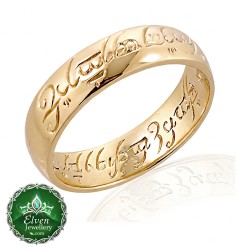
The ring forged in the fires of Mount Doom — filmed on Ngauruhoe in Tongariro National Park, New Zealand. Solid 925 sterling silver, precision engraved, Comfort Curve, custom-made to size. Made in New Zealand by the New Line Productions licence holders.
Shop One Ring →Arwen Evenstar Pendant
The official Evenstar — the pendant of Rivendell, worn by Arwen in the Last Homely House filmed in Kaitoke Regional Park, Wellington. Solid 925 sterling silver, claw-set CZ stones. Made in New Zealand by the New Line Productions licence holders.
Shop Evenstar →Nenya — Ring of Water
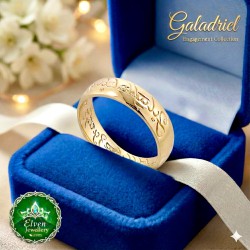
Galadriel's Ring of Water — the ring that sustained Lothlórien filmed in the forests of the South Island. The only officially licensed Elven Ring in the collection. Solid 925 sterling silver with white gold finish. Made in New Zealand.
Shop Nenya →Frequently Asked Questions About Middle-earth Locations
Where is the Shire in real life?
The Shire was filmed at Hobbiton, a working sheep farm near Matamata in the Waikato region of New Zealand's North Island. The film set — forty-four hobbit holes, the Green Dragon Inn, and the Party Tree — was originally built for Peter Jackson's 1999–2003 Lord of the Rings trilogy. It was rebuilt in permanent materials for The Hobbit trilogy (2012–2014) and is now open as a year-round tourist attraction. Tolkien based the Shire on the English Midlands countryside of the late Victorian era, describing it in letters as the kind of rural England that existed before industrialisation changed it.
Where was Rivendell filmed?
Rivendell's outdoor scenes were filmed primarily at Kaitoke Regional Park, located in the Hutt Valley north of Wellington in New Zealand's North Island. The park's ancient rimu and kahikatea forest, with the Hutt River running through it, provided exactly the quality of enclosed, green, light-filled valley that Tolkien described. Rivendell's interiors were built at Weta Workshop studios in Wellington. Tolkien based Rivendell partly on the Lauterbrunnen valley in Switzerland, which he visited as a young man.
Where was Mordor filmed?
The volcanic landscapes of Mordor were filmed on the central plateau of New Zealand's North Island — specifically in and around Tongariro National Park, which contains the active volcanic mountains Tongariro, Ngauruhoe, and Ruapehu. Mount Ngauruhoe served as the visual basis for Mount Doom. The black rock, steam vents, and ash plains of the park's volcanic landscape provided exactly the quality of barren, ancient, geologically violent terrain that Tolkien described. No other readily accessible filming location in the world could have provided an authentic volcanic landscape at that scale.
Why did Peter Jackson film in New Zealand?
New Zealand offered, within a single country and reasonable driving distance, the full range of landscapes Middle-earth requires: subtropical forest for the Shire, ancient beech forest for Rivendell, open tussock plains for Rohan, volcanic plateau for Mordor, and the Southern Alps for the Misty Mountains. No other country provides this variety of landscape type at this scale and within this proximity. The quality of light, particularly in the South Island, also matched Tolkien's descriptions in ways that other locations did not. Jackson was born in New Zealand and had an intimate knowledge of its geography.
Is Tolkien's Middle-earth based on a real place?
Middle-earth is not based on a single real place but draws on several. England — particularly the Midlands countryside and the landscapes of Tolkien's childhood in Birmingham and later Oxford — provided the template for the Shire and the general feel of the inhabited lands. The mountains of Switzerland, which Tolkien walked as a young man, influenced his descriptions of the Misty Mountains. The Norse and Icelandic landscapes he studied through the literature he loved shaped the more extreme and dramatic locations. He described Middle-earth as representing "the North-west of the Old World, Europe" — specifically, a mythological version of England and its northern European connections.
What is the significance of Helm's Deep?
Helm's Deep — the fortified gorge in the White Mountains of Rohan — is significant on three levels in Tolkien's story. As a location, it is the last defensible point in Rohan when the kingdom is overrun. As a narrative device, it is the setting of the War of the Ring's most concentrated military battle. As a historical reference, it takes its name from Helm Hammerhand — the ninth King of Rohan — who made his legendary last stand in the fortress during the Long Winter of TA 2758–59, conducting night raids against the besieging Dunlendings until he died standing in the snow. The history of the fortress gives the battle of the War of the Ring its weight: this place has saved the Rohirrim before.
Sources & Further Reading
- The Lord of the Rings — The Fellowship of the Ring, The Two Towers, The Return of the King — J.R.R. Tolkien: primary source for all location descriptions and their narrative role
- The Hobbit, or There and Back Again — J.R.R. Tolkien (1937): Rivendell, Mirkwood, and the geography of the North
- The Silmarillion — J.R.R. Tolkien, ed. Christopher Tolkien: the deep history of Moria, Lothlórien, Gondor, and the origins of Middle-earth's geography
- The Letters of J.R.R. Tolkien, ed. Humphrey Carpenter: Letters 131 and 183 — Tolkien's own descriptions of his geographical influences and the real-world inspiration for Middle-earth's landscapes
- Where Was Lord of the Rings Filmed in New Zealand? — The Complete Location Guide — lotrjewelry.com blog: full guide to every New Zealand filming location
- Tolkien Gateway — tolkiengateway.net
Related Products