Before he was Gollum, he was Sméagol — a young hobbit of the Stoors, the river-folk who lived beside the Gladden Fields in the Vales of Anduin. Around the year 2463 of the Third Age, his cousin Déagol pulled the One Ring from the riverbed while fishing. Sméagol murdered him for it on his birthday, was cast out by his family, and carried the Ring into the dark beneath the Misty Mountains for nearly five hundred years. The new film The Hunt for Gollum, releasing 17 December 2027, will finally bring this untold backstory to the screen.
Every villain has an origin story, but Gollum's is something rarer: a tragedy. Tolkien never wrote him as a monster. He wrote him as a hobbit — or something so close to a hobbit that Gandalf himself believed they were kin. A small, ordinary person from a small, ordinary family, undone by a golden ring lying in the mud of a river.
With Kate Winslet now confirmed as Marigol, a matriarch of the Stoors, the upcoming film is clearly going back to that riverbank. So this is the story the movie will be drawing from — who the Stoors were, what happened on Sméagol's birthday, and how a fishing trip changed the fate of Middle-earth.
Who Were the Stoors? The Forgotten Branch of Hobbit-kind
Tolkien tells us hobbits came in three breeds: the Harfoots, the Fallohides, and the Stoors. The Stoors were the broadest and heaviest of the three — the only hobbits who took readily to water, who used boats, who fished, and who could even grow a little down on their chins. While most hobbit-kind migrated west over the Misty Mountains towards what would become the Shire, one group of Stoors lingered in the east, in the green river-country of the Vales of Anduin near the Gladden Fields.
That is where Sméagol was born — into a large, respected family of riverside Stoors ruled by a stern grandmother, the matriarch of the clan. In Gandalf's account in The Fellowship of the Ring, she was a woman of standing, wealthy as their folk counted wealth, and it was she who finally expelled Sméagol from the family when his thieving and muttering became unbearable.
Is Marigol in the Books?
Not by that name. Marigol, Kate Winslet's character, appears to be the film's interpretation of the Stoor matriarch tradition — quite possibly inspired by Sméagol's grandmother herself, the unnamed clan-mother of Tolkien's account. The name fits beautifully: hobbit women in Tolkien carry flower names like Marigold, and Sam Gamgee's own sister was Marigold Gamgee. It is exactly the kind of detail the writers' room of Fran Walsh, Philippa Boyens, Phoebe Gittins and Arty Papageorgiou would reach for.
The Birthday at the River — Déagol and the Ring
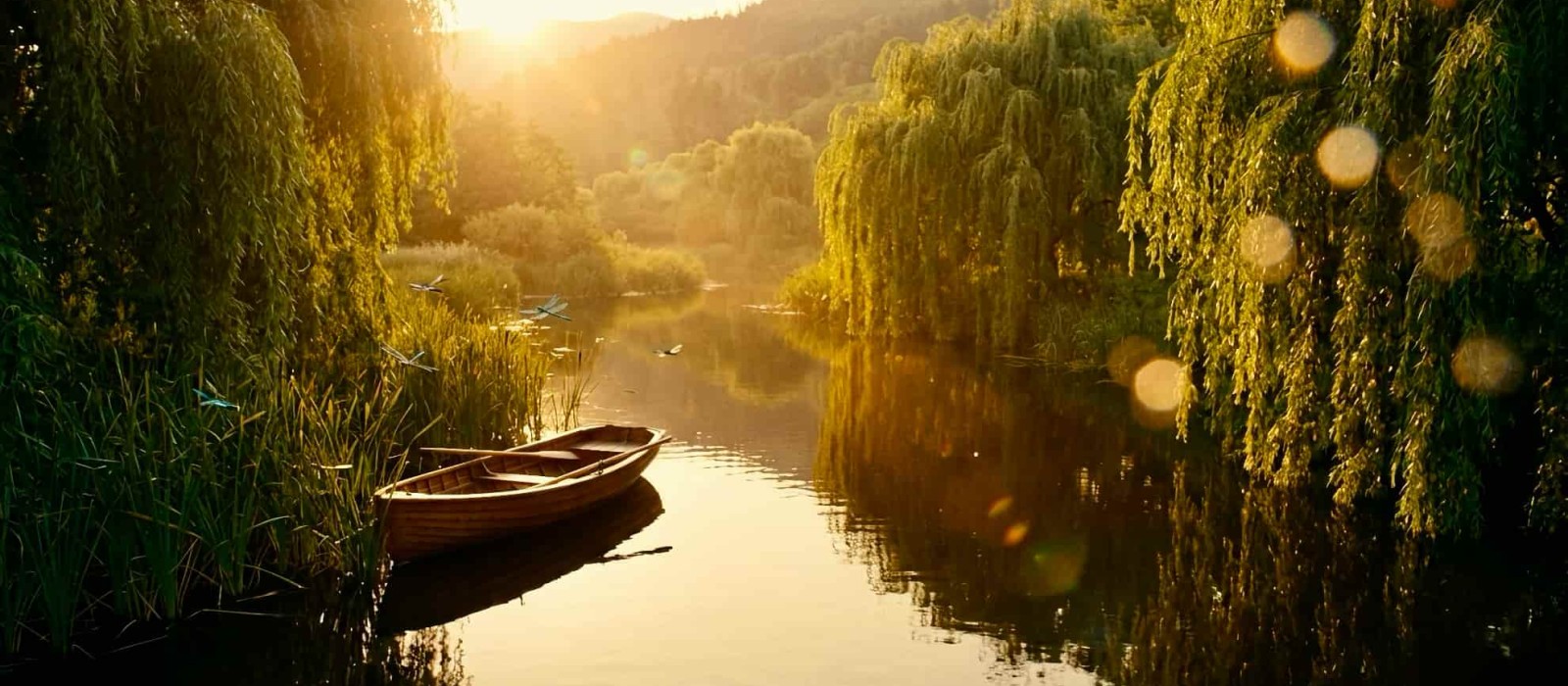
It happened on Sméagol's birthday. He went fishing with his cousin and closest friend Déagol on the Anduin, near the Gladden Fields — the same reach of river where, two and a half thousand years earlier, Isildur had been ambushed and the One Ring had slipped from his finger into the water.
A great fish dragged Déagol out of the boat and down to the riverbed, and when he surfaced, gasping, his hand held something golden from the mud. Sméagol watched the Ring glitter in his cousin's palm and asked for it as a birthday present. Déagol refused — he had already given Sméagol a present that year, and the Ring was his find. So Sméagol caught him by the throat and strangled him, took the Ring, and hid the body.
No one ever found Déagol. And Sméagol discovered that when he wore his new treasure, no one could find him either.
The Slow Corruption
Invisibility made Sméagol a thief and an eavesdropper. He learned secrets and used them cruelly, took to muttering to himself, and gurgled in his throat — which is how he earned the name Gollum, an insult before it was an identity. His grandmother eventually expelled him from the family, and around the year 2470 of the Third Age he crept up the streams towards the Misty Mountains and vanished into the tunnels beneath them, taking the Ring out of the world's sight for nearly five centuries.
He was perhaps thirty-three when he found the Ring — barely of age, by hobbit reckoning. He was over five hundred and eighty when he finally fell into the fires of Mount Doom still clutching it. No other bearer carried the Ring so long, and no other bearer paid so terrible a price.
Why the Ring Didn't Destroy Him — and Why It Couldn't Save Him
Gandalf says something remarkable about Gollum: he was tougher than even the Wise would have guessed. The hobbit-part of his mind never fully died. There was a corner of it that remembered wind on the water, sunlight on grass, the taste of fish, the sound of family — and the Ring could starve that corner, but never quite extinguish it.
That is the war the films made famous: Sméagol against Gollum, the river-hobbit against the creature, fought in one ruined body across the centuries. It is also why Frodo could reach him where no one else could, and why Bilbo's pity — staying his hand in the dark under the mountains — turned out to rule the fate of the entire quest. As Gandalf foresaw, Gollum still had a part to play before the end.
What the New Film Will Show
Philippa Boyens has described The Hunt for Gollum as an intense, psychological story told through the perspective of this one creature, set in the years between Bilbo's birthday party and the Mines of Moria. The hunt itself — Gandalf and Strider tracking Gollum through the wild — is the present-day thread. But the casting of Winslet's Marigol among the Stoors tells us the film will also take us back: to the river, the family, the birthday, and the murder that started it all. For the first time on screen, we will meet Sméagol before the Ring.
The Ring That Started It All — Made in New Zealand
The Hunt for Gollum is being filmed in New Zealand, where every Middle-earth film has been made — and where the official jewellery has always been made too. Each piece at elvenjewellery.com is crafted in New Zealand by the New Line Productions licence holders, with a Licence of Authenticity card and a 5-year guarantee. The two treasures of Gollum's story are both here.
One Ring — Sterling Silver
The golden thing in the mud of the Gladden. The treasure Sméagol killed for and Déagol died for, found again by Bilbo in the dark. Solid 925 sterling silver, custom-made to your size, made in New Zealand by the New Line Productions licence holders.
My Precious Ring
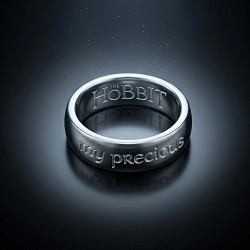
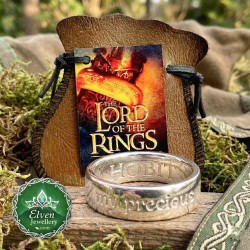
The name Gollum gave his treasure in the long dark — and the only word of love he had left. "My Precious" engraved on the outside, the official Hobbit logo inside. Solid 925 sterling silver, made in New Zealand by the New Line Productions licence holders.
Sméagol and the Stoors — Frequently Asked Questions
Was Gollum a hobbit?
Yes — or as near as makes no difference. Gandalf believed Sméagol was of hobbit-kind, belonging to the Stoors, one of the three ancient breeds of hobbits. The Stoors were river-dwellers of the Vales of Anduin, akin to the ancestors of Shire hobbits, which is why Gollum and Bilbo could trade riddles from the same shared tradition.
Who was Déagol?
Déagol was Sméagol's cousin and friend, a fellow Stoor. While fishing on the Anduin near the Gladden Fields, he was pulled into the water by a great fish and found the One Ring on the riverbed. Sméagol murdered him for it the same day — Sméagol's birthday — making Déagol the Ring's briefest bearer.
How did Sméagol find the One Ring?
He didn't — Déagol did. The Ring had lain in the river since Isildur was killed at the Gladden Fields over two thousand years earlier. When Déagol pulled it from the mud, Sméagol demanded it as a birthday present, was refused, and strangled his cousin to take it.
How long did Gollum have the Ring?
Nearly five hundred years. He took it around the year 2463 of the Third Age and lost it to Bilbo in 2941. The Ring stretched his life far beyond any natural hobbit span — he was over 580 years old when he fell into the Cracks of Doom in 3019.
Who is Marigol in The Hunt for Gollum?
Marigol, played by Kate Winslet, is a matriarch of the Stoors in the upcoming film. She is not named in Tolkien's books, but appears to draw on the Stoor matriarch of Gandalf's account — Sméagol's grandmother, the head of his family, who eventually cast him out after the Ring corrupted him.
What were the Stoors in Lord of the Rings?
The Stoors were one of the three breeds of hobbits, alongside the Harfoots and Fallohides. They were the heaviest-built, the most comfortable with water and boats, and the last to migrate west. Sméagol's people were a group of Stoors who remained in the Vales of Anduin near the Gladden Fields.
Will The Hunt for Gollum show Sméagol's backstory?
All signs point to yes. The film explores Gollum's past as a young Stoor, and the casting of Kate Winslet as the Stoor matriarch Marigol indicates the story will return to the river-community where Sméagol found the Ring. The film releases in cinemas on 17 December 2027.
Sources and Further Reading
- J.R.R. Tolkien — The Fellowship of the Ring, "The Shadow of the Past" (Gandalf's full account of Sméagol and Déagol)
- J.R.R. Tolkien — The Lord of the Rings, Prologue, "Concerning Hobbits" (the three breeds of hobbits)
- J.R.R. Tolkien — The Lord of the Rings, Appendix B, "The Tale of Years" (dates of the finding of the Ring)
- J.R.R. Tolkien — The Hobbit, "Riddles in the Dark"
- Collider — "The Hunt for Gollum Officially Confirms Aragorn Recast as the Full Cast List Is Unveiled" (April 2026)
- Empire — Philippa Boyens on The Hunt for Gollum's psychological, interior story (January 2026)
- The Hollywood Reporter — "Lord of the Rings: Hunt for Gollum Reveals Full Cast" (April 2026)
Related Products