
On May 13, 2026, Peter Jackson received an Honorary Palme d'Or at the Cannes Film Festival, presented to him by Elijah Wood. The following morning, at a Cannes masterclass, he explained why he was not directing The Hunt for Gollum: "The film is very much an internal story about Gollum's psychology and his sort of addiction. It's a very personal story to Gollum, the character. Andy knows this guy better than anybody. He's going to put a Gollum psychology on screen that you cannot imagine." Two words in that statement are doing more work than they appear to: psychology and addiction. Jackson was not describing an action film about a creature being hunted across a wilderness. He was describing a character study of someone in the grip of a dependency that has consumed everything he once was. That is a very different kind of story, and understanding it changes how you read Gollum across all six existing films.
Tolkien never used the word addiction about Gollum. The concept as a clinical framework did not exist in the form we use it today when he was writing The Hobbit and The Lord of the Rings in the 1930s and 1940s. But what he described, with extraordinary precision, is what we now understand addiction to be: the progressive replacement of a person's own desires, relationships and identity by a single compulsive need, until the person is functionally gone and only the need remains.
Gollum is not a monster Tolkien invented to give Bilbo a puzzle in the dark. He is a study of what happens to a person when something takes hold of them and does not let go.
What the Ring Actually Did to Sméagol
Sméagol was a Stoor hobbit, living in the community of the Gladden Fields with his family and his cousin Déagol. He was curious, clever, and by Gandalf's account something of a nuisance to his family in the way of a person who asks too many questions and pries into things that are not his concern. He was not evil. He was not particularly good either. He was an ordinary person.
On the day Déagol found the Ring in the river, Sméagol felt a desire for it so immediate and overwhelming that he murdered his cousin to possess it. Tolkien is specific about this: it was Sméagol's birthday. Déagol offered it as a gift and Sméagol demanded it as a right. When Déagol refused, Sméagol strangled him.
This is not presented as a gradual corruption. The Ring reached into Sméagol and found something already there: a capacity for possessiveness, for acquisitiveness, for the prioritising of his own desire over another person's life. It did not create that capacity. It amplified it, instantly and beyond any proportion the original quality warranted, until an impulse that in ordinary life would have produced a moment of coveting produced instead a murder.
This is how addiction is now understood to work. The substance or behaviour does not create the vulnerability. It finds it, amplifies it, and makes it the organising principle of a life.
The Progressive Loss of Self
After the murder, the Ring's effect on Sméagol continued in the pattern that modern addiction research describes as characteristic: escalating tolerance, progressive withdrawal from normal life, and the gradual replacement of the person's previous identity by the identity organised around the dependency.
His family noticed the change immediately. He became furtive, dishonest, given to muttering to himself, increasingly antisocial. He began spending time alone. His grandmother, the matriarch of the community, eventually drove him out, and he went under the Misty Mountains where he lived in the dark for nearly five hundred years, eating fish and the occasional goblin, speaking to himself in the two voices that had replaced the single voice he was born with.
The two voices are the most clinically precise detail in Tolkien's portrait. Sméagol and Gollum are not a supernatural split: they are the remnant of the original person and the identity the Ring created, living in permanent internal conflict over a single question. The Sméagol voice retains fragments of who he was: his memories of warmth, his attachment to Frodo, his capacity for brief happiness when someone treats him with kindness. The Gollum voice is the addiction speaking: the calculating, the scheming, the reduction of every relationship to its potential utility in recovering the Ring.
Clinical literature on addiction describes this internal split as one of its most characteristic features: the person knowing, on some level, that what they are doing is destructive, while being unable to stop doing it. The knowing self and the compelled self existing in parallel, each real, each unable to fully dislodge the other.
Why He Could Not Simply Stop
Frodo's mercy toward Gollum, sustained throughout The Two Towers against Sam's more pragmatic scepticism, is grounded in his understanding of what the Ring does to a person. He has worn it. He knows what it pulls at. He knows that what Gollum is, he himself could become, and that the distance between them is not a difference of character so much as a difference of duration. Gollum has been bearing the Ring's weight for five centuries. Frodo has been bearing it for months.
Gandalf makes the same point earlier, when Frodo asks why Bilbo did not simply kill Gollum in the tunnels. Gandalf says Gollum is not wholly ruined. That there is a small corner of him that Sauron has not touched. That pity and mercy may yet matter. He is not being sentimental. He is being precise: the Sméagol voice still exists, which means the person is still in there, which means the addiction has not yet fully completed its work.
This is why Gollum could not simply stop wanting the Ring. The Ring had been the organising principle of his existence for so long that there was no longer any self capable of wanting anything else. You cannot simply decide to stop when the thing you are stopping is the structure your identity has been built around. The withdrawal is not just physical. It is existential.
The Moment of Choice — and Why It Failed
The most controversial scene in Peter Jackson's The Two Towers, among Tolkien fans, is the sequence where Sméagol appears to win the internal argument with Gollum: he sends Gollum away, thanks Frodo for his kindness, seems for a moment to be genuinely present as a person rather than as a driven creature. It was an addition to Tolkien's text, and many readers felt it overplayed the possibility of his redemption.
But Jackson and Fran Walsh and Philippa Boyens were doing something consistent with what Tolkien actually wrote, just making it more visible on screen. In the book, Tolkien gives Gollum a moment at the door of Shelob's lair where he reaches out toward Frodo sleeping, and something in him hesitates. If Sam had not woken and spoken sharply, something might have changed. It does not change. The moment passes. Gollum goes through with the betrayal.
Tolkien understood that the capacity for recovery does not mean recovery will happen. The window exists. People do not always climb through it. What closes Gollum's window is not a lack of will or a fundamental evil in his nature. It is the length of time the dependency has been operating, the depth of the identity replacement it has achieved, and the cruelty of a single ill-timed word that pushes him back into the Gollum voice at precisely the moment the Sméagol voice was winning.
This is one of the saddest things in the entire book. Not a villain being defeated, but a person failing to recover, by the narrowest possible margin, for reasons that are not entirely their fault.
Tolkien's Sources — Corruption as Process
Tolkien was a devout Catholic and his understanding of moral corruption was theological as much as psychological. The concept of the Ring's effect on its bearers draws on his belief that evil works not by replacing goodness with evil but by taking something genuine and good in a person and distorting it beyond recognition.
Sméagol wanted to know things. That was real. The Ring took that quality and turned it into obsessive secrecy, hoarding, the keeping of knowledge as power. Boromir wanted to protect his people. The Ring took that and turned it into the willingness to take the Ring by force, to justify the harm by the end. Galadriel wanted to preserve beauty. The Ring offered to let her preserve beauty forever, at the cost of becoming the instrument of domination. The desire in each case was genuine. The distortion in each case was total.
This is Tolkien's theology of addiction, expressed in mythological rather than clinical terms: the self is not replaced by something alien, it is corrupted from within, using the person's own genuine qualities as the mechanism of their destruction. The Ring did not give Sméagol a new desire. It gave his existing desire a magnitude that destroyed everything else.
Why Serkis Was Always the Right Director
Andy Serkis has said in multiple interviews that he approached Gollum from the beginning as a performance about addiction and psychological damage rather than as a performance about a monster. He drew on research into addiction and dissociative states in developing the physical grammar of the character: the way the two voices inhabited the body differently, the way withdrawal from the Ring manifested in Gollum's physicality, the specific quality of the need in his eyes when the Ring is nearby.
Jackson's statement that the film is about Gollum's psychology and addiction is therefore not a new idea imposed on the character for the purposes of marketing The Hunt for Gollum. It is the articulation of what Serkis has understood about the character for twenty-five years, now placed at the centre of a film that covers the period of Gollum's story that has never been dramatised: the years after he lost the Ring, when the withdrawal was at its most acute, when he was most completely the addiction with almost nothing of Sméagol left, when the hunger drove him to Mordor and to the torture that gave Sauron the two words that nearly destroyed everything.
Nobody else who could plausibly direct this film has spent twenty-five years living inside that psychology. Jackson's reasoning was not modest deference to a colleague. It was a precise understanding of what the film required and who had the materials to make it.
What This Means for The Hunt for Gollum
If the film is genuinely structured as a psychological portrait of addiction, it will be doing something that no film in the franchise has attempted in quite this way. The existing six films show Gollum as a supporting character: important, brilliantly performed, but always in service of Frodo's story or Bilbo's story or the larger narrative of the Ring. The Hunt for Gollum places him at the centre, and the period it covers is the period when the addiction is driving the plot rather than a character arc within it.
The years after Gollum loses the Ring to Bilbo are the years when he is most fully consumed. He has nothing. The Ring is gone. Sméagol is nearly gone too. What remains is the need, and the need takes him south toward Mordor where Sauron finds him, and the torture extracts the two words that set everything else in motion, and then he is released and the need drives him north again toward the Shire, toward "Baggins," toward the Ring.
Aragorn catches him in the Dead Marshes. Thranduil's Elves hold him in Mirkwood. He escapes. And all of it is driven not by plan or intelligence or even malice in the full sense, but by the hunger that replaced him five centuries ago and will not stop until the Ring or Gollum himself is destroyed in the Crack of Doom.
That is the film Peter Jackson described. That is the film Andy Serkis is making. It is, if it is done with the care the subject warrants, one of the most unusual things a major fantasy franchise has ever attempted: a film whose central subject is not heroism or villainy but the long, slow, terrible process of a person being consumed by something they cannot put down.
The Official One Ring — Made in New Zealand
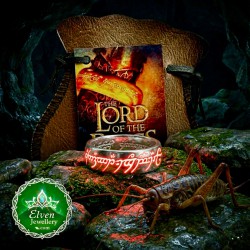
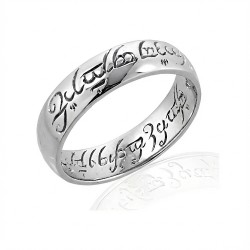
The ring that Gollum called his precious for five centuries, that he killed to possess, that he could not stop wanting even when wanting it destroyed everything else in him, is the central piece of the official collection at lotrjewelry.com. Made in New Zealand by the New Line Productions licence holders, in the country where The Hunt for Gollum is currently filming.
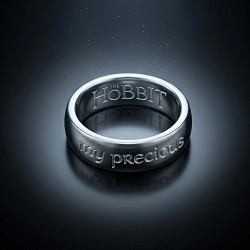
My Precious Ring
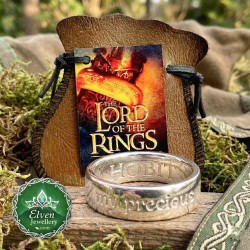
"My Precious" is engraved outside. Official Hobbit logo inside. The ring Gollum could not stop wanting, which he called by a name rather than what it was, because naming it as the Ring would have been acknowledging that it had him rather than the other way round. Solid 925 sterling silver. Made in New Zealand.
One Ring — Sterling Silver
The One Ring, precision-engraved with the Black Speech inscription on both surfaces. The ring, whose psychology and addiction Peter Jackson described as the subject of the entire film. Solid 925 sterling silver, Comfort Curve, custom-made to size. Made in New Zealand by the New Line Productions licence holders.
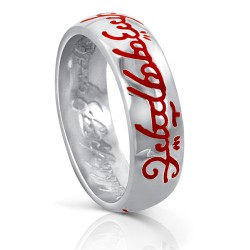
One Ring — UV Fire Script
The inscription glows red under UV light. The ring whose inscription Gandalf read in Frodo's hearth, knowing then what it had done to Gollum and what it would do to whoever carried it next. Custom-made to size. Made in New Zealand.
Frequently Asked Questions
Why did Peter Jackson not direct The Hunt for Gollum?
Jackson explained his reasoning directly: "The film is about Gollum's psychology and addiction. I thought Andy knows this guy better than anybody. So I actually didn't think much of me directing the new movie. I thought the most exciting version of this movie is if Andy Serkis makes it." His reasoning was not about his own availability or desire to step back from the franchise. It was a specific judgement that the subject matter required someone with Serkis's particular knowledge of the character, built across twenty-five years of playing him and studying the psychology of what he represents.
Is Gollum a portrayal of addiction?
Tolkien never used the word addiction, but what he described maps precisely onto what we now understand addiction to be: the progressive replacement of a person's own identity by a compulsion, using their existing genuine qualities as the mechanism of their destruction. The Ring did not give Sméagol a new desire. It found his existing possessiveness, amplified it beyond proportion, and made it the organising principle of a life that was otherwise entirely normal. Modern readers of Tolkien, and Serkis himself, have long understood Gollum as one of literature's most accurate portrayals of what prolonged addiction does to a person.
Could Gollum have been saved?
Tolkien suggests yes, in theory, and then shows why it does not happen. He gives Gollum a moment at the door of Shelob's lair where the Sméagol voice is winning. The window is real. It closes because of a single ill-timed word from Sam, which pushes Gollum back into the voice of the addiction at the critical moment. Tolkien understood that the capacity for recovery does not guarantee recovery. What makes Gollum's story so affecting is not that he was irredeemable but that he was almost redeemed, and the almost is the tragedy rather than the failure.
What period of Gollum's story does The Hunt for Gollum cover?
The film covers the seventeen-year period between Bilbo finding the Ring in the Misty Mountains in TA 2941 and Frodo leaving the Shire in TA 3018. During this period, Gollum escaped from the mountains, wandered in search of the Ring, was captured by Sauron and tortured in Mordor, was released, and was subsequently caught by Aragorn and imprisoned in Thranduil's Mirkwood before escaping. It is the period when the addiction was driving every decision he made, with almost no Sméagol left to moderate it.
Cannes, an Honorary Palme d'Or, and Why Serkis Will Not Win an Oscar
Jackson made these comments at the Cannes Film Festival on May 13, 2026, the morning after he received an Honorary Palme d'Or at the festival's opening ceremony. The award was presented to him by Elijah Wood, who played Frodo Baggins across the original trilogy and is confirmed to return in The Hunt for Gollum. It was one of the more quietly meaningful moments of the evening: the man who made the films and the man who carried the Ring through all of them, on the same stage together, with the first new entry in the franchise filming in New Zealand as they spoke.
In the same masterclass, Jackson raised a subject that connects directly to the question of Gollum's psychology and how it is perceived: the current state of the AI debate in Hollywood, and what it means for Serkis's chances of winning an award for his Gollum performance in The Hunt for Gollum.
Jackson's view was clear and pointed. "A lot of the current environment, everyone's so worried about AI. I don't think a Gollum-type character or a generated character has any hope for winning any awards. Which is a bit unfair, especially in the Andy Serkis case where it's not an AI-generated performance. It's a human-generated performance 100% of the way."
This matters beyond the awards conversation. The conflation of motion-capture performance with AI-generated content is the same category error that blocked Serkis's Academy Award campaign for The Two Towers in 2002. Two decades later, with the AI debate making everyone in Hollywood more anxious about digital characters than ever, the error is being made again. Gollum is not a generated character. He is a human performance rendered visible through technology, in the same way that a stage actor's performance is rendered visible through lighting and staging. The technology does not replace the performance. It transmits it.
Jackson said he originally wanted to call Serkis's role a "motion-captured performance" to distinguish it from animation during the original trilogy's awards campaign. The Academy disagreed. Nothing has changed in twenty years except that the question has become more loaded, not less. That Serkis is now directing the film as well as performing its central character, bringing twenty-five years of Gollum's psychology to both roles simultaneously, makes the situation simultaneously more extraordinary and more likely to be misunderstood.
The full quote from Jackson at Cannes captures the weight of it: "I thought the most exciting version of this movie is going to be if Andy Serkis makes it, because he's going to put a Gollum psychology on screen that you cannot imagine."
That is the standard the film is being held to. Not the spectacle of a chase across Middle-earth. A psychology on screen that you cannot imagine, from the one person who has spent twenty-five years imagining it.
Sources and Further Reading
- Peter Jackson, Cannes Film Festival masterclass, May 13, 2026 (via Deadline, Variety, Hollywood Reporter): full quotes on Gollum's psychology, Andy Serkis as director, and the AI awards debate
- Deadline, May 13, 2026: "Lord of the Rings: Hunt for Gollum: Why Andy Serkis Is Directing"
- Variety, May 13, 2026: "Peter Jackson Says 'I Don't Dislike' AI in Film, Explains Not Directing Next Lord of the Rings Movie"
- Hollywood Reporter, May 13, 2026: "Peter Jackson Talks Upcoming Projects, AI's Role in Filmmaking"
- The Lord of the Rings, The Fellowship of the Ring: "The Shadow of the Past" — Gandalf's account of Gollum's history and the Ring's progressive effect on him
- The Lord of the Rings, The Two Towers: "The Taming of Sméagol" and "The Forbidden Pool" — the two voices and Frodo's mercy toward Gollum
- The Lord of the Rings, Appendix B: "The Tale of Years" — Gollum's chronology from TA 2463 to TA 3019
- The Letters of J.R.R. Tolkien, ed. Humphrey Carpenter: Letters 131 and 246 — Tolkien's own account of the Ring's mechanism of corruption and why Frodo's failure at the Crack of Doom was not a moral failing
- Tolkien Gateway: tolkiengateway.net
Related Products