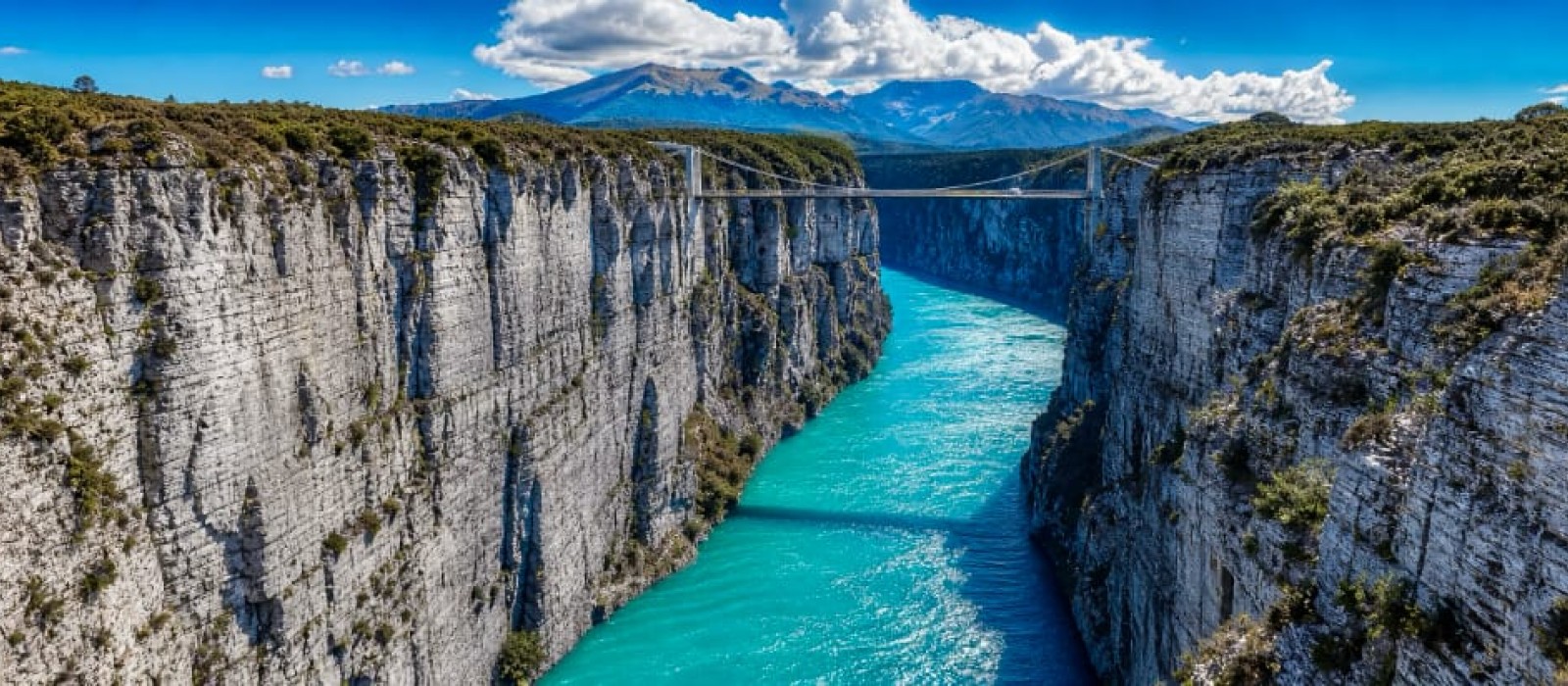
The Kawarau River in the Queenstown region of New Zealand's South Island served as the Anduin River in The Lord of the Rings: The Fellowship of the Ring, most memorably in the sequence where the Fellowship floats downstream through the Kawarau Gorge and passes between the two enormous statues of the Argonath, the Pillars of the Kings. The statues were computer-generated and added in post-production. The gorge, the cliffs, the turquoise water, and the raw scale of the landscape were real. They still are. You can stand at the viewpoint above the Kawarau Gorge today and see exactly what the cameras saw in 2000.
The Anduin in Tolkien's legendarium is one of the great rivers of Middle-earth. Rising in the far north near the Grey Mountains, it flows south for more than a thousand miles, passing through Mirkwood's eastern border, along the edge of the Brown Lands, through the Field of Celebrant and the Emyn Muil, and finally into the Bay of Belfalas at the southern tip of Gondor. It is the arterial waterway of the western lands of Middle-earth, the river that countries are measured by, the road the Fellowship takes south from Lothlórien toward the inevitable breaking of their company at Amon Hen.
That stretch of the journey, including the most iconic single visual in the entire trilogy, was filmed on a river outside Queenstown, New Zealand, in a gorge carved by glacial action over thousands of years. The fit was perfect.
The Argonath — The Pillars of the Kings
The Argonath are two enormous statues carved into cliff faces flanking the Anduin at the northern entrance to the lake of Nen Hithoel. They represent Isildur and Anárion, the sons of Elendil, the two kings of Gondor and Arnor in the Second Age who founded the realm that Aragorn is heir to. Their right hands are raised in warning against any enemy that approaches from the north. Their left hands hold axes.
Tolkien describes Aragorn's reaction to seeing them for the first time in years with particular care: "Aragorn had thrown back his hood and his dark cloak, and he rose to his feet. Tall and proud he seemed again; and casting aside his weather-worn cloak he stood up in the stern, and his grey eyes were fixed, not on the statues, but on the distant mountains ahead. His face was stern and he spoke no word." The statues are Aragorn's inheritance made physical. They are what he is heir to. The scale of what he is being asked to reclaim is written in stone, on the faces of his ancestors, raised from the water on either side of the boat.
The production team created the Argonath through a combination of scaled models and digital effects by Weta Digital. The models were enormous by the standards of physical effects, built at significant scale to allow them to be composited convincingly into the canyon footage. The faces were not invented: Peter Jackson asked Viggo Mortensen's wife for photographs of his father and grandfather, and had those faces used as the basis for the Argonath statues. Isildur and Anárion, in the finished film, look like Aragorn's ancestors because they were modelled on the ancestors of the man playing Aragorn.
The Kawarau River — Middle-earth in the Queenstown Gorge
The Kawarau River runs east to west from Lake Wakatipu through a dramatic gorge before meeting the Clutha River near Cromwell. It is one of the most distinctive rivers in the South Island: clear, fast-moving, coloured an extraordinary pale turquoise by the mineral-rich glacial flour suspended in the water, flowing between sheer schist rock walls that rise steeply from the waterline on both sides. The gorge is deep, the walls are dramatic, and the scale of it reads on screen as the kind of ancient, geological grandeur that Tolkien's great rivers required.
The specific section used for filming is in the Kawarau Gorge between Queenstown and Cromwell, near the historic Kawarau Gorge Suspension Bridge. The bridge itself predates the films by more than a century, built in 1880 as a crossing for gold rush miners working the area. It later became famous as the site of the world's first commercial bungee jump, operated by AJ Hackett from 1988. The combination of Victorian engineering, gold rush history, and extreme sport tourism makes it one of the more unusual backdrops in the entire filming location roster. It also remains the easiest access point for visitors wanting to see the Anduin from the most relevant vantage point.
The viewpoint above the gorge offers a perspective very close to what the camera saw when the Fellowship's boats were composited into the shot. The turquoise water runs between the pale grey schist cliffs and you can, as one visitor observed, genuinely imagine the small Elven boats passing down between the canyon walls. The Argonath are not there. But the space they occupied is, and it is large enough and dramatic enough that the CGI made sense rather than overpowering it.
The Anduin Across New Zealand — Multiple Locations, One River
The Anduin as it appears in the films was not created from a single New Zealand river. Like most of the large-scale outdoor environments in the trilogy, it was assembled from multiple locations across the South Island, each chosen for what it contributed to a specific scene.
The opening aerial shots of The Fellowship of the Ring, showing the forested banks of the Anduin in the prologue sequence, were filmed on the Waiau River near Te Anau in Fiordland, flowing between dense native beech forest with the mountains visible behind. This was the river at its most Tolkienian: ancient, green-banked, untouched.
The Mararoa River swingbridge at South Mavora Lake was used for the scene where the Fellowship departs from Lothlórien onto the Anduin, the boats launching from the bank as the Elves watch from the shore. North Mavora Lake itself became Nen Hithoel, the lake at the end of the Fellowship's river journey, and the surrounding forest provided the location for the breaking of the Fellowship at Amon Hen.
The Kawarau Gorge provided the most dramatic section: the deep canyon passage, the cliffs that made the Argonath convincing when composited in, and the colour and movement of the water that gave the sequence its physical sense of speed and scale. Each river contributed what it could do best. The edited result was a single, continuous, mythic waterway that felt as ancient and vast as Tolkien had described it.
The Kawarau in Tolkien's Story — What Happened on the Anduin
The Fellowship's journey down the Anduin covers the second half of The Fellowship of the Ring, from their departure out of Lothlórien to the breaking of the company at Amon Hen. It is a rare period of relative quiet in the story: no immediate enemies, no crisis to navigate, just the boats and the river and the growing shadow ahead. Tolkien uses these chapters to develop the Fellowship's internal tensions, particularly Boromir's increasing fixation on the Ring, which the reader can watch building through small gestures and silences across the river journey before it finally breaks into the confrontation at Amon Hen.
The Argonath passage is the visual climax of that journey and one of the most cinematically perfect moments in the trilogy. Aragorn standing in the prow of his boat, looking up at the faces of his ancestors, seeing what the kingdom was and understanding what reclaiming it would require. The camera pulling back to show the boats small against the immensity of the statues, the statues themselves against the cliffs, the cliffs against the sky. Tolkien's text gives you the same shot: the described scale of the statues, Aragorn's speechless response, the sudden weight of history pressing down on a journey that had been moving through wilderness and was now moving through the relics of an empire.
The Kawarau Gorge, in the finished film, makes that scene work. The real canyon gave the composited statues somewhere plausible to stand. The real scale of the South Island schist cliffs made the scale of the Argonath credible. Without the physical landscape underneath the CGI, the sequence would have been less believable regardless of the quality of the digital effects.
Visiting the Kawarau Gorge Today
The Kawarau Gorge is one of the most accessible Lord of the Rings filming locations in the South Island, sitting approximately 23 kilometres east of Queenstown on State Highway 6 toward Cromwell. The Kawarau Gorge Suspension Bridge, at the western end of the gorge, is the centre of AJ Hackett's bungee operations and has a free visitor area with viewpoints over the river. The turquoise colour of the water is most vivid in summer when the glacial melt is running, but the gorge is dramatic in any season.
Several sections of the gorge road offer viewpoints looking down toward the river at angles consistent with the filming positions used by Jackson's crew. The most commonly cited viewing point for the Anduin sequence is approximately at the Chard Road turnoff, where the gorge deepens and the cliffs on both sides rise most dramatically above the water. No special access or tour is required. You can drive the State Highway, pull over at the designated viewpoints, and see the river and the canyon exactly as they appeared in the film minus, as one puts it, the somewhat significant absence of two enormous stone kings.
For a more immersive experience, several operators run Lord of the Rings location tours out of Queenstown that include the Kawarau Gorge alongside the Arrowtown Gladden Fields location, Deer Park Heights, and other Queenstown-region filming sites. The gorge is also part of the Kawarau Gorge Scenic Reserve, and the historic bungee bridge is itself worth a visit regardless of its cinematic history.
The Queenstown Region — Middle-earth's Southern Hub
The Kawarau River is one of many Lord of the Rings filming locations concentrated in the Queenstown region, which served as a production hub for the South Island work across all three films. Within a two-hour radius of Queenstown:
The Remarkables mountain range to the south provided the Misty Mountains and the slopes of Dimrill Dale after the Fellowship emerged from Moria. Lake Alta, accessible from the Remarkables ski area road, was used as Dimrill Dale itself. Deer Park Heights above Queenstown served for multiple Rohan scenes. Glenorchy and the Paradise area, 45 kilometres north, provided Isengard, Lothlórien, and Ithilien Camp at Twelve Mile Delta. Skippers Canyon provided part of the Ford of Bruinen sequence. Arrowtown's Wilcox Green was the Gladden Fields. Mavora Lakes, further south toward Te Anau, provided the end of the Anduin journey and Amon Hen.
The Queenstown region was Middle-earth's southern continent: dramatic, varied, and capable of being mountains, plains, river gorges, ancient forests, and volcanic landscapes within the same day's drive. The Kawarau, in the middle of all of it, was its most famous river.
The Official Collection — Made in New Zealand
The official Lord of the Rings jewellery at lotrjewelry.com is made in New Zealand by the New Line Productions licence holders, in the same country as the Kawarau Gorge, the Waiau River, and every other New Zealand waterway that became the Anduin on screen. The One Ring that Aragorn was heir to reclaim, and the Evenstar that Arwen gave him as the symbol of her devotion, are both made here, in the country that is Middle-earth.
One Ring — Sterling Silver
The ring that belonged to the kingdom whose founders are carved into the cliffs of the Argonath. The ring Aragorn stood before his ancestors to reclaim. Solid 925 sterling silver, Comfort Curve, custom-made to size. Made in New Zealand by the New Line Productions licence holders.
Shop One Ring →Arwen Evenstar Pendant
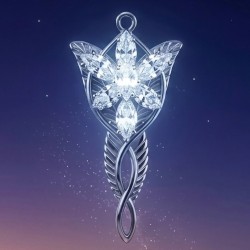
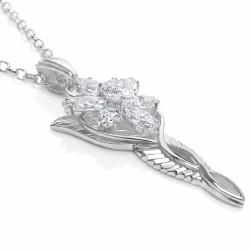
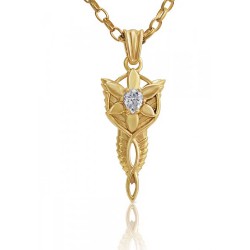
The pendant Arwen gave Aragorn before the Fellowship departed Rivendell, the physical evidence of her choice to give up immortality for the man who would reclaim his kingdom and become King Elessar. Solid 925 sterling silver, claw-set CZ. Made in New Zealand.
Shop Evenstar →Nenya — Ring of Water
Galadriel's Ring of Water, the ring that sustained Lothlórien from where the Fellowship launched onto the Anduin. The only officially licensed Elven Ring of Power. Solid 925 sterling silver with white gold finish. Made in New Zealand.
Shop Nenya →Frequently Asked Questions About the Kawarau River and the Anduin
Where was the Anduin River filmed in Lord of the Rings?
The Anduin River scenes in The Lord of the Rings were filmed across multiple New Zealand locations. The Kawarau River in the Queenstown region was used for the Argonath sequence in The Fellowship of the Ring, where the Fellowship passes the Pillars of the Kings. The Waiau River near Te Anau was used for opening aerial shots. The Mararoa River at South Mavora Lake provided the Fellowship's departure from Lothlórien. North Mavora Lake served as Nen Hithoel at the end of the journey. Each location contributed specific visual qualities to the overall impression of a single great river.
Are the Argonath real structures?
No. The Argonath statues of Isildur and Anárion were created through a combination of large-scale physical models and digital effects by Weta Digital, composited into footage of the Kawarau Gorge. The cliffs, the river, and the canyon are real. The statues were added in post-production. The faces of the Argonath were modelled on photographs of Viggo Mortensen's father and grandfather, at Peter Jackson's direction.
Can you visit the Kawarau River filming location?
Yes. The Kawarau Gorge is on State Highway 6 approximately 23 kilometres east of Queenstown. The Kawarau Gorge Suspension Bridge at the western end of the gorge is freely accessible and has viewpoints over the river. Several operators run Lord of the Rings location tours from Queenstown that include the Kawarau Gorge alongside other regional filming sites. No special access or permit is required to view the location from the highway viewpoints.
What is Anduin in Tolkien's books?
The Anduin, also called the Great River, is the major north-south waterway of western Middle-earth in Tolkien's legendarium. Rising near the Grey Mountains in the north, it flows south for more than a thousand miles, forming the eastern border of several major regions, before emptying into the Bay of Belfalas in southern Gondor. In The Lord of the Rings, the Fellowship travels south on the Anduin from Lothlórien to the lake of Nen Hithoel near Amon Hen, where the company breaks apart. The river also appears in the prologue when Isildur is killed, and the Ring slips from his finger into the water at the Gladden Fields.
What other Lord of the Rings locations are near the Kawarau River?
The Queenstown region contains a high concentration of filming locations. Within a short distance of the Kawarau Gorge, Arrowtown's Wilcox Green was the Gladden Fields where Isildur was killed, and the Ring was lost; Skippers Canyon, north of Queenstown was part of the Ford of Bruinen sequence; Deer Park Heights served for multiple Rohan scenes; and Lake Wakatipu provided Lothlórien shots. Further north, the Glenorchy and Paradise area provided Isengard, Lothlórien, and Ithilien Camp. The entire region is a practical base for a multi-day Lord of the Rings location tour.
Sources and Further Reading
- The Lord of the Rings, The Fellowship of the Ring: "The Great River" — Tolkien's account of the Fellowship's passage through the Argonath and into Nen Hithoel
- Brodie, Ian: The Lord of the Rings Location Guidebook Extended Edition, HarperCollins — the definitive guide to New Zealand filming locations with GPS coordinates
- Department of Conservation New Zealand: doc.govt.nz Lord of the Rings Locations — official DOC guide to accessible filming sites
- Experience Queenstown: experiencequeenstown.com — regional filming location guide
- Tolkien Gateway: tolkiengateway.net
Related Products