
In the spring of 1999, Andy Serkis received a script and an offer he almost didn't take. It was for a three-week voice acting job on a fantasy film being made in New Zealand. He was a working British stage and screen actor with a solid reputation and no particular interest in fantasy. He was not immediately drawn to it.
Then he read the book.
He read The Lord of the Rings, the whole thing, for the first time, and by the end of it he understood what Gollum was. Not a monster. Not comic relief. A tragedy. A person who had been consumed so thoroughly by an object's influence that the person was essentially gone, and what remained was the consuming. He called Peter Jackson and said he wanted to do it. Not three weeks. Whatever it took.
What it took was three years, a performance captured in ways that cinema had never attempted, an Oscar campaign that the Academy could not quite decide how to handle, and the invention of an entirely new way of acting that other performers have spent the following two decades trying to understand and replicate. And now, twenty-six years later, he is going back. This time, he is also in charge.
Before Gollum — A Career Built on Character
Andy Serkis was born in London in 1964 to a medical doctor father of Iraqi-Armenian descent and an English mother. He studied at Lancaster University, visual art rather than drama, and came to acting through theatre, where he built a reputation for intense physical commitment and an unusual willingness to disappear entirely into a character. He began screen work in 1989 and spent the 1990s accumulating a body of film and television work — Career Girls, Among Giants, Topsy-Turvy, which was respected by those who saw it and largely unknown to everyone else.
He was, in other words, exactly the kind of actor Peter Jackson needed for Gollum: someone with deep technique, no stardom to protect, and complete willingness to subordinate himself to the character's demands. When Jackson saw Serkis's audition, which reportedly involved Serkis getting on all fours and moving across the floor with a physicality that immediately suggested something no longer quite human, he understood he had found what he was looking for.
The Making of Gollum — A New Form of Acting
The technical challenge of playing Gollum in 2001 was unlike anything cinema had previously attempted at this scale. The character was entirely computer-generated in the final film; there was no Gollum costume, no prosthetics, no mask. But the performance inside the CGI was entirely Serkis: every facial expression, every movement of the body, every vocal inflection captured through motion-capture technology and translated by Weta Digital's animators into the creature on screen.
This created an immediate and unresolved question for the film industry: was this acting? Barrie M. Osborne, one of the film's producers, campaigned for Serkis to be nominated for the Academy Award for Best Supporting Actor for The Two Towers. The Academy declined because the performance was too mediated by technology to qualify in the traditional acting categories. The debate this sparked has never been fully resolved, and remains live in the industry today, as AI and performance capture technology continue to develop.
Serkis's position was always clear: he was acting. The technology was a costume, not a replacement for performance. The emotions, the choices, the physical grammar of how Gollum moved and responded, all of that was his. The Gollum that audiences responded to was his Gollum, not an animator's invention. The animators at Weta would have said the same thing: they were translating his performance, not creating one of their own.
The proof is in how the character reads on screen. Gollum in Peter Jackson's films is one of the most emotionally complex performances in the franchise, more complex, arguably, than most of the performances given by actors in conventional roles. The scene in The Two Towers where Sméagol and Gollum have a conversation with themselves, the split-personality argument, the brief hope, the collapse back into obsession, is performed with a precision and emotional range that would be extraordinary in any medium. It happens to be rendered in CGI. That does not make it less of a performance.
The Hobbit — Second Unit Director
When Jackson returned to Middle-earth for The Hobbit trilogy (2012–2014), Serkis reprised Gollum for the "Riddles in the Dark" sequence, the encounter with Bilbo in the tunnels under the Misty Mountains that Tolkien had originally written as a fairly cheerful puzzle game and that Serkis and Jackson transformed into something darker, more dangerous, and more tragic. It is one of the finest scenes in all six films.
He was also given his first significant directing credit: second unit director on all three Hobbit films, responsible for aerial photography and battle sequences. This was Jackson's deliberate investment in Serkis's directorial development, giving him experience at scale, with large crews, within the specific world of Middle-earth. It was, in retrospect, preparation for exactly the job he has now been given.
"Andy was a joy to work with, directing Second Unit on The Hobbit," Jackson said when The Hunt for Gollum was announced. "He has the energy and imagination and, most importantly, an inherent understanding of the world of the story that is needed to step back into Middle-earth. We have collaborated on eight films together, and each time it has been a fantastic experience."
The Career After Middle-earth
Serkis spent the decade between the Hobbit films and The Hunt for Gollum becoming one of the most distinctive actor-directors in the industry. His performance as Caesar in the Planet of the Apes reboot trilogy (2011–2017), a motion-capture performance of a chimpanzee's long arc from captivity to revolutionary leadership, extended everything he had developed as Gollum into a three-film character study that many considered the most sophisticated use of performance capture in cinema history.
He made his feature directing debut with Breathe (2017), a biographical drama starring Andrew Garfield. He directed Mowgli: Legend of the Jungle (2018) for Netflix, in which he also played Baloo, and Venom: Let There Be Carnage (2021) for Sony. Both demonstrated his ability to manage large-scale productions, though neither was the defining statement of a directing career.
The Hunt for Gollum is that statement, the film that brings together everything he has developed across twenty-five years of performance capture, two decades of directorial experience, and a relationship with one character that is unlike any other actor-character relationship in modern cinema.
He is also simultaneously appearing as Alfred Pennyworth in The Batman Part II, filming in London starting in late May 2026, overlapping with the New Zealand production. The scheduling is ambitious by any standard. He described it as a structured "strategic rotation between locations." What it actually means is that one of the busiest actor-directors in the world is giving Middle-earth his best while also honouring a commitment to another major franchise. Middle-earth, as he has said, is something he "can't escape", and by now, it seems clear he has stopped trying.
What Gollum Means in The Hunt for Gollum
The story of The Hunt for Gollum is, as Philippa Boyens described it, "told through the perspective of this incredible creature." That means Serkis is not merely a supporting character in a film about Gandalf and Aragorn — he is the film's central consciousness, the being through whose eyes the audience will experience the seventeen years between Bilbo's party and Frodo's departure.
That period covers Gollum's escape from the Misty Mountains, his capture by Sauron and torture in Mordor, his release and desperate journey toward the Shire, his recapture by Aragorn, his imprisonment in Mirkwood, and his escape that set the final act of the War of the Ring in motion. It is, in every sense, Gollum's story — the period between losing the Ring and the Ring being found by Frodo that the original films skipped over almost entirely.
Peter Jackson said when the project was announced: "The Gollum/Sméagol character has always fascinated me because Gollum reflects the worst of human nature, whilst his Sméagol side is, arguably, quite sympathetic. There's much more ground to cover. Especially in the periods when Gollum was off the grid."
Off the grid, in this context, means five centuries of isolation under the Misty Mountains and then, suddenly, sixty years of Bilbo having the Ring and Gollum knowing it and trying to find it. That is the most compressed emotional arc in Tolkien's entire chronology, and it belongs entirely to Serkis to give it shape.
The Official One Ring — Made in New Zealand
The ring Gollum called his precious for five centuries, the ring Andy Serkis has now played across five films, is the central piece of the official collection at lotrjewelry.com. Made in New Zealand by the New Line Productions licence holders, in the country where filming begins in May 2026.
My Precious Ring
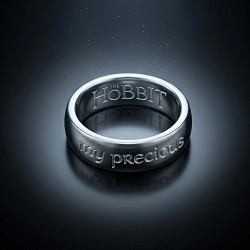
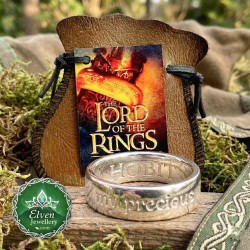
"My Precious" is engraved outside. Official Hobbit logo inside. The ring Sméagol called his own — found at the Gladden Fields, kept for five centuries under the Misty Mountains, lost to a hobbit in the dark. Solid 925 sterling silver. Made in New Zealand.
Shop My Precious →One Ring — Sterling Silver
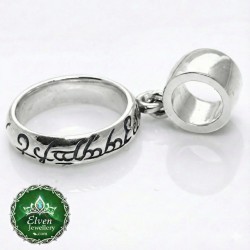
The One Ring, the ring Gollum lost, Bilbo found, Gandalf identified, Frodo carried to Mount Doom. Solid 925 sterling silver, precision engraved, Comfort Curve. Custom-made to size. Made in New Zealand by the New Line Productions licence holders.
Shop One Ring →One Ring — UV Fire Script
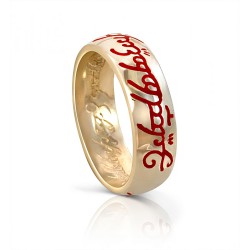
The inscription glows red under UV light, as Gandalf saw it in the flames of Frodo's hearth, the moment that confirmed everything Gollum had revealed under torture in Mordor. Custom-made to size. Made in New Zealand.
Shop UV Fire Script →Frequently Asked Questions About Andy Serkis and Gollum
How many times has Andy Serkis played Gollum?
Including The Hunt for Gollum, Andy Serkis will have played Gollum five times: in The Fellowship of the Ring (2001, voice only), The Two Towers (2002, full motion-capture performance), The Return of the King (2003), The Hobbit: An Unexpected Journey (2012), and The Hunt for Gollum (2027). He also voiced the Witch-king of Angmar and Khamûl in The Fellowship of the Ring, and has performed Gollum in various promotional and live contexts outside the films.
Why is Andy Serkis directing The Hunt for Gollum?
Peter Jackson chose not to direct the film himself, having decided after The Hobbit trilogy that he did not want to return to the director's chair for Middle-earth. When the decision was made that the film would focus on Gollum's story, Serkis was, as Philippa Boyens put it, the only choice: "There's nobody else you can think of who knows what goes into that character." Serkis also has genuine directorial experience — second unit director on all three Hobbit films, and three feature films as director. Jackson was explicit: "There's no one on earth better equipped to tackle Gollum's story than Andy."
Was Andy Serkis nominated for an Oscar for Gollum?
No — and the campaign to nominate him remains one of the most discussed controversies in Academy Awards history. Producer Barrie M. Osborne campaigned for Serkis to be nominated for Best Supporting Actor for The Two Towers, arguing that his performance was the foundation of everything audiences saw on screen. The Academy declined, because the CGI mediation of the performance placed it outside the traditional acting categories. The debate this sparked about the legitimacy of motion-capture performance has never been definitively resolved, and Serkis has remained the most prominent advocate for performance capture being recognised as acting.
Is Andy Serkis really doing The Hunt for Gollum and The Batman at the same time?
Yes. Serkis is directing and starring as Gollum in The Hunt for Gollum, filming in New Zealand from May 2026, while also appearing as Alfred Pennyworth in The Batman Part II, directed by Matt Reeves, filming in London from late May/June 2026. The two productions have structured overlapping schedules to allow him to rotate between locations. Both films will be released in 2027 — The Batman Part II on October 1 and The Hunt for Gollum on December 17.
What other famous roles has Andy Serkis played?
Beyond Gollum, Serkis is best known for Caesar in the Planet of the Apes reboot trilogy (2011–2017), widely considered his finest motion-capture work alongside Gollum, Supreme Leader Snoke in the Star Wars sequel trilogy (2015–2017), Ulysses Klaue in the MCU's Black Panther and Avengers: Age of Ultron, Captain Haddock in Spielberg's The Adventures of Tintin (2011), and King Kong in Jackson's King Kong (2005). He also read the entire text of The Hobbit on his YouTube channel during the 2020 pandemic lockdown, a seven-hour performance that became one of the most widely watched readings of any Tolkien text in that period.
Sources & Further Reading
- Deadline — May 2024: Peter Jackson, Andy Serkis, and Philippa Boyens on The Hunt for Gollum — announcement interview
- Art Threat — April 2026: Andy Serkis confirmed for both Hunt for Gollum and The Batman Part II simultaneous productions
- Empire Magazine — January 2026: Philippa Boyens on the film's "strong psychological, interior story"
- Serkis, Andy — Gollum: How We Made Movie Magic (2003): Serkis's own account of creating the performance
- Tolkien Gateway — tolkiengateway.net
Related Products