Tauriel — Captain of the Guard of the Woodland Realm of Mirkwood — is a character created by Peter Jackson, Philippa Boyens, and Fran Walsh for The Hobbit film trilogy, portrayed by Evangeline Lilly. She does not appear in Tolkien's novel. She is a Silvan Wood-elf, orphaned young, raised under Thranduil's care, and appointed Captain of his Elven Guard at an age that was young even by Elvish standards. She is the first major female character original to the Jackson films — and in the Tauriel Dagger Earrings, the only official licensed piece of jewellery in the entire Middle-earth range made specifically in her honour.
The Hobbit as Tolkien wrote it contains no named female characters with significant roles. The Company of Thorin Oakenshield is thirteen Dwarves and a Hobbit, all male. The narrative moves from the Shire to the Misty Mountains to Mirkwood to Lake-town to the Lonely Mountain, and the speaking roles belong almost entirely to the men — or Dwarves and Hobbits — of the story.
Peter Jackson, adapting the book into three films covering considerably more of Middle-earth's history than Tolkien's novel alone, made a deliberate decision to create a Mirkwood Elf who could represent the Silvan Wood-elves as a people, stand alongside Legolas as a character of real agency, and carry some of the emotional weight of the Hobbit trilogy's middle section. He named her Tauriel — Daughter of the Forest — and cast Evangeline Lilly, then best known for Lost, in the role.
She became one of the most discussed characters in the trilogy's reception. Whether you found her addition enriching or unnecessary, her presence in the films is undeniable — and the dagger earrings that honour her are the only official jewellery in the entire LOTR and Hobbit range made for a character who was created for cinema rather than for the page.
Who is Tauriel? — Daughter of the Forest
Tauriel is a Silvan Elf — a Wood-elf of Mirkwood, of the more earthy and practical Elvish kindred who had lived in the forests of Middle-earth since the earliest ages, never having made the great journey to Valinor. Where figures like Galadriel and Elrond carry the weight of thousands of years of high Elvish history and philosophy, the Silvan Elves were more immediate, more connected to tree and root and the practical demands of a forest under threat.
Tauriel's name in Sindarin means "Daughter of the Forest" — or more precisely "Forest Maiden," from taur (forest) and iel (daughter). It was the name she was given, and it was accurate. She had grown up entirely in Mirkwood. She knew nothing but the forest, its spiders, its dark places, and its borders.
Her parents were killed by Orcs when she was young. Thranduil took her in — raised her alongside his own son Legolas, though she was a Silvan Elf of lower social standing than the royal Sindarin household. She grew up knowing both the privilege of the Elvenking's court and the social ceiling that her birth had placed above her. She could not aspire to Legolas. She could not, in Thranduil's view, be anything other than what she was: a very capable, very loyal, very young Wood-elf captain who served the Woodland Realm with complete dedication and was not quite Sindarin enough for his son to love.
She was approximately 600 years old during the events of The Desolation of Smaug — young, by Elvish standards. Young enough to be impatient with Thranduil's isolationism. Young enough to believe that the growing evil could be fought if only the Elves of Mirkwood would stop pretending it was someone else's problem.
Captain of the Guard — The Best Fighter in Mirkwood
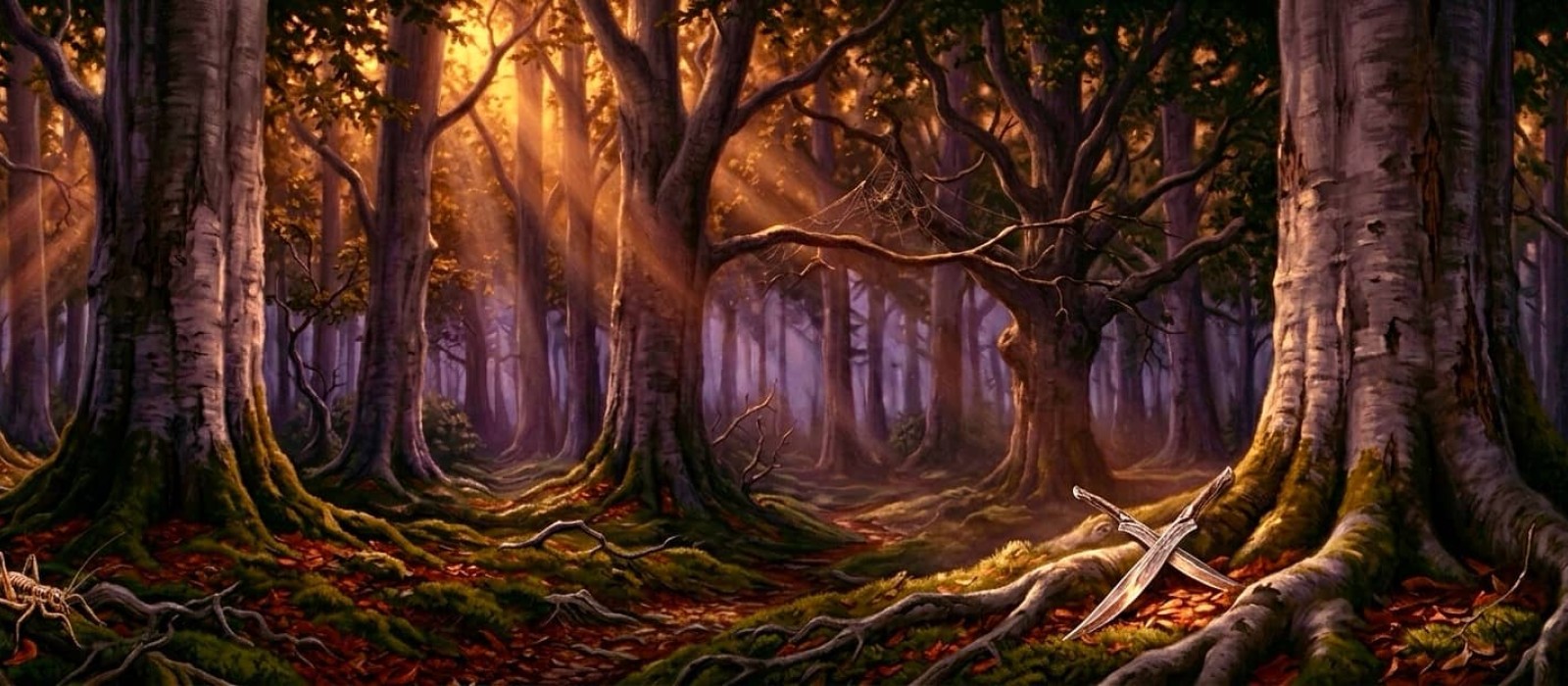
Tauriel was the head of Thranduil's Elven Guard — the military force that defended the Woodland Realm and kept its borders clear of Orcs and spiders. She had been given the role because she was, simply, the best. Her combat skills combined the two disciplines most essential to a Mirkwood warrior: archery at speed in close woodland conditions, and close-quarters knife fighting when the distance closed. She wielded twin long knives alongside her bow, and in the extended battle sequences of The Desolation of Smaug and The Battle of the Five Armies, her fighting style is specific and identifiable — faster and more acrobatic than Legolas, less distant and composed, more immediate and physical.
Evangeline Lilly trained extensively for the role — swordplay, archery, and the physical demands of wirework and stunt sequences. She had experience with physical work from Lost but described the Hobbit training as significantly more demanding. Jackson noted that Tauriel's fighting style was deliberately differentiated from Legolas — where Legolas was all distance and precision, Tauriel was closer quarters, faster, more kinetic.
Where she and Thranduil disagreed was not on capability but on philosophy. Thranduil's directive was to hold the borders — kill the spiders that threatened the Woodland Realm's territory and ignore everything beyond it. Tauriel believed this was treating the symptom rather than the disease. The spiders were spreading from Dol Guldur. The darkness was growing. Stopping it at the border was not stopping it. She wanted to go to the source.
The Company of Thorin — and Kíli
When Thorin Oakenshield's company of thirteen Dwarves was captured by Mirkwood's patrol after escaping from the spider-infested forest, it was Tauriel who supervised their imprisonment in Thranduil's underground halls. And it was Tauriel who stopped at the cell of Kíli — the youngest of Thorin's nephews, dark-haired and young-looking even by Dwarf standards — and talked to him through the bars.
The conversation began with Kíli showing her a runestone his mother had given him as a token so he would remember to return to her. It was a small thing — not a magic object, not a talisman of power, just a stone a mother had pressed into a son's hand before he left on a dangerous journey. Tauriel was moved by it in a way she could not entirely explain. An Elf, who had centuries of memory and would have centuries more, encountering the simple, urgent mortality of a Dwarf's relationship with his mother — something she had never had, given what had happened to her parents — was an unexpected meeting point.
The connection that formed between them during the Company's imprisonment in Mirkwood — then continued when Tauriel defied Thranduil's orders and followed the escaping Dwarves to Lake-town to protect them from Bolg's pursuing Orc pack — was the emotional centre of Tauriel's arc across the two films. Kíli was shot with a Morgul arrow in the escape. Tauriel used Elvish healing arts — a skill that Silvan Elves possessed in connection with the earth and growing things — to draw the poison out and save his life.
She understood that it was improbable, to put it mildly. Elves did not love Dwarves. Dwarves did not love Elves. The two races had been hostile since the First Age and had never, in the history of Middle-earth, produced a story anything like this one. Legolas confronted her at Lake-town and asked her directly whether she loved Kíli. She said: "I don't know what I feel." It was the most honest answer available.
The Battle of Five Armies — and What Was Lost
Kíli was killed at the Battle of Five Armies on Ravenhill, fighting Bolg. Tauriel arrived too late to save him. She knelt over him and asked, in one of the most genuinely affecting moments in the trilogy: "If this is love — I do not want it. Take it from me, please. Why does it hurt so much?" Thranduil, who had come after her, answered simply: "Because it was real."
It was the most human thing Thranduil said in three films — a man who had loved and lost himself, who had spent an age in emotional isolation as a result, recognising in this young Wood-elf the same wound he carried. It was also the moment where Tauriel's arc completed: she had chosen connection and vulnerability over the Elvish habit of distance and self-preservation, she had paid the full price for that choice, and she emerged from it having been, briefly, more fully alive than most Elves in Middle-earth allowed themselves to be.
Thranduil banished her from Mirkwood. She had defied his orders too many times. He also told her — seemingly — that she was free to go. What happened to Tauriel after the battle is not told in the films. Evangeline Lilly stated in interviews that she believed Tauriel eventually returned to Mirkwood. But within the story as shown, she walks away from Ravenhill alone, into an uncertain future, carrying a grief that was real.
Why Tauriel Was Created — and Why She Matters
Jackson and his co-writers were direct about the reason for Tauriel's creation: The Hobbit as written contained no female characters with significant roles, and a three-film adaptation covering events across multiple years and locations needed the range of perspective that male-only casting could not provide. Tolkien himself acknowledged in letters that The Hobbit was written before he had developed the deeper mythology of Middle-earth — it was a children's story that only gradually accumulated the weight of the larger legendarium. The films were adapting not just the book but the world.
Tauriel's design as a character — the Silvan rather than Sindarin background, the orphan history, the appointment by merit rather than birth, the interventionist philosophy set against Thranduil's isolationism, the connection to Kíli — drew on what Tolkien did write about the Woodland Elves even where it invented specific characters. The Mirkwood guards who captured Thorin's company existed in the novel. A captain led them. Tauriel was that captain, given a name, a history, and a face.
Lilly herself described Tauriel as a nonconformist — a character who "rebels against the established social order of the Elves." That description is accurate. In a society organised around lineage, age, and ancient hierarchies, Tauriel achieved her position through demonstrated skill in a realm that valued survival above ancestry. She was a Wood-elf in a court of Sindarin nobles. She was Captain of the Guard by the age of 600. She chose to protect a Dwarf at the cost of her position. She is, in the most direct sense, the character who acts rather than deliberates — who reaches toward the world rather than withdrawing from it.
The Tauriel Dagger Earrings — The Only Official Tauriel Jewellery in the World
The Tauriel Dagger Earrings are the only officially licensed piece of jewellery in the entire Lord of the Rings and Hobbit range made specifically to honour Tauriel. Across all the official collections — One Ring, Evenstar, Nenya, Orcrist, Key to Erebor, Sting, and all the rest — these are the only piece connected to a character created specifically for the films rather than drawn from Tolkien's books.
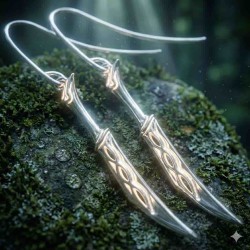
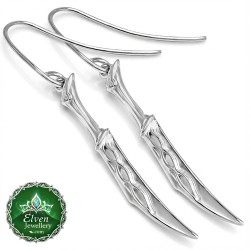
They are made in the form of Tauriel's twin long knives — the daggers she carried alongside her bow, the close-quarters weapons of the Captain of the Guard of Mirkwood. Solid 925 sterling silver, made in New Zealand by the New Line Productions licence holders. If you love the character, these are the only official piece made for her.
Tauriel Dagger Earrings
The only officially licensed Tauriel jewellery in the world. A pair of sterling silver drop earrings in the form of Tauriel's long knives — the weapons of the Captain of the Guard of Mirkwood. Solid 925 sterling silver, nickel-free, sold as a pair. Made in New Zealand by the New Line Productions licence holders. Supplied with official Licence of Authenticity.
Shop Tauriel Dagger Earrings →Frequently Asked Questions About Tauriel
Is Tauriel in Tolkien's books?
No. Tauriel does not appear anywhere in J.R.R. Tolkien's writings. She was created by Peter Jackson, Philippa Boyens, and Fran Walsh specifically for The Hobbit film trilogy. She first appeared in The Hobbit: The Desolation of Smaug (2013) and continued in The Hobbit: The Battle of the Five Armies (2014). Her creation was motivated by the absence of significant female characters in Tolkien's novel, which was written as a children's story before the deeper mythology of Middle-earth had been fully developed.
What does Tauriel mean?
Tauriel is a Sindarin Elvish name meaning "Daughter of the Forest" — from taur (forest, or great wood) and iel (daughter). Peter Jackson initially described her name as meaning "Daughter of Mirkwood" — the same concept, with Mirkwood being the specific forest she came from. It was an entirely fitting name for a Silvan Wood-elf whose whole world was the forest, who had been raised in it, who fought for it, and whose identity was inseparable from it.
Who plays Tauriel in The Hobbit?
Tauriel is portrayed by Evangeline Lilly — a Canadian actress best known at the time for playing Kate Austen in the ABC drama Lost (2004–2010). She subsequently played Hope van Dyne / Wasp in the Marvel Cinematic Universe. For the Hobbit role, Lilly underwent extensive training in archery, swordplay, and the Elvish language. She accepted the part under the condition that Tauriel would not be involved in a love triangle — a condition that was subsequently overridden when the decision was made to extend the trilogy to three films. She was nominated for several awards for her performance.
What kind of Elf is Tauriel?
Tauriel is a Silvan Elf — a Wood-elf of Mirkwood, of the Elvish kindred who had lived in the forests of Middle-earth since before the First Age and had never made the journey to Valinor. This makes her of lower social standing than the Sindarin Elves like Thranduil, Legolas, and Elrond, or the Noldorin High Elves like Galadriel. The Silvan Elves were more earthy and practical in Tolkien's description — less learned in ancient lore, more connected to the immediate life of the forest. Tauriel's appointment as Captain of the Guard despite her Silvan background was a mark of exceptional individual ability.
Did Legolas love Tauriel?
In the films, Legolas clearly had strong feelings for Tauriel — his father Thranduil noticed this and told Tauriel directly not to give him false hope, because she was Silvan and Legolas was the Sindarin prince of the realm, and the social gap between them was unbridgeable in Thranduil's view. Whether Legolas's feelings constituted love in the full sense is left ambiguous. What is clear is that he followed her to Lake-town, that he fought to protect the same Dwarves she was protecting, and that her choice of Kíli over him was a genuine loss for him. His departure for the North at the end of The Battle of the Five Armies — following Thranduil's suggestion to find the young ranger Strider — begins the long road that leads to Rivendell and the Fellowship.
What happened to Tauriel after The Battle of Five Armies?
The films leave Tauriel's fate open. Thranduil banished her from Mirkwood for defying his orders, and the story ends with her kneeling over Kíli's body on Ravenhill. Evangeline Lilly said in interviews that she believed Tauriel eventually returned to Mirkwood — that Thranduil's banishment, delivered in a moment of grief and anger, would not have been permanent. But within the films as released, Tauriel's fate after the battle is not shown. She is the one major character in the Hobbit trilogy whose ending is deliberately unresolved.
Why are there Tauriel earrings but no other Tauriel jewellery?
The official licensed jewellery collection draws from the most visually and narratively iconic elements of the films. Tauriel's defining visual symbols are her twin long knives — the daggers she wore alongside her bow and used in close-quarters combat. The Tauriel Dagger Earrings translate those weapons into earring form — elegant, precise, and unmistakably connected to her character. They are the only officially licensed piece made specifically for Tauriel in the entire range, and the only official LOTR or Hobbit jewellery in the world made for a character created for the films rather than drawn from Tolkien's books.
Sources & Further Reading
- The Lord of the Rings: The Hobbit film trilogy (2012–2014) — Directed by Peter Jackson — the sole canonical source for Tauriel, who does not appear in Tolkien's written works
- The Hobbit, or There and Back Again — J.R.R. Tolkien (1937) — Source for the Woodland Realm, Thranduil, and the Elven guard
- Tolkien Gateway — tolkiengateway.net
Related Products